Beginners Running Program: The Run-Walk Method Explained

Let's face it — starting from zero fitness needs its own approach. I've coached beginners through this exact build for over 20 years, and the runners who avoid injury are consistently the ones who let a program pace them, not their own ambition. Start at the wrong level and you'll either stall or burn out early, so use what follows to choose well.
The Run-Walk Method: Why Every Best Running Tips Beginner Program Starts Here
I'm a strong believer in the tortoise and the hare. Too many beginner runners cut their own running careers short for one reason: they start off far too enthusiastically. They want quick results, so they run too much, too fast — and they get injured. Injury is the most common reason novice runners stop, and doing too much, too fast is a classic way to get there.A run/walk interval is exactly what it sounds like — short bursts of running broken up by walking recovery, repeated for the length of your session. It looks slow on paper. In practice, it's the fastest route to consistent, injury-free running, because it lets your tendons and joints catch up to fitness your heart and lungs gain within weeks.
That's also why Best Running Tips runs three separate beginner programs rather than one. They're not different in quality — they're matched to different starting fitness. Get the match wrong and you'll either be bored by week two or overwhelmed by week three. Get it right, and the build takes care of itself.
Which Beginners Running Program Should You Start With?
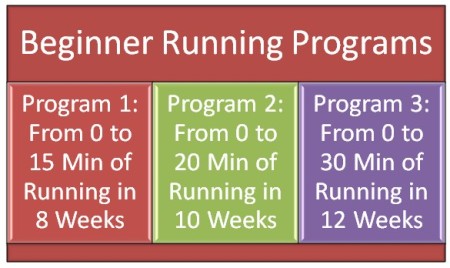
Here's the comparison, so you don't have to read all three program pages just to work out where you belong.| Program | Non-Stop Target | Length | Start Here If... |
|---|---|---|---|
| Program 1: 15 minutes in 8 weeks | 15 minutes | 8 weeks | You've never run before, or can't yet run for a minute or two without stopping. |
| Program 2: 20 minutes in 10 weeks | 20 minutes | 10 weeks | You've done some regular exercise, but structured running still feels new. |
| Program 3: 30 minutes in 12 weeks | 30 minutes | 12 weeks | You can already run 10-15 minutes without stopping — join partway through rather than starting at week 1. |
How the Run-Walk Ratio Progresses Week to Week
Start with your program's Week 1 ratio exactly as written — a short run segment and a much longer walk segment. Don't adjust it upfront. Each week, the run segments lengthen and the walk segments shorten on a schedule I've already built for you, so by the final week you're running non-stop for your program's target time.You're ready to extend a run segment when three things line up: you complete the current interval without excessive breathlessness, you do it for two sessions in a row, not just one good day, and your walk break is enough to fully reset your breathing before the next run segment starts. Miss any one of those and the sensible move is to repeat the week, not push ahead.
Life happens, and schedules slip. If you've missed a day or need to adjust your schedule, that's covered separately — don't try to make up lost sessions by cramming.
Does the Run-Walk Method Actually Work? (Is It Slower?)


This isn't only a beginner's method, either. Plenty of experienced runners use run-walk deliberately to pace long races, half marathons and marathons especially — it's a pacing strategy at every level, not training wheels you eventually outgrow.
I hear from people who "didn't think they had it in them" often enough that it's stopped surprising me — previous non-runners finishing their first 5K, or building genuine fitness and confidence, off the back of exactly this approach.
Frequently Asked Questions
What run-walk ratio should I start with as a beginner?
Start with your program's Week 1 ratio exactly as written — a short run segment and a longer walk segment. Don't adjust it upfront; it's calibrated for a genuine beginner, not for someone impatient to run more.
How do I know when I'm ready to run longer without a walk break?
Two consecutive sessions completing your current interval without excessive breathlessness is the signal to progress. One good session could be a fluke — two in a row tells you it's genuinely time.
Should I use time or distance to structure my run-walk intervals?
Time, for beginners. Distance-based intervals quietly reward pushing your pace, which is the opposite of what a beginner program should encourage.
How often should I increase my run segment length?
Follow your program's own weekly schedule rather than self-adjusting. The right progression rate is already built in.
Is it okay to walk during a race if I've trained with run-walk?
Yes. Race-day walk breaks are entirely consistent with run-walk training — see using run-walk on race day for how to plan them in.
So: pick your program from the table above, run its Week 1 ratio exactly as written, and let the schedule do the rest. Sensible, progressive, and — for what it's worth — it works.
More Pages on This Topic
Some Other Pages You May Like
About the author

Dominique de Rooij (Dom)
Advanced Running Coach certified by Athletics Australia with 20 years of writing about running and over a decade coaching runners — from first-timers to marathoners. Dom's beginner programs have guided thousands of runners and been praised above plans from Jeff Galloway, Hal Higdon, and Runner's World. Now over 50, Dom still loves trail running, parkrun, and the coffee after.
Free beginner guide • From Coach Dom
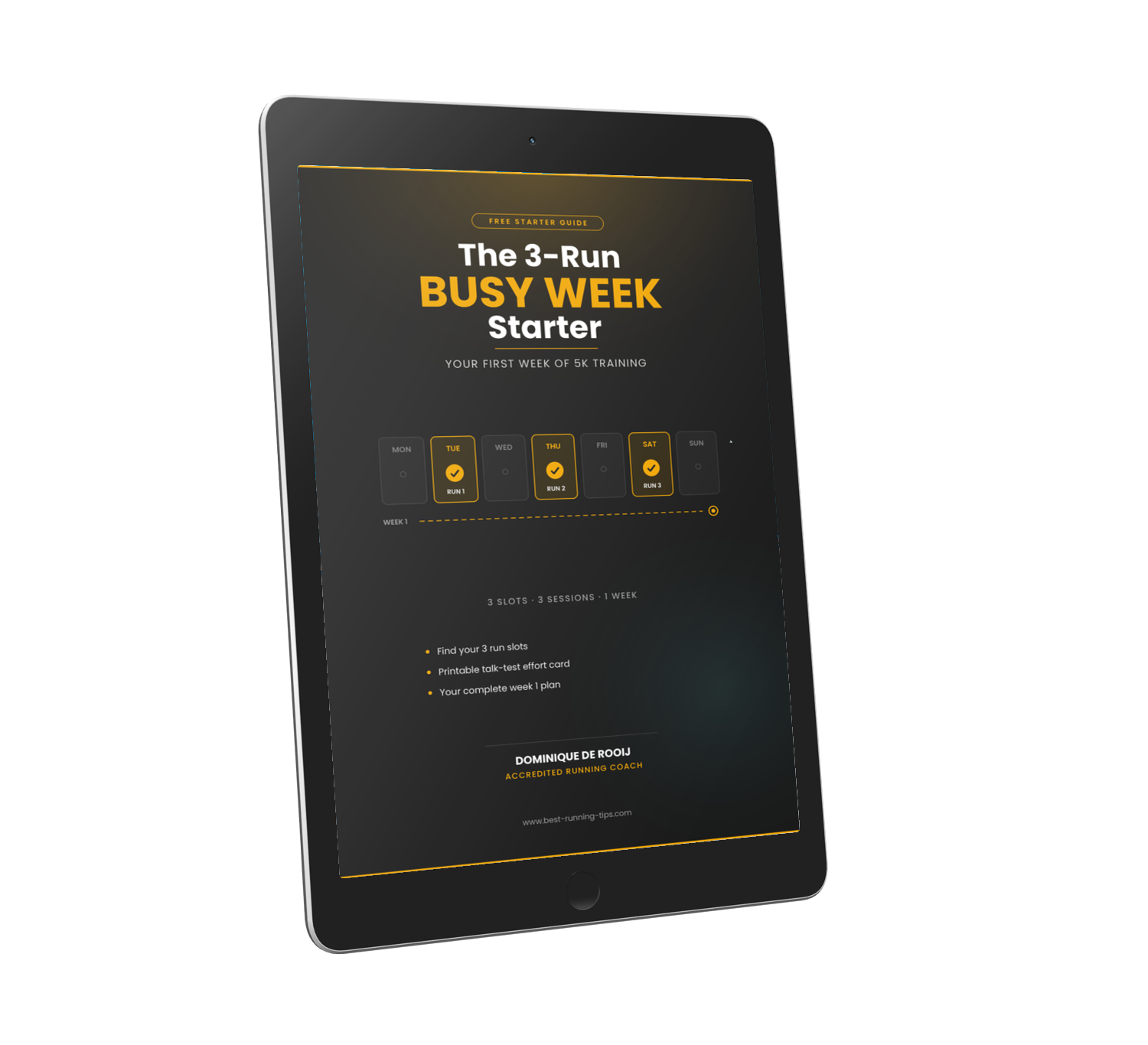
Start Running This Week, Even If Your Week Is Already Full
Most beginners don't quit for lack of motivation. They quit because their plan doesn't fit their life. The 3-Run Busy Week Starter plans your first week around the week you actually have.
- Find 3 run slots you can actually keep
- The talk test: the simple way to stop running too fast
- Your complete week 1 plan: 3 run/walk sessions, about 20 minutes each
You'll get the guide plus a short email every few days to help you through week 1. Unsubscribe any time. Privacy policy.
What's New?
-
Personalized Running Coaching - BRT | Run Smarter, Race Better
 Get a personalized running program built around your current fitness, goals, and schedule - not a generic app template. Choose from BRT Silver, Gold, or Platinum coaching with Dom, accredited running…
 -
Sample 4-Day Marathon Training Week: Base to Taper
A full 4-day-a-week marathon training schedule, phase by phase - base, build, peak, and taper - with named workouts and weekly mileage. -
Marathon Taper for a 10-12 Week Training Cycle
How to taper correctly on a compressed 10-12 week marathon plan - the right taper length, why standard advice doesn't fit, and the week-by-week structure.