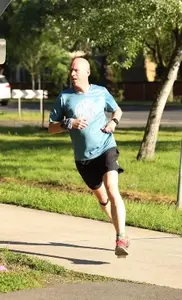
Improve My Running Time to 10:30min for 1.5 Miles
I weigh 97kg and have a height of 184cm. Any time I run I suffer from shin splints. My run time for a 1.5 mile race is 12:59 mins.
I need to get it down to under 10.30 min for the same distance.
What can I do to prevent the shin splints and what running schedule should I use to reduce my run time to under 10.30 min and reduce my weight to 80–85kg in 2–3 months?
Thank you.
– Christopher, London, England
Answer by Dom:
Hi Chris, thanks for your questions — you've given me a lot to work with here. Three challenges at once: shin splints, a significant time improvement, and weight loss. They're all connected, and tackling them in the right order makes each one easier. I do want to be honest with you about the timeline. Taking your 1.5-mile time from 12:59 to 10:30 in two to three months while managing shin splints and losing meaningful weight is genuinely ambitious — it may be possible, but it requires everything to go well. Let me break down the plan:
- Deal with the shin splints first — they're the most urgent problem
- Build a safe running base
- Weight loss and speed — how they connect
Deal With the Shin Splints First

If you get shin splints every time you run, the problem is not going to solve itself by running more. You need to change something. At 97kg, the impact forces on your tibial bones with every running stride are significant — and running on hard tarmac amplifies this considerably.
The first change: run on soft surfaces. Grass in a park, a rubber running track, or a treadmill — any of these reduce the impact load substantially compared to pavement. If you can only run in London with access to parks, use them. This one change alone often reduces shin splints markedly. Have a look at the Shin Splints page for a fuller explanation of the causes and treatments.
The second change: get your running shoes fitted by a specialist. I don't know what you're currently wearing, but a shoe without sufficient cushioning or with the wrong level of support for your gait can contribute heavily to shin splints. A proper fitting at a running shop — where they watch you run and recommend accordingly — is worth every pound.
The third change: add two specific strengthening exercises to your routine. Calf raises — standing on the edge of a step, lowering your heels below the step and raising up on your toes, three sets of fifteen — build the calf muscles that protect the tibia. Tibialis anterior raises — sitting in a chair, tapping your toes repeatedly for thirty seconds — strengthen the muscle that runs alongside the shin bone and is often the seat of shin pain. Do these daily. They take five minutes and they work.
If your shin splints flare during training, replace that running session with cycling or swimming rather than running through the pain. Cross-training on non-running days keeps your fitness building without adding more load to already-stressed legs.
Now Live - Built by Dom from best-running-tips.com
Get a Training Plan Built Around Your Test
AceTheTest turns your fitness, schedule and test date into a personalised day-by-day plan — free to start, in under 60 seconds.
Start Building My Plan →Code ACETHETEST20 gets you 20% off any upgrade.
Build a Safe Running Base

Once the shin splints are under control — or at least managed — you can start building your running consistently. I'd recommend a run/walk approach to begin with. The Beginner Running Programs on this site give you a structured week-by-week build-up that handles this well.
Run four times a week. Keep two of those sessions genuinely easy — 20 to 30 minutes at a pace where you can hold a conversation. These easy sessions are not "too slow to count." They build your aerobic capacity and give your legs time to adapt to the repetitive stress of running. If you go too fast on these runs, you increase injury risk without getting much additional fitness benefit.
A word on realistic expectations, Chris: improving from 12:59 to 10:30 on the 1.5 miles in two to three months is a very large ask — especially with shin splints to manage and meaningful weight to lose. It can happen, but everything needs to go right. A more realistic target for two to three months of good consistent training might be 11:30 to 12:00. From there, with another block of training, you can push toward 10:30. I'd rather set you up for success than have you feel like you've failed when you've actually made great progress.
Weight Loss and Speed — How They Connect

Here's the good news: every kilogram you lose will improve your running time. Less weight means less effort for the same pace. It also means less load on your shins with every stride — so weight loss helps your shin splint problem too. These goals are aligned, not competing.
Losing 12–17kg in two to three months through exercise alone is not realistic. Running burns calories, but the deficit from running 4x per week doesn't produce that kind of result in that timeframe without significant dietary change. Diet does most of the heavy lifting when it comes to weight loss — a mile of running only burns around 100 calories, which is a small dent against the size of the deficit you need. Check out the Running for Weight Loss page for more on combining the two.
The dietary basics: cut alcohol completely. Cut processed food and sugary snacks. Eat proper meals — protein at every meal to support muscle recovery, plenty of vegetables, and adequate carbohydrates to fuel your training. No big secrets. No magic system. Consistent, sensible eating alongside consistent, sensible training — that's the combination that works.
You're currently far from your goal, Chris — but with the right approach, you will improve considerably over the next three months. Get the shin splints managed, build your base safely, and let the weight come off through training and diet. Everything else follows from that.
Best of luck.
Kind regards,
Dom
Some Other Pages You May Like
About the author
Dominique de Rooij (Dom)
Advanced Running Coach certified by Athletics Australia with 20 years of writing about running and over a decade coaching runners — from first-timers to marathoners. Dom's beginner programs have guided thousands of runners and been praised above plans from Jeff Galloway, Hal Higdon, and Runner's World. Now over 50, Dom still loves trail running, parkrun, and the coffee after.
Stop Guessing. Get a Plan
Built for Your Test.
AceTheTest builds a personalised, day-by-day 1.5 mile training plan around your fitness, schedule and test date — free to start.
"I did it - even had time to spare!" - James, Ohio
Free preview included. Ready to go further? Use code ACETHETEST20 for 20% off any upgrade.
What's New?
-
Personalized Running Coaching - BRT | Run Smarter, Race Better
 Get a personalized running program built around your current fitness, goals, and schedule - not a generic app template. Choose from BRT Silver, Gold, or Platinum coaching with Dom, accredited running…
 -
Sample 4-Day Marathon Training Week: Base to Taper
A full 4-day-a-week marathon training schedule, phase by phase - base, build, peak, and taper - with named workouts and weekly mileage. -
Marathon Taper for a 10-12 Week Training Cycle
How to taper correctly on a compressed 10-12 week marathon plan - the right taper length, why standard advice doesn't fit, and the week-by-week structure.