Interval Running: Workouts, Benefits & Beginner Guide

But interval workouts bring results however, so you do need to put yourself through some discomfort. After all, us runners know that wise old saying "no pain, no gain" better than anyone.
Before you jump into intervals though, you need to be able to run at easy pace first. A good rule of thumb is to spend time building your base running before adding speedwork. Without the ability to run long, the ability to run fast is pretty much useless.
Any running race longer than 800m relies on endurance more than speed. Read that again, so it really sinks in. Your aerobic base is much more important. So build that base first. After you've done that, you can start incorporating intervals into your training.
Even then, the advice is simple: do intervals only once a week, maximum. That's plenty when you're involved in an endurance sport. Interval running workouts are taxing, hard sessions. Too many of them in a week will make it too hard to put other tough workouts (long runs, lactate threshold runs) into your schedule. And hard workouts increase the risk of injury.
What is Interval Running and How Does It Work

This isn't quite an all-out sprint, but it's not far off. You won't be able to hold this pace for miles without slowing down. It'll leave you out of breath.
When you run fast, your heart beats faster to pump more oxygen-rich blood to your working muscles. Your muscles learn to absorb and use that oxygen more efficiently.
So, this speed trains your body in getting better at oxygen processing. The more oxygen which is delivered to your muscles, the faster and the further you will be able to run. Your muscles need the oxygen to function. If they don't get enough of it, they will not work as well for you.
As with other paces, your heart rate monitor can help you in establishing proper interval pace. See the heart rate monitor training section for more details. However, it is a bit harder to use the heart rate monitor for this purpose. Your heart rate always needs a bit of time to adjust when you start going faster (or slower). So, when you are doing very short intervals (e.g. 30 seconds or so), then you do not give your heart a lot of time to adjust.
Through practice, you'll learn to feel what interval pace is.
Key Benefits of Interval Running for Recreational Runners

When your muscles get more oxygen, you can run faster and farther. It's that simple.
But there's more happening than just oxygen transport. Intervals improve your running economy — how efficiently you use energy at any given pace. This means your easy runs feel easier and your race paces become more sustainable.
Recreational runners often drop minutes off their 5K times within weeks of adding consistent interval work. Your body adapts quickly to this type of stress, especially if you've been doing mostly easy running.
Intervals also build mental toughness. Learning to push through discomfort in training translates directly to race day. You'll know you can maintain pace even when it gets uncomfortable.
Your VO2 max — your body's maximum oxygen uptake — improves significantly with interval training. Something really happens to your aerobic power in those weeks when you push intervals beyond the 90-second mark.
How Interval Running Fits Into Your Weekly Training Plan

Most coaches, including myself, limit intervals to once per week, maximum. There are periods in training when no interval running is included at all. But when they are included, it's always just one session per week.
And when you get older, like me, you may opt to leave interval running out of your schedule altogether! Hard workouts increase injury risk. More isn't better with intervals — it's about quality over quantity. Your interval workout doesn't improve from adding more repetitions. It gets better from doing the right number at the right intensity.
For 10K runners and above, intervals are probably the least important speed in your training arsenal. Your easy running, tempo work, and goal pace running are far more crucial for race success.
Think of intervals as the cherry on top of a solid training base, not the foundation itself.
Beginner Interval Running Workouts

First-Time Interval Session
- 4-6 × 30 seconds at interval effort
- 30-60 seconds easy jogging recovery
- Total workout: 10-15 minutes easy warm-up + intervals + 10-15 minutes easy cool-down
Beginner Progression (Weeks 2-4)
Week 2: 6-8 × 30 seconds with 45-second recoveryWeek 3: 6 × 45 seconds with 60-second recovery
Week 4: 5 × 1 minute with 90-second recovery

Intermediate Beginner (Month 2)
- 4-5 × 2 minutes at interval effort
- 2-3 minutes easy jogging recovery
- Or try: 6-8 × 400m with 200m recovery jog
Advanced Beginner Workouts (Month 3+)
Once you're comfortable with shorter intervals, try these:- Pyramid Session: 1-2-3-2-1 minutes with equal recovery
- Classic 400s: 8-10 × 400m with 200m recovery jog
- 1K Repeats: 4-5 × 1000m with 400m recovery jog
- Mixed Distance: 2 × 800m, 4 × 400m, 2 × 200m with appropriate recovery
Remember: the speed in your first interval should equal the speed in your last interval. Don't run the first one like a madman then fade. Keep it even throughout. And also, the speed during your interval should be consistent. It is tempting to start off an interval too fast and then hang on for dear life. It is much better to slow it down somewhat, even start slightly conservatively and keep consistent pace throughout the interval.
Common Interval Running Mistakes and How to Avoid Them
Mistake #1: Starting Too Fast, Too Soon
You see it every time: runners who've been doing easy miles decide to crush their first interval session. They run the first 400m way too fast, then struggle through the remaining repeats at progressively slower paces.Start conservatively. Your first interval session should feel challenging but controlled. You should finish thinking, "I could have done one more repeat at that pace."
Mistake #2: Inadequate Recovery
Running easy during recovery isn't optional — it's essential. Runners often jog too fast between intervals, thinking they're maintaining fitness. You're not. You're sabotaging the next interval.Recovery should be genuinely easy. Walk, stand still or jog slowly. The work happens during the fast bits, not the recovery.
Mistake #3: Doing Too Many Interval Sessions
More interval sessions per week doesn't equal faster times. It equals injury risk and burnout.Your body needs time to absorb the training stress. Easy runs, tempo work, and long runs all contribute more to distance running success than additional interval sessions.
Mistake #4: Ignoring Warm-Up and Cool-Down
Jumping straight into intervals from your front door is asking for trouble. Your muscles, tendons, and cardiovascular system need preparation for high-intensity work.Always include 10-15 minutes of easy running before your first interval. Follow with dynamic movements if needed. Cool down with another 10-15 minutes easy afterward.
Mistake #5: Wrong Pace Selection
Interval pace isn't your 5K race pace. It's not your 1-mile pace either. It's the fastest pace you can sustain for the prescribed work period while maintaining quality throughout the session.If you're slowing significantly on later intervals, you started too fast. If you finish feeling like you could run much faster, you were too conservative. But, I have to say, being a little conservative is way better, than being too aggressive!
Injury Prevention Strategies
- Never increase interval volume and intensity simultaneously
- Skip intervals if you're feeling unusually fatigued
- Pay attention to minor aches — intervals amplify existing issues
- Ensure your shoes have adequate cushioning for the increased impact
- Consider running intervals on softer surfaces when possible
Advanced Interval Training Strategies
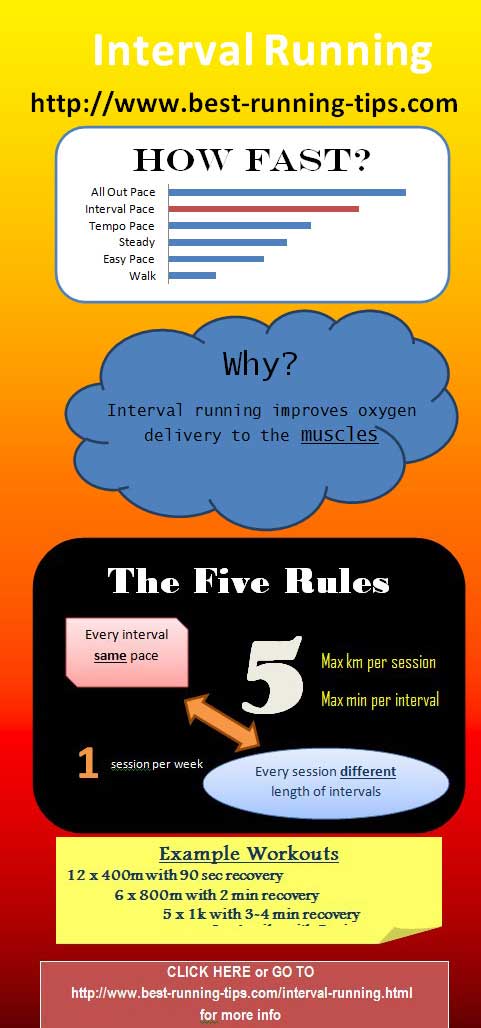
When first starting intervals in a running program, start with 30 seconds to 1 minute. Then build up from there. One rule to follow is that interval running workouts should change from one week to the next.
Some runners just do 400m intervals. And they do them every week. That's ok. But it is not the best. You don't want to condition your body to just getting used to doing 400s. You want a range of distances.
Key Training Rules for Intervals:
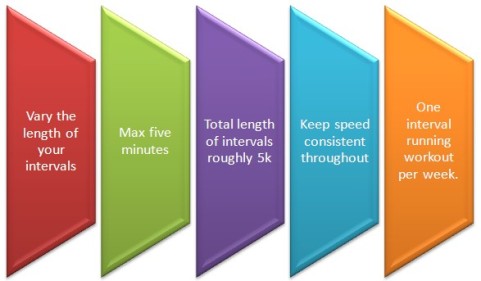
- Vary the distance from week to week; don't always do 400m intervals. Don't always do 800m intervals. Vary the distance.
- Make sure the intervals are a maximum of about five minutes in length. You can't do a 10 minute interval. It simply means you are going to slow down and it is not an interval session anymore.
- Make sure the total length of the speed workout is about 5k in length (just over 3 miles). Doing an interval running workout is taxing. Making the speed part of the workout much longer will simply make your intervals slower.
- Make sure the speed in the first interval is equal to the speed in the last interval. This is very important. Don't run the first interval like a madman, and then slow down by a few seconds or more every consecutive interval.
- Do one interval workout per week, max. When you are training for long distance running, your easy running, tempo running and goal pace running are way too important to sacrifice your time to too many intervals!
Fartlek Integration
Fartlek training offers a less structured alternative to traditional intervals. Instead of prescribed distances and recoveries, you vary pace based on how you feel and terrain features.Try "telephone pole fartlek" — run hard between every other set of poles, then recover to the next set. Or use hills, turns, or other landmarks to dictate your work periods.
Tempo-Interval Combinations
Advanced runners can combine interval work with tempo running in the same session. Try 2 × 10 minutes at tempo pace with 3 minutes recovery, followed by 4 × 2 minutes at interval pace.These combination sessions are demanding and should only be attempted by experienced runners with a solid training base. But they are fun and add a little variety to your training that will work well for you if you are not seeing much progression.
If you're looking for a comprehensive approach to speed training for runners, intervals are just one component of an effective program.
Interval training is just one piece of the puzzle. Your easy runs, tempo work, long runs, and recovery all play crucial roles in your development as a runner. Use intervals wisely — as a sharpening tool, not a foundation — and you'll see remarkable improvements in your running performance.
Frequently Asked Questions
Can I do intervals if I'm a beginner who's only been running for a few months?
You need a solid running base first — at least 3-4 months of consistent easy running, 3-4 times per week. Without that foundation, intervals are more likely to cause injury than improvement. Build your aerobic base with easy miles before adding any speedwork.
How do I know if I'm running at the right pace during intervals?
You should be breathing hard and feel like you couldn't hold this pace for more than a few minutes. It's faster than your lactate threshold but not an all-out sprint. Through practice, you'll learn to feel when you're pushing hard enough without going so fast that you can't complete all your reps.
What should I do during the recovery periods between intervals?
Easy jogging, not complete rest. The recovery should be at least as long as your work interval — if you run hard for 1 minute, jog easy for 1-2 minutes. This active recovery helps clear lactate while keeping your body ready for the next rep.
Why does my heart rate monitor seem off during short intervals?
Heart rate monitors lag behind your actual effort during quick changes in pace. For 30-60 second intervals, your heart rate doesn't have time to catch up to your actual intensity. Focus on perceived effort rather than the numbers on your watch for short intervals.
How long should I stick with beginner interval workouts before progressing?
Give yourself at least 4-6 weeks at each level before moving up. Your body needs time to adapt to the stress of speedwork. Most recreational runners can make huge gains just from consistent 30-second to 2-minute intervals — no need to rush into longer, harder sessions.
Some other pages you may like
About the author

Dominique de Rooij (Dom)
Advanced Running Coach certified by Athletics Australia with 20 years of writing about running and over a decade coaching runners — from first-timers to marathoners. Dom's beginner programs have guided thousands of runners and been praised above plans from Jeff Galloway, Hal Higdon, and Runner's World. Now over 50, Dom still loves trail running, parkrun, and the coffee after.
Free weekly coaching • Join 3,500+ runners
Train Smarter, Not Just Harder
Get your free guide when you join the BRT Coaching Letter
No spam, ever. Unsubscribe in one click, any time.
What's New?
-
Personalized Running Coaching - BRT | Run Smarter, Race Better
 Get a personalized running program built around your current fitness, goals, and schedule - not a generic app template. Choose from BRT Silver, Gold, or Platinum coaching with Dom, accredited running…
 -
Sample 4-Day Marathon Training Week: Base to Taper
A full 4-day-a-week marathon training schedule, phase by phase - base, build, peak, and taper - with named workouts and weekly mileage. -
Marathon Taper for a 10-12 Week Training Cycle
How to taper correctly on a compressed 10-12 week marathon plan - the right taper length, why standard advice doesn't fit, and the week-by-week structure.