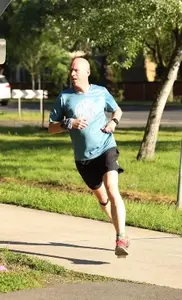
1.5 Mile Running Test: on Treadmill
I have been asked to run 1.5 miles as part of an entry test on a treadmill. The treadmill measures speed in km/hr which is 2.4km for 1.5 miles. What speed on the treadmill would I need to maintain to complete the test around 10 minutes or less? I don't want to misjudge the speed and fail.

Answer by Dom:
Hi there,
Thanks for your question about your 1.5 mile test. You're lucky — I'm not only a runner, but also a mathematician! It's interesting that you're focused on the speed conversion, as running 1.5 miles in 10 minutes is a reasonable challenge. You must be a pretty good runner already.
1. How to calculate the right treadmill speed
2. Smart pacing strategy for test day
3. Understanding different agency standards
4. Training approach to nail your target time
5. Common mistakes that cause test failures
1. How to calculate the right treadmill speed

In miles, that's 9 mph.
But here's the crucial part — don't set your treadmill to exactly 14.4km/hr. The treadmill takes time to reach your target speed, and you'll lose precious seconds during that ramp-up period.
Setting it to 14.6km/hr (9.1 mph) gives you a buffer. This accounts for the acceleration time and gives you a small cushion if you need to hop off briefly or adjust your footing.
If you're aiming for significantly under 10 minutes — say 9:30 — you'd need to maintain about 15.2km/hr (9.4 mph). That's a much more aggressive pace that requires serious fitness preparation.
If you'd rather have a plan built around your exact target and test date instead of adapting the framework above, I put together AceTheTest — a free tool that generates a personalised, day-by-day plan for hitting a specific 1.5 mile time. It handles the sequencing so you don't have to work it out yourself.
2. Smart pacing strategy for test day

Start conservatively for the first 30 seconds. Let the treadmill reach full speed while you find your rhythm. Don't panic if you feel like you're "behind" — you're setting yourself up for success.
From 0.5 miles to 1.0 miles, settle into your target pace. This is where you do the work. Your breathing should be hard but controlled. You should be able to grunt out single words if someone asked you a question.
The final 0.5 miles is where mental toughness wins. Your legs will feel heavy, your breathing will be labored, but the end is in sight. Focus on maintaining form rather than fighting the pace.
Never grab the handrails unless you're about to fall off. The moment you do, you're no longer running — you're assisted walking. Test administrators will fail you immediately for this.
3. Understanding different agency standards
Police academies typically require times between 12:00-15:30, depending on age and gender. Military branches are usually stricter — the Army's 1.5 mile standard for younger recruits hovers around 13:00-13:30.
Fire departments often have among the most demanding standards because of the physical nature of the job, with some requiring times close to 12 minutes or less.
Your 10-minute target suggests you're aiming for a competitive position or a physically demanding role. That's roughly a 6:40 mile pace, which puts you in excellent company.
If you're unsure about your specific requirements, contact your testing administrator directly. People sometimes train for the wrong standard and show up unprepared. Don't let that be you.
4. Training approach to nail your target time
Here's the thing about hitting 1.5 miles in 10 minutes — you need both the endurance to sustain the effort and the leg speed to hit that pace.Start with base building if you're not currently running regularly. Three to four runs per week, mostly easy pace, building up to 20-25 miles per week over 4-6 weeks works well.
Add tempo runs once you've established your base. Try 20-25 minutes at a "comfortably hard" effort — you should be able to speak in short phrases but not hold a conversation. This develops your lactate threshold, which is crucial for sustained speed.
Interval training becomes important as your test approaches. Try 6 x 400m at your goal pace (around 1:40 per 400m for a 10-minute 1.5 mile) with 90-second recovery jogs. This teaches your body the specific pace and builds confidence.
Don't neglect goal pace workouts. Two weeks before your test, do a 1-mile time trial at your target pace. If you can hold 6:40 pace for a mile, you'll have the speed to sustain it for 1.5 miles.
Check out a full range of running paces on the running workouts page.
5. Common mistakes that cause test failures
Here are the most common mistakes that cause test failures even when people have adequate fitness.Starting too fast is the classic error. Your first 0.25 miles should feel almost easy. If you're breathing hard in the first two minutes, you've blown your pacing and will struggle to recover.
Overthinking the treadmill is another trap. Some people get so focused on the display that they lose their natural running rhythm. Set your speed and trust it — look ahead, not down at the console.
Wearing new gear on test day is asking for trouble. Blisters, chafing, and equipment malfunctions can derail otherwise prepared candidates. Wear exactly what you've trained in, down to your socks and underwear.
Mental preparation matters more than people realize. Visualize your test beforehand. Know exactly what 10 minutes of hard effort feels like. The more familiar the discomfort, the better you'll handle it when it counts.
Finally, don't attempt this test without proper preparation. If you can't currently run a comfortable 2 miles, you're not ready for a 10-minute 1.5 mile test. For comprehensive guidance on how to prepare for a police fitness test, make sure you allow adequate training time. Respect the distance and the pace — they'll respect you back with a passing time.
Hope this helps. You've got the right mindset asking for specifics rather than just winging it. That attention to detail will serve you well on test day. Best of luck!
Some Other Pages You May Like
About the author
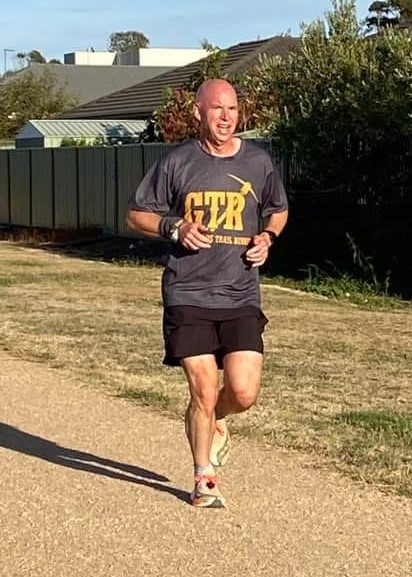
Dominique de Rooij (Dom)
Advanced Running Coach certified by Athletics Australia with 20 years of writing about running and over a decade coaching runners, including candidates preparing for the 1.5 mile test. Dom created AceTheTest, a training plan generator built specifically for the 1.5 mile test. Now over 50, Dom still loves trail running, parkrun, and the coffee after.
Stop Guessing. Get a Plan
Built for Your Test.
AceTheTest builds a personalised, day-by-day 1.5 mile training plan around your fitness, schedule and test date — free to start.
"I did it - even had time to spare!" - James, Ohio
Free preview included, no card required. Upgrade any time for the full plan.
What's New?
-
Personalized Running Coaching - BRT | Run Smarter, Race Better
 Get a personalized running program built around your current fitness, goals, and schedule - not a generic app template. Choose from BRT Silver, Gold, or Platinum coaching with Dom, accredited running…
 -
Sample 4-Day Marathon Training Week: Base to Taper
A full 4-day-a-week marathon training schedule, phase by phase - base, build, peak, and taper - with named workouts and weekly mileage. -
Marathon Taper for a 10-12 Week Training Cycle
How to taper correctly on a compressed 10-12 week marathon plan - the right taper length, why standard advice doesn't fit, and the week-by-week structure.