Increase Stamina for Air Force Physical Test
Hi sir, I am Deepak. I want to join the Air Force. Presently I am 18 years old, height 163cm, weight 62kg.
To clear the physical test, I have to cover 1600m in 6.30 min. At the moment I am covering just 600m.
I have only 16 days left for practice.
Please help me. Is there something in my diet which can help me in running?
– Deepak, Chandigarh, India
Answer by Dom:
Hi Deepak, thanks for writing in. I want to be straight with you: sixteen days is a very short window, and the gap between 600m and 1600m in 6:30 is significant. Running 1600m in 6:30 requires sustaining 4:04 per kilometre — a demanding pace. I'd normally want three months to prepare someone for that standard from your starting point. So my first question is: if you don't clear the test this time, is there an opportunity to take it again at a later date? If yes, use these sixteen days to build momentum and treat the first attempt as valuable experience, not a final chance. If this is truly your only shot, we go all-in and give it everything we have. Either way, here's the plan:
- Cover the distance first — run/walk your way to 1600m
- Add speed and train the full test
- Smart choices before and on test day
Cover the Distance — Run/Walk Your Way to 1600m

Right now you can run 600m. The first task is to be able to cover 1600m — even if you walk some of it. You cannot work on speed until you can cover the distance.
Start with a run/walk approach. In your first training session, try this: run 1 minute, walk 1 minute, and repeat for 25–30 minutes total. Keep the running genuinely easy — not a sprint, just a controlled jog that you can sustain. The goal is to accumulate time on your feet and build your aerobic system from the ground up.
Week 1 (days 1–7): Run 1 minute, walk 1 minute, repeat for 25–30 minutes. Do this every day, or every other day with a rest day in between — listen to your body. If your legs feel sore, take a rest day. Going from no exercise to daily running too quickly exposes you to injury, and an injury now would end your preparation completely.
Week 2 (days 8–13): Extend the running intervals. Run 2 minutes, walk 1 minute, repeat. By day 12 or 13, try to run the full 1600m at a slow, steady pace without stopping. Even if it takes 9 minutes, getting around the distance non-stop is a significant achievement at this stage. Keep the running on softer surfaces where possible — grass or a dirt track — to reduce the stress on your legs.
Also use cross-training on some non-running days. A 60-minute brisk walk or bike ride gives your aerobic system additional work without the same impact stress. Check out the Fartlek page for a primer on adding speed bursts into your runs once you have the basic distance covered.
Now Live - Built by Dom from best-running-tips.com
Get a Training Plan Built Around Your Test
AceTheTest turns your fitness, schedule and test date into a personalised day-by-day plan — free to start, in under 60 seconds.
Start Building My Plan →Code ACETHETEST20 gets you 20% off any upgrade.
Add Speed and Train the Full Test

Once you can cover 1600m — even slowly — you need to add some faster running to get your pace down. The Air Force test is 6:30, which means roughly 97 seconds per 400m lap. That's a fast pace to sustain for four laps when you're currently only completing 600m. But you can train your body to move faster in short bursts.
Alternate your easy run/walk sessions with a Fartlek session: run for 30 seconds fast, then 30 seconds easy, and repeat ten times. "Fast" here means genuinely hard — 80–90% effort. You can do this within your 25-30 minute session two or three times per week. It trains your legs to turn over more quickly and gets your body used to effort beyond easy jogging.
The Air Force physical test also includes 10 push-ups, 10 sit-ups, and 20 squats. Don't neglect these. Practice them daily — they're achievable standards, but you need to have done them in training so they don't drain you on test day. Aim to get comfortable completing all three components in sequence, as you'll need to do them alongside the run.
Smart Choices Before and on Test Day

The day before your test, do not run. A gentle 30-minute walk is fine — it keeps the blood flowing without adding fatigue. No speed work, no hard efforts, nothing that will leave you with sore legs tomorrow morning.
On test morning, eat a light meal two hours before — rice and dal, or roti with something simple. Nothing heavy. Stay hydrated but don't overdrink water right before running. Warm up with a five-minute walk followed by a light jog for two minutes.
Your race-day strategy matters enormously, Deepak. The biggest mistake in a 1600m test is going out too fast in the first 200m. If you sprint the opening lap and blow up in the third, you'll be walking the finish while fresh runners pass you. Instead, start at a controlled effort — uncomfortable but sustainable — and aim to hold it. A consistent 4:04/km across all four laps is far more achievable than 3:30/km for the first lap and 5:00/km for the last three.
On the diet question: at 62kg and 163cm, your weight is not a problem. And sixteen days is too short a window for dietary changes to make any meaningful impact on your performance. Eat well — fresh food, enough protein, enough carbohydrates to fuel the training load. There is no shortcut here. The improvement will come from the training, not from a diet change.
Give it everything you have in these sixteen days, Deepak. And if this attempt doesn't go as you hope, let it be the start of your preparation for the next one — not the end of the dream.
Best of luck.
Kind regards,
Dom
Some Other Pages You May Like
About the author
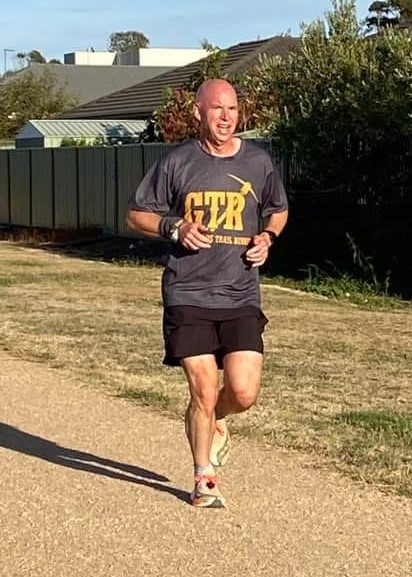
Dominique de Rooij (Dom)
Advanced Running Coach certified by Athletics Australia with 20 years of writing about running and over a decade coaching runners — from first-timers to marathoners. Dom's beginner programs have guided thousands of runners and been praised above plans from Jeff Galloway, Hal Higdon, and Runner's World. Now over 50, Dom still loves trail running, parkrun, and the coffee after.
Stop Guessing. Get a Plan
Built for Your Test.
AceTheTest builds a personalised, day-by-day 1.5 mile training plan around your fitness, schedule and test date — free to start.
"I did it - even had time to spare!" - James, Ohio
Free preview included. Ready to go further? Use code ACETHETEST20 for 20% off any upgrade.
What's New?
-
Personalized Running Coaching - BRT | Run Smarter, Race Better
 Get a personalized running program built around your current fitness, goals, and schedule - not a generic app template. Choose from BRT Silver, Gold, or Platinum coaching with Dom, accredited running…
 -
Sample 4-Day Marathon Training Week: Base to Taper
A full 4-day-a-week marathon training schedule, phase by phase - base, build, peak, and taper - with named workouts and weekly mileage. -
Marathon Taper for a 10-12 Week Training Cycle
How to taper correctly on a compressed 10-12 week marathon plan - the right taper length, why standard advice doesn't fit, and the week-by-week structure.