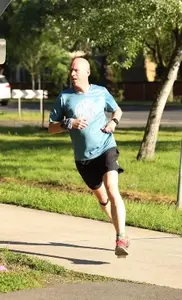
What is the Right Running Technique?
by Himja
(India)

I have started using your Beginner Running Program 3 and I have a question about my running technique. I've never run before. I read on many running sites that the right way to run is that your heel should touch the ground first and then the ball of your feet, but when I run naturally, it's my ball of my feet that touches the ground first. When I consciously try to run with my heels hitting the ground, I feel pain in my ankle, knees, and calfs. So, is it okay if I continue running with the ball of my feet hitting the ground first?
Answer by Dominique:
Hi Himja,
Thank you for your question! I'll break my response down as follows:
1. What's your natural running technique?
2. The right running technique is all in the upper body
What's your natural running technique?

The technique that feels most natural to you is "forefoot striking." Interestingly, forefoot striking is very common among experienced runners. Many believe that it helps to reduce the potential for injury, provided your body is well-conditioned for it.
There may be some benefits to heel-striking as well. Some sources say it uses less energy, but puts more strain on the knees. On the flip side, forefoot striking can be quicker and agile but puts more stress on your calf muscles and Achilles tendons.
When it comes to heel-striking vs forefoot-striking I am very much in the camp of "if it ain't broken, don't fix it". I have seen running theory evolve over time and I am not convinced there is one right answer. And it is hard to change this part of your technique.
So, is it okay that you continue running with the ball of your feet hitting the ground first? Absolutely! Our bodies are unique and running style is part personal preference and part anatomy. If landing on the balls of your feet first is what feels best for you, stick with it. It might just be a natural running style for your body.
I also very much believe that you need to listen to your body. When changing your technique, your body was trying to tell you something. Keep listening to your body as you train. Discomfort is your body's way of letting you know something isn’t quite right. So, listen to the signs.
The Right Running Technique is All in the Upper Body

Let's first think about what we do with your head, chest and arms. Then the rest will follow.
Right running technique: head and chest
When I tell you to "run proudly", what image does that conjure up? Is your head drooping and hanging forward or is your head straight? Is your chest out a little bit? Running with your head held high and chest out helps create energy and it allows your breathing to function optimally. So, firstly, focus on running with pride.
Right running technique: arms
Secondly, the way you move your arms is pretty important.
The first mistake some people make is to not move their arms at all or not enough. Your arms actually help you move forward.
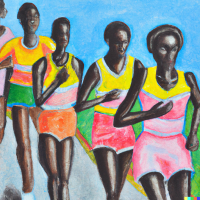
Turning it around, if this is currently an issue for you, just focusing on your arm swing being straighter, will help straighten out your stride. It can do wonders for your running technique.
So, next time you go for a run, just think to yourself run with pride and straight arm swing and you'll be doing a lot of things right.
Hoping this helps and best of luck with Beginners Running Program 3, Himja!
Kind regards,
Dominique
Free weekly coaching • Join 3,500+ runners
Train Smarter, Not Just Harder
Get your free guide when you join the BRT Coaching Letter
***EZINE show_email_label="1"
show_name_label="1"
show_name_field="1"
show_gdpr_fields="1"
orientation="horizontal"
alignment="left"
button_text="Send Me the Letter"
email_label="Your email address"
name_label="First name (optional)"
gdpr_age_consent_label="I am at least 16 years of age."
gdpr_privacy_policy_consent_label="I have read and accept the <>."
gdpr_information_purpose_label="I understand that you will use my information to send me a newsletter."
gdpr_privacy_policy_link_label="privacy policy"
gdpr_privacy_policy_link="/privacy-policy.html" ***
No spam, ever. Unsubscribe in one click, any time.
What's New?
-
Personalized Running Coaching - BRT | Run Smarter, Race Better
 Get a personalized running program built around your current fitness, goals, and schedule - not a generic app template. Choose from BRT Silver, Gold, or Platinum coaching with Dom, accredited running…
 -
Sample 4-Day Marathon Training Week: Base to Taper
A full 4-day-a-week marathon training schedule, phase by phase - base, build, peak, and taper - with named workouts and weekly mileage. -
Marathon Taper for a 10-12 Week Training Cycle
How to taper correctly on a compressed 10-12 week marathon plan - the right taper length, why standard advice doesn't fit, and the week-by-week structure.