Want to Run 5k in: 26.5 Minutes
I am starting back to running after about a decade-long break. I've never been particularly fast, but am building stamina. I'm up to 11 km long runs once a week (increasing 10%) each week. My actual goal is to be able to get faster. I'm training for a potential job that requires that I run 5k in 26.5 min or less. I'm doing 5k in about 40 minutes right now, because I actually cannot run the whole distance yet. Any advice or tips on how to get faster but still build stamina so I can run for 30+ minutes at a time? Thank you in advance. Simone

Thanks for your 5k running question. Great to hear you're getting back into running after more than a decade off. And your long run is already at a fantastic length — 11k is really solid work for someone getting back into running.
You're looking at a significant improvement from 40 minutes to 26.5 minutes for 5k. That's dropping from about 8:00 per kilometre to 5:18 per kilometre. It's absolutely doable, but you'll need a structured approach and realistic timeline.
Here's how to approach this:
- Build continuous running first with run-walk progression
- Add one weekly speed session to improve pace
- Understand the realistic timeline for your goal
- Plan your training structure around the fitness test
- Monitor progress and adjust training intensity
1. Build continuous running first with run-walk progression

Since you're returning to running after a long break, beginner running tips using run-walk intervals could really help. You're further advanced than starting from scratch. But consider using these principles to get you running continuously.
An hour's workout could be something like 10 x 5 min run with 1 min walk. You can play around with length of your workouts, how much running and how much walking. Just build it up slowly, increase the length of running a bit each and every week.
The key principles are: run slowly at a conversational pace, slow build-up of running time, and gradual but consistent progress. When it comes to running, slow and steady always wins the race.
Dozens and dozens, possibly hundreds of runners complete this type of progression successfully. Even those, especially those, who didn't think they had it in them to run 30 minutes non-stop. Take one runner who came to me in a similar situation — she was training for police academy fitness requirements and could only run for 3-4 minutes at a time. But just chipping away at it, day after day, week after week, she built up to running her full test distance and passed with time to spare. The consistency is what makes all the difference.
2. Add one weekly speed session to improve pace

Assuming you're running 3-4 times a week, it'll be great to have one long run, one or two easy runs, and one faster session. This can be a tempo running session or a faster interval session.
If you're new to speed work, fartlek training is an excellent place to start — here's why it works so well for runners like you. What makes fartlek great is that you can incorporate bouts of faster running in your workout at will. You could decide to run faster to the next lamppost, or to the end of the street, or some other landmark.
You could happily have a session where you speed up 5-10 times during a 30-40 minute run. It's very unstructured, and that doesn't work for everybody, but it's a fun way to start with speedwork.
As you progress, you can make your workouts more structured. Something like 6 x 3 minutes at your target 5k pace with 2-minute recovery walks. The main idea is to run at different paces — each type of workout stimulates your body in different ways.
3. Understand the realistic timeline for your goal
Let's be honest about what you're asking your body to do. You're currently at 8:00 per kilometre and want to reach 5:18 per kilometre. That's a massive improvement — we're talking about nearly 3 minutes per kilometre faster.In my experience coaching runners, most people can expect to shave off about 10-15 seconds per kilometre every 6-8 weeks if they're consistent with their training. At that rate, closing a 2:42 per kilometre gap works out to roughly 15 to 30 months of solid, consistent training — nearer 15 months if you're improving at the faster end of that range, longer if progress comes slower.
If your job application has a specific deadline, you need to know this upfront. Too many people set unrealistic expectations and burn themselves out trying to achieve impossible timelines.
That said, you've got some advantages. You're already building a good aerobic base with those 11k runs. Once you can run 5k continuously, you'll immediately see your time drop significantly — probably into the 35-minute range just from not having to walk.
Your fitness will improve quickly in the first few months because you're returning to running rather than starting from zero. But the final push from, say, 30 minutes to 26.5 minutes will be the hardest part.
4. Plan your training structure around the fitness test
If this is for police or military recruitment, you'll likely have a specific test date. Work backwards from that date to plan your training phases.Phase 1 (8-12 weeks): Focus entirely on building continuous running. Your goal is to run 5k without walking, even if it takes 35-40 minutes. Don't worry about speed yet.
Phase 2 (8-12 weeks): Now add one speed session per week while maintaining your base. Start with fartlek sessions, progress to structured intervals. Aim to get your 5k time down to 30-32 minutes.
Phase 3 (6-8 weeks): This is your sharpening phase. Two quality sessions per week — one tempo run at slightly slower than 5k pace, one interval session at target pace or faster. This is where you chase those final few minutes.
Consistency beats intensity every time. Missing a week of training sets you back more than any single hard workout can push you forward.
You'll want to run 4-5 times per week during phases 2 and 3. More than that and you risk injury, which would destroy your timeline completely.
Because you're working toward a specific distance goal, 2 mile running tips might also be valuable since the fitness test format is similar to that distance.
5. Monitor progress and adjust training intensity
Test yourself regularly, but not obsessively. A 5k time trial every 4-6 weeks works well to track progress. This gives you enough time to see meaningful improvement without turning every run into a race.Keep a simple training log — just distance, time, and how you felt. You'll start to see patterns in your good and bad days, which helps you understand what training intensity works for your body.
If you're not seeing the progress you need, don't just run harder. Usually the issue is consistency, not intensity. More runners achieve breakthrough performances by adding an extra easy run per week than by hammering themselves with intervals.
Watch for signs of overtraining: persistent fatigue, elevated resting heart rate, or times getting slower despite harder training. If this happens, take a few easy days. Your fitness won't disappear in a week, but it can disappear if you get injured or burned out.
The closer you get to your test date, the more important it becomes to stay healthy rather than chase those last few seconds. A fit, healthy runner who's 30 seconds short is better than an injured runner who can't even take the test.
As your endurance improves and you're running longer distances consistently, 10k running tips can be helpful for building that aerobic base even further.
These ideas should get you on your way and help you achieve your goal of running 5k in 26.5 minutes! If you're bound by a certain time limit and need more specific, targeted help, there are running coaching services available that can provide more detailed, personalised support for your specific timeline and circumstances.
Best regards,
Dominique
Some Other Pages You May Like
Want to Improve My 5k Race Speed
My 5k Running Time
Want a Sub-22 Min for 5k
Want to Run 5k in 22 Minutes – What Should My Third Run Be?
5k racing
5k Training Plan
5k Pace Chart
Training for a Half Marathon
Home > Running Races > 5k > How to Improve Your 5k > Want to Run 5k in 26.5 Minutes

About the author
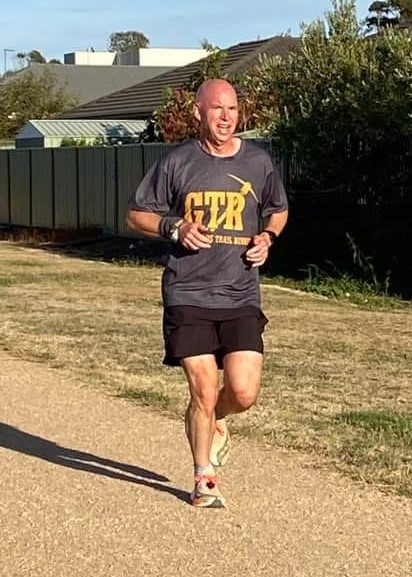
Dominique de Rooij (Dom)
Advanced Running Coach certified by Athletics Australia with 20 years of writing about running and over a decade coaching runners — from first-timers to marathoners. Dom's beginner programs have guided thousands of runners and been praised above plans from Jeff Galloway, Hal Higdon, and Runner's World. Now over 50, Dom still loves trail running, parkrun, and the coffee after.
Free weekly coaching • Join 3,500+ runners
Train Smarter, Not Just Harder
Get your free guide when you join the BRT Coaching Letter
No spam, ever. Unsubscribe in one click, any time.
What's New?
-
Personalized Running Coaching - BRT | Run Smarter, Race Better
 Get a personalized running program built around your current fitness, goals, and schedule - not a generic app template. Choose from BRT Silver, Gold, or Platinum coaching with Dom, accredited running…
 -
Sample 4-Day Marathon Training Week: Base to Taper
A full 4-day-a-week marathon training schedule, phase by phase - base, build, peak, and taper - with named workouts and weekly mileage. -
Marathon Taper for a 10-12 Week Training Cycle
How to taper correctly on a compressed 10-12 week marathon plan - the right taper length, why standard advice doesn't fit, and the week-by-week structure.