Altitude Training Masks Do They Actually Work?
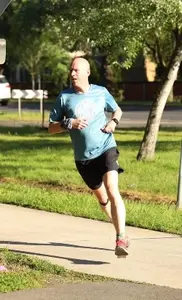
No: an altitude (elevation) training mask does not simulate high altitude. It only restricts how much air you can pull in through a small valve, while real altitude means every breath holds fewer oxygen molecules because the air pressure is lower, so the two train your body very differently. Below: how the mask works, what the research shows, how a mask compares with real altitude and a hypoxic tent (a sleeping tent with low-oxygen air), my own experience training at altitude, my verdict, and safety guidance if you still want to use one.Spend months strapped into a mask expecting altitude gains and you may be training the wrong thing entirely. Jason, a triathlete already wearing one for both running and cycling, wrote in asking whether it carried a real health risk or whether he was "just an idiot who loves torture." It is a fair question, and the answer is worth knowing before your next session.
by Jason
(Louisville, KY)
How the Mask Actually Works (and What Real Altitude Does Instead)

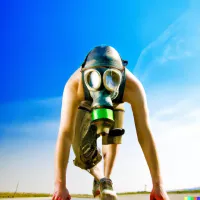
An altitude mask works by narrowing the airway through an adjustable valve. That forces your breathing muscles — your diaphragm and the muscles between your ribs — to work harder to move the same amount of air. That's real work. It's genuine airflow restriction, and your lungs feel every second of it.
Real altitude works through a completely different mechanism. Lower barometric pressure means every lungful of air up there contains fewer oxygen molecules — full stop. That drop in oxygen is what triggers the actual adaptations altitude training camps are built around: more red blood cells, and a genuine improvement in how much oxygen your blood can carry.
Here's the problem for the mask. It cannot lower barometric pressure. It cannot reduce the amount of oxygen in the air you're breathing. So it cannot trigger that adaptation — no matter how hard the breathing feels.
What the Research Actually Shows

The evidence for a genuine maximal oxygen uptake (VO2 max) or endurance benefit from altitude masks is inconclusive at best. Several studies comparing masked and unmasked runners doing the same training protocol found no significant difference in VO2 max between the two groups.
Where masks do show a measurable effect, it's in respiratory muscle strength and ventilatory threshold — a real training target, but a different one to aerobic capacity. And it doesn't reliably carry over to race performance.
One study actually found masks reduced peak velocity during strength and power work. That matters directly if hill sprints or strength sessions are part of your own training — a mask may be working against you there, not for you.
The studies that measured blood markers such as hemoglobin and hematocrit found no meaningful change from wearing a mask, unlike the red blood cell gains real altitude produces. That's not surprising — the mechanism that triggers those changes, reduced oxygen partial pressure, simply isn't present when you strap on a mask.
Mask vs. Real Altitude vs. a Hypoxic Tent
If you genuinely want the altitude-training effect, here's how your three real options compare.
| Option | What It Actually Changes | Real Oxygen-Partial-Pressure Reduction? | Cost & Accessibility | Who It's Realistically For |
|---|---|---|---|---|
| Elevation/Altitude Mask | Restricts airflow, trains the breathing muscles | No | Cheap and available to anyone | Anyone who wants respiratory muscle work — not altitude prep |
| Altitude Training Camp | Real reduced oxygen, drives red blood cell adaptation | Yes | Expensive — travel, accommodation, weeks of time | Competitive athletes with the budget and time to spend at elevation |
| Hypoxic (Altitude) Tent | Simulates reduced oxygen while you sleep or train indoors | Yes | Expensive equipment, ongoing running costs | Serious athletes with the budget who can't relocate to altitude |
A mask is the only one of these three within most recreational runners' reach — it's cheap, and you can buy one today. But it's also the only one of the three that doesn't do the thing people buy it for.
My Experience Training at Real Altitude
I lived and trained at real altitude for six months, on a student exchange to Colorado State University in Fort Collins, CO. The first few weeks of running there were genuinely hard — my legs and lungs both struggled with a distinctly thinner supply of oxygen.
It took weeks — not one session — before my body adapted. That's the point worth sitting with: real adaptation comes from living at reduced oxygen pressure around the clock, for weeks on end. A mask gives you 45 minutes of restricted airflow during a single run. That's a scale mismatch no mask can close.
Should You Still Use One? A Coach's Verdict
If your goal is genuine altitude preparation for a race or a trip at elevation, a mask won't get you there. Nothing short of time spent at real altitude — or a hypoxic tent, if you have access to one — will do that job.
If your goal is respiratory muscle strength as its own training target, that's a legitimate reason to use one. But choose it for that reason. Don't market it to yourself as altitude prep, because it isn't.
For most recreational runners, the better use of that same time and discomfort tolerance is proven aerobic work. If a real VO2 max improvement is what you're after, put the effort into interval training, which reliably improves VO2 max instead.
If You Do Use One: Safety Guidance
I'd just like to leave you with a few words of caution. A few things to keep in mind when running with a mask:
- Start slowly and build up the intensity gradually.
- Listen to your body, and rest when you need to.
- Stay hydrated.
- Watch for heat exhaustion and heatstroke — a mask traps heat around your face, so the risk is higher than usual.
- Stop and remove the mask at any sign of dizziness or genuine breathing distress.
- Beware training at a lower intensity and volume than you would unmasked — it's harder to sustain effort with one on, and worn indiscriminately across a whole training block, that can quietly undercut the pace and mileage that actually build fitness.
I hope that clears up what a mask can and can't do for you. For further training advice, have a look at my Running Training section.
Frequently Asked Questions
Does an altitude or elevation training mask actually simulate high altitude?
No — it restricts airflow through a valve, not the oxygen content of the air; real altitude lowers barometric pressure and the number of oxygen molecules per breath, which a mask can't replicate.
Do altitude masks improve VO2 max or running performance?
The evidence is inconclusive at best; where a benefit shows up it's usually in respiratory muscle strength, not aerobic capacity, and it doesn't reliably transfer to race performance.
Is it safe to train for a triathlon or run using a mask like this, the way Jason (Louisville, KY) did?
There's no established serious health risk for a healthy adult using one in short, controlled sessions, beyond added perceived exertion and heat retention — the bigger issue isn't safety, it's that it won't deliver the altitude-simulation benefit he was hoping for.
Do elite runners train with altitude masks?
No — elite athletes use real altitude camps or hypoxic tents, because those actually lower oxygen partial pressure; a mask doesn't, which is exactly why it hasn't caught on at that level despite being cheap and available.
What should I do instead if I want an altitude-training effect?
For most recreational runners, real altitude camps and hypoxic tents aren't accessible or affordable, so the honest answer is to skip the mask and put the same effort into proven training — interval sessions are what reliably move VO2 max for readers without altitude access.
Some Other Pages You May Like
About the author

Dominique de Rooij (Dom)
Advanced Running Coach certified by Athletics Australia with 20 years of writing about running and over a decade coaching runners, from first races to marathons. Dom created PlanMyRace, a training plan generator for any race from 1500m to the marathon. Now over 50, Dom still loves trail running, parkrun, and the coffee after.
Stop Guessing.
Train for Your Best Race.
PlanMyRace builds a personalised, week-by-week training plan for any race from 1500m to the marathon, around your race date, your current fitness and the week you actually have.
Get My Free Plan →No credit card needed. Your full first week is free.
What's New?
-
Personalized Running Coaching - BRT | Run Smarter, Race Better
 Get a personalized running program built around your current fitness, goals, and schedule - not a generic app template. Choose from BRT Silver, Gold, or Platinum coaching with Dom, accredited running…
-
Sample 4-Day Marathon Training Week: Base to Taper
A full 4-day-a-week marathon training schedule, phase by phase - base, build, peak, and taper - with named workouts and weekly mileage. -
Marathon Taper for a 10-12 Week Training Cycle
How to taper correctly on a compressed 10-12 week marathon plan - the right taper length, why standard advice doesn't fit, and the week-by-week structure.