Best Running Pace for an 18-Minute 3 Mile: Your 6-Month USMC PFT Plan
I'm in the Marine DEP and leave for bootcamp in 6–7 months. I need to run a sub-18 minute 3 mile for a perfect PFT score. I've been running about 3 weeks and improved from 26 minutes to 24:30, but my right lower leg is acting up — I think shin splints. My questions: am I increasing pace too quickly? Will long slow runs at 9 min/mile help my 3-mile pace? Should I keep pushing the faster 3-mile pace or do long distance? And will weight lifting help?
– Jonathan, Cerritos CA
Answer by Dom: Jonathan, you've improved by 90 seconds in three weeks — that's encouraging, but the shin pain is your body telling you to slow down before you do some real damage. The good news is that you have six months, which is a perfectly sensible amount of time to build from where you are now to a sub-18 3-mile — if you do it in the right order. Here is exactly what I'd recommend.
- Your pace target — and the shin splints problem
- The 6-month training progression
- Weight training alongside running
Your Pace Target and the Shin Splints Problem


Sub-18 minutes for 3 miles means averaging exactly 6:00 per mile. You're currently running 3 miles in 24:30, which works out to roughly 8:10 per mile. That's a gap of 2:10 per mile — significant, but absolutely closeable in 26 weeks with a sensible progression. I've seen runners make larger improvements in that time frame when they train intelligently rather than just grinding.
Shin splints are almost always a case of "too much, too soon." Three weeks of running, rapidly increasing pace on every session — that is the textbook cause. The tissue along the front of your lower leg hasn't had time to adapt to the repeated loading. Repeatedly timing your 3-mile at maximum effort is exactly the pattern that causes this injury and keeps it going.
Here is what to do right now:
- Drop to three runs per week for the next two weeks, and keep all three at an easy, comfortable pace — no racing in training.
- Do 3 sets of 15 single-leg calf raises daily. This strengthens the calf and the connective tissue that supports the shin. It's one of the most effective preventive and rehabilitative exercises for this type of pain.
- If the pain is sharp or worsening, rest completely for 5 to 7 days before starting again. Mild soreness that fades within a few minutes of starting a run is usually acceptable. Sharp pain — stop immediately.
- If the pain does not improve within two weeks, see a physiotherapist. Stress fractures present very similarly to shin splints, and they need a different response.
The 6-Month Training Progression

With six months available, you can build this in three distinct phases. Each phase does a specific job, and skipping ahead to the next one too early is the most common mistake runners make when preparing for a timed fitness test.
Phase 1 — Base building (weeks 1–8): Four easy runs per week at 9:00 to 9:30 per mile. Build your total weekly mileage slowly — aim to add no more than 10 percent per week — until you reach 25 to 30 miles per week. Do not time your 3-mile during this phase. It will feel slow. That is correct. You are building the capillary networks and aerobic engine that will power your speed later. Long slow runs at 9:00/mile absolutely do help your 3-mile pace — they mean that 3 miles at a fast pace becomes a much smaller ask on the engine. Build your long run to 6 to 8 miles by the end of this phase. See the base running page for more on why this foundation matters, and the increasing mileage safely page for how to build volume without getting hurt again.
Phase 2 — Tempo phase (weeks 9–18): Add one weekly tempo run to your schedule — a sustained 20 to 25 minutes at a "comfortably hard" pace, roughly 7:00 to 7:15 per mile. Keep three easy runs. You'll start to feel your 3-mile pace drop — now is the time to do a monthly time trial to measure progress. By week 18, you should be running 3 miles in the 21 to 22 minute range. Start adding tempo running to your understanding of the work.
Phase 3 — Race prep (weeks 19–26): Replace one easy run with a weekly interval session — 6 repetitions of 800 metres at 5:50 per mile pace with 90 seconds of easy jog recovery between each. Keep the tempo run. Do a race-simulation 3-miler every three weeks, targeting negative splits: first mile at 6:10 to 6:15, second mile at 6:00, final mile at 5:45 to 5:50. That pacing strategy is the most reliable route to a sub-18 result on PFT day.
A well-structured plan like Daniels' Running Formula has training templates specifically for 5k-distance events that map this type of periodisation in precise detail — worth looking into once you're through the base phase.
Weight Training Alongside Running

Weight training absolutely has a place alongside this programme — and it's worth noting that the USMC PFT includes pull-ups and crunches alongside the 3-mile run, so you need to be lifting anyway. Here is how to make the two work together rather than against each other.
For leg strength and running performance, focus on:
- Compound lower-body lifts: squats and deadlifts — the foundation of lower-body power
- Single-leg work: lunges and Bulgarian split squats — these address muscle imbalances and build the unilateral strength that running demands
- Daily calf raises: especially important while the shin splints are resolving
- Core work: planks and dead bugs rather than endless crunches — a stable core means less wasted energy in your running stride
- Upper body: pull-ups, rows, bench press — all relevant to the PFT score and to keeping your running posture solid over the final mile
Work in the 5 to 10 rep range with heavier weights — you're building strength, not muscular endurance. Your legs need to be powerful, not just fatigue-resistant.
Critically: schedule your weight sessions on easy run days, never on the same day as an interval or tempo session. Trying to run hard intervals and squat heavy on the same day increases injury risk and blunts the adaptation from both sessions. Keep the hard days hard, the easy days easy, and lift in between.
Six months is a genuine runway, Jonathan. Sort the shin splints first — two weeks of sensible running costs you nothing in the long run. Then build properly, phase by phase, and you'll arrive at boot camp ahead of where you need to be.
Kind regards,
Dom
Frequently Asked Questions
What is the target pace per mile for a sub-18 minute 3-mile USMC PFT?
Sub-18 minutes for 3 miles requires an average of exactly 6:00 per mile. A sensible race strategy is to go out at 6:10 to 6:15 for the first mile — controlled, not flat-out — hit 6:00 for mile two, then push everything you have in the final mile. Aim for 5:45 to 5:50 on that last mile and you'll finish comfortably under 18:00.
How long should I rest with shin splints before running again?
With mild shin splints, a 5 to 10 day break from running combined with daily calf raises usually allows a pain-free return. If the pain is sharp, or if it doesn't ease within two weeks, see a physiotherapist — stress fractures present very similarly and need a different approach entirely.
What is a good race strategy on PFT day for a sub-18 3-mile?
Start the first mile at 6:10 to 6:15 per mile — it will feel almost too easy. Hit mile 2 at 6:00. Then push everything you have on the final mile, aiming for 5:45 to 5:50. Negative splits are the most reliable route to a PFT personal best and prevent the blowup that happens when runners go out too hard in mile one.
Can I do interval training and weight lifting on the same day?
I'd avoid it. Interval sessions are demanding enough on their own — adding heavy lower-body work the same day increases injury risk and blunts the adaptation from both sessions. Schedule lifting on easy run days instead, and you'll get the benefits of both without the accumulated fatigue.
Some Other Pages You May Like
About the author
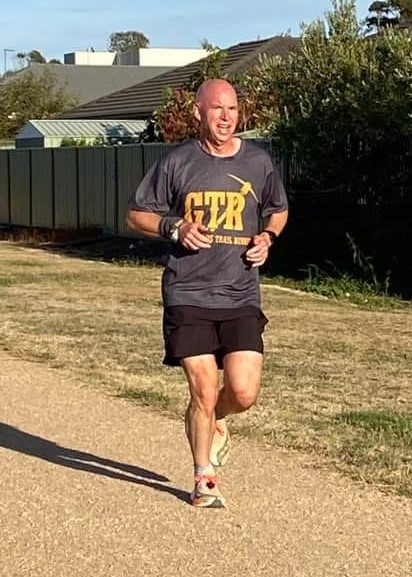
Dominique de Rooij (Dom)
Advanced Running Coach certified by Athletics Australia with 20 years of writing about running and over a decade coaching runners — from first-timers to marathoners. Dom's beginner programs have guided thousands of runners and been praised above plans from Jeff Galloway, Hal Higdon, and Runner's World. Now over 50, Dom still loves trail running, parkrun, and the coffee after.
Free weekly coaching • Join 3,500+ runners
Train Smarter, Not Just Harder
Get your free guide when you join the BRT Coaching Letter
No spam, ever. Unsubscribe in one click, any time.
What's New?
-
Personalized Running Coaching - BRT | Run Smarter, Race Better
 Get a personalized running program built around your current fitness, goals, and schedule - not a generic app template. Choose from BRT Silver, Gold, or Platinum coaching with Dom, accredited running…
 -
Sample 4-Day Marathon Training Week: Base to Taper
A full 4-day-a-week marathon training schedule, phase by phase - base, build, peak, and taper - with named workouts and weekly mileage. -
Marathon Taper for a 10-12 Week Training Cycle
How to taper correctly on a compressed 10-12 week marathon plan - the right taper length, why standard advice doesn't fit, and the week-by-week structure.