Advanced Marathoning Book Review - If You Want To Do More Than Finishing a Marathon
Short answer: Advanced Marathoning by Pfitzinger and Douglas is the book for runners chasing a real marathon time goal, not just a finish — it's less useful if this is your first marathon. Below: what's covered in each chapter block (training and periodization, recovery and tapering, race-day strategy, the actual 12- and 18-week programmes), who the book suits, and a note on the newer edition.There is a world of difference between running and racing a marathon.
Advanced Marathoning by Pete Pfitzinger and Scott Douglas is not about "just" finishing a marathon — even though that is a major accomplishment in itself. It's about running your best marathon yet. I'd recommend it to you if that's genuinely your goal.
This is not the right book for every runner. I'll be direct about that further down. But for the runner chasing a real time goal, it's one of the most useful books on my shelf.
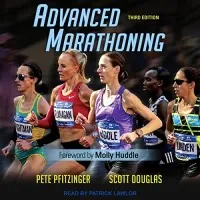
If you're aiming for your best marathon — not just a finish — this book is the one I'd put in your hands first.
I'd also argue it's worth reading for any serious runner, because it covers sound basic training principles alongside the advanced material the title promises.
So, why do I rate Advanced Marathoning so highly as a book about racing marathons? In short:
- Written by marathon experts Pfitzinger and Douglas
- Covers all aspects of marathoning
- Solid, well-structured running programmes
- Real-world perspectives throughout

Contents
The book contains eleven chapters. Chapters eight to eleven are predominantly running programmes.Chapter 1 to 3 - The Basics
The first chapter explains the concept of "advanced marathoning" and sets out what the rest of the book covers.The second chapter gets straight into marathon running training. It tells you what your body actually needs to race a marathon, which systems are being trained, and how that translates into your required training regime.
Two sections stand out here: "When are long runs too long" and "Increasing mileage while minimising the risks of breakdown." There's also a chart with sample long run paces. If you've ever done a long run that left you flat for a week afterwards, this chapter explains exactly why — and how to build up your mileage without that happening again.
Periodization is clearly explained too — cutting your training into blocks, each a set number of weeks long, in which you target specific body systems. The concept is well-defined and its application to marathon training is made practical.
Nutrition and hydration take up chapter three. Pfitzinger and Douglas lay out the critical factors in a marathoner's diet — the required intake of proteins, carbs, iron and fluids, both during training and on race day.
What I particularly respect about this chapter — and about the book as a whole — is the realism. The alcohol and caffeine section is a good example. Idealists would write "Thou shalt not drink alcohol and caffeine" and leave it there. Pfitzinger and Douglas don't do that.
They acknowledge that most runners do have a daily coffee and an occasional glass of wine, beer or spirits. Then they use that reality to give you sensible recommendations on what to do around race day. That's the difference between theory and useful advice.

Chapter 4 to 6 - About Training
The fourth chapter deals with balancing training and recovery.Issues discussed are:
- Hard and easy days
- Avoiding overtraining
- Proper tapering
Again, the realism earns its place — sections like "When to do back-to-back hard days" and "Recovery considerations in the real world" show the authors understand that you have a life outside of pounding the pavement.
Chapter five covers cross-training — specifically which types are genuinely beneficial to you as a marathoner.
Chapter six is about tracking your progress. Think about the longer term. Pfitzinger and Douglas ask you to state your marathon career goal, your goal for your upcoming marathon, and your short-term process goals.
These goals need to correspond with each other. If you don't put the required training in this week, you jeopardise the goal for your next marathon — and, further down the line, your marathon career goal.
The message is direct: set your goals, track your progress, and know why you're doing what you're doing. Marathon training demands hard work and real sacrifices. Short-term goals keep your motivation and direction intact when the weeks get tough.
Chapter 7 - Race Day Strategy
The seventh chapter covers race day strategy. This one matters enormously. Have your plan ready before you toe the start line. Know how you'll prepare yourself, know your goal time, and pace yourself accordingly.Going out too fast is the number one mistake for too many marathoners. Every minute too fast in the first miles will cost you at least five minutes at the end.
Pfitzinger and Douglas also tell you what to do when you go out too fast or too slow. The main message is that you need to be in total control of your plan — fully aware of every decision you're making.
When you reach those final six miles, your pacing, eating and drinking during the first twenty miles will determine what you look like, how painful the end will be, and whether you'll make your marathon goal.
Give this chapter a lot of attention. Think about it when you are training yourself silly.
Marathon training is taxing. Don't let a poorly executed race be the cause of regret and wasted months of preparation.

Chapter 8 to 11 - Marathon Running Programmes
Chapters eight, nine and ten cover a solid range of marathon running programmes. Depending on your current mileage and ambitions, you can choose a 12- or 18-week programme for up to 55 miles per week, up to 70 miles per week, or more than 70 miles per week. There's something in there for you — whatever stage you're at.
The final chapter tackles multiple marathoning. I'll be honest — I've always viewed multiple marathoning as borderline lunacy.
But it speaks well of Pfitzinger and Douglas that they want to be complete and realistic. They know that some of us do run multiple destination marathons in quick succession — the Berlin Marathon followed by the New York Marathon as part of a big running trip, for instance.
So the final chapter of Advanced Marathoning includes five transition programmes depending on the time between marathons: 12, 10, 8, 6 or 4 weeks.
Who This Book Is For (and Who It Isn't)
Let's face it — this book isn't for everyone, and I'd rather tell you that now than have you buy it and feel let down.If you're training for your first marathon and your only goal is to get round the course, save your money. Advanced Marathoning is written for runners who already have a base under them and want to race, not just finish.
The lactate threshold and VO2 max sessions it prescribes are demanding. Follow them without a solid foundation and you're at real risk of a niggle turning into something worse.
It's also a book, not a coach. It won't adjust your programme when you miss a week through illness or when a session leaves you more tired than it should. That's the trade-off with any book-based programme — the guidance is thorough, but the judgement calls about your individual training still sit with you.
A fourth edition has since been published, updating some of the science and sample paces. Worth checking which edition you're picking up — the training principles carry over, but the finer numbers have moved on.
My advice to you: if you're an experienced marathoner with a genuine time goal, this book earns its place on your shelf. If you're still building your base for your first marathon, come back to it once you've got a couple of marathons behind you.
Conclusion
This book is required reading if you are serious about the marathon. It delivers clear, direct advice on every aspect of marathoning — the training, the nutrition, the pacing and the mindset needed to race it well.I've read it multiple times and drawn on its concepts repeatedly. When you're serious about your marathon, this book belongs on your shelf.
Running Book Reviews

Home > Running Races > Marathon Training Tips > Marathon Training Resources / Book Reviews

About the author

Dominique de Rooij (Dom)
Advanced Running Coach certified by Athletics Australia with 20 years of writing about running and over a decade coaching runners — from first-timers to marathoners. Dom's beginner programs have guided thousands of runners and been praised above plans from Jeff Galloway, Hal Higdon, and Runner's World. Now over 50, Dom still loves trail running, parkrun, and the coffee after.
Free weekly coaching • Join 3,500+ runners
Train Smarter, Not Just Harder
Get your free guide when you join the BRT Coaching Letter
No spam, ever. Unsubscribe in one click, any time.
What's New?
-
Personalized Running Coaching - BRT | Run Smarter, Race Better
 Get a personalized running program built around your current fitness, goals, and schedule - not a generic app template. Choose from BRT Silver, Gold, or Platinum coaching with Dom, accredited running…
 -
Sample 4-Day Marathon Training Week: Base to Taper
A full 4-day-a-week marathon training schedule, phase by phase - base, build, peak, and taper - with named workouts and weekly mileage. -
Marathon Taper for a 10-12 Week Training Cycle
How to taper correctly on a compressed 10-12 week marathon plan - the right taper length, why standard advice doesn't fit, and the week-by-week structure.
