Pins and Needles While Running: Why It Happens and When to Worry

It doesn't hurt, and that is exactly what makes it unsettling: a foot that just feels wrong mid-run is hard to ignore and harder to explain. I hear about this constantly from runners in my coaching groups, and the ones who sort it fastest stop guessing and work through the checks in order. Start with the self-check, because the pattern tells you where to look.
Quick Answer: Is This Normal?
Pins-and-needles during a run is usually laces or shoe fit pressing on the nerves and blood vessels in your foot — genuinely normal, and easy to fix. It becomes a concern when it's one-sided, lingers for more than a day or two after you've stopped, or turns up alongside other symptoms. Put simply: normal and mechanical, self-fixable with a change of gear, or a case for a professional opinion. Read on to work out which of the three is yours.What Your Numbness Pattern Tells You (Self-Check)
Where the pins-and-needles shows up, and how long it sticks around, tells you almost everything you need to know before you even open your shoe. Here's the self-check I actually use when a runner messages me with nothing more to go on than "my foot feels weird":| Location | Timing | Likely cause | First step |
|---|---|---|---|
| Whole sole, or both feet | Starts during the run, eases within minutes of stopping | Tight laces or shoes too small | Loosen laces, check shoe size |
| Concentrated between two toes (often 3rd-4th) | Burning quality, worse with pace or hard surfaces | Possible Morton's neuroma | See "when it might be something else" below |
| Top of foot, under the laces | Starts during the run, no bruising | Lacing pressure | Try a different lacing technique |
| Along the sole, worsens with mileage | Builds progressively through longer runs | Possible tarsal tunnel syndrome | See "when it might be something else" below |
| One foot only, persists for days after you stop | Doesn't resolve with rest, not explained by gear | Possible trapped nerve — needs a professional look | See red flags below |
| Both feet, tied to calf tightness | Worse late in longer runs, calves feel rock-hard beforehand | Possible contribution from tight calves (not well proven) or a cold or stiff start | Warm up properly, stretch calves (see below) |
Reader story: Catherine, Australia
Catherine, a 41-year-old runner in Australia training 30km a week, wrote to me after an 8km run in 47 minutes left pins-and-needles in one foot — and it was still there five days later. Five continuous days in a single foot, with nothing in her kit to explain it, ruled out the "normal" causes straight away. I recommended she see a podiatrist rather than wait it out, and that's exactly the call this pattern deserves. If your numbness sits in one foot for days rather than minutes, hers is the pattern to recognise.Check Your Running Shoes and Laces
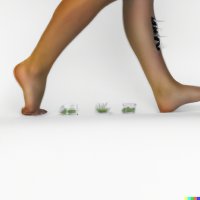
I had this happen to me once, playing soccer as a teenager. A new pair of boots, just that little bit too tight, and pins-and-needles for an entire game. I loosened the laces before the next match and it never happened again — sometimes the fix really is that simple.
If you've checked all three and nothing's obviously wrong, get properly fitted at a specialist running store rather than guessing. Bring your old shoes along and ask them to comment on the wear pattern — test whether your shoes actually fit before you assume the problem is something else entirely.
Tight Calves and Your Warm-Up
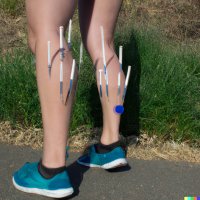
The fix is warm up first, stretch second, in that order. Ease into ten minutes of easy running before you do anything else, then move into dynamic stretches once your muscles are warm and pliable rather than cold and tight. Stretching cold calves does very little — you're working with muscle that's already warmed through, not forcing flexibility onto tissue that isn't ready for it.
Keep this up consistently, not just on the days your calves feel tight, and it becomes prevention rather than a fix you reach for after the fact.
Lacing Techniques That Relieve Pressure

Heel-lock (or "lace lock") lacing — uses the top eyelets to create a loop that locks your heel in place, which stops your foot sliding forward and jamming your toes, and eases pressure across the top of your foot at the same time.
Window lacing — skips the eyelets directly over a sensitive or painful spot, leaving a gap so the lace doesn't press on that exact area at all.
Wide-loop lacing — swaps the standard criss-cross for straight bars across wider-set eyelets, giving a wide forefoot noticeably more room without needing to size up your shoes entirely.
I've covered specific lacing techniques for foot numbness in full elsewhere — worth a proper read if none of the fixes above have settled things by now.
When It Might Be Something Else: Morton's Neuroma, Tarsal Tunnel, and Nerve Compression
Occasionally, none of the above is the actual cause, and it's worth knowing the names of what else might be going on so you're not left guessing indefinitely.Morton's neuroma — a burning, numb sensation concentrated specifically between two toes, most often the third and fourth. It's caused by a thickened nerve being squeezed between the bones of your foot, and it tends to worsen with faster paces or harder surfaces rather than ease off.
Tarsal tunnel syndrome — numbness that runs along the sole of your foot rather than staying at the toes, and typically gets worse the further into a run — or the higher your weekly mileage climbs.
General nerve compression — a broader catch-all for a nerve being squeezed somewhere along its path, from your lower leg down to your foot, usually from swelling, tight footwear, or a change in your running form.
All three are distinguishable from simple lacing-related numbness by one thing: they don't reliably clear up when you loosen your laces or switch shoes. If you've tried the fixes above properly and the pattern persists, Morton's neuroma and tarsal tunnel treatment steps is the next page to read.
Red Flags: When Pins and Needles Need a Professional Opinion
If it's a constant, recurring pattern no matter what you change about your shoes or laces, I'd rather you had it checked out properly than assumed it was nothing. Persistent tingling or numbness can occasionally point to nerve damage from a condition such as diabetes, or to a nerve pinched higher up in the leg or lower back. If the foot is also sore in one spot, a stress fracture is worth ruling out too — better safe than sorry, every time.
Reader story: Steve, 45
Steve, a 45-year-old runner with 17 years of experience, wrote to me about his left foot falling asleep roughly 35 minutes into every run, for two months straight. He'd already changed his shoes, socks and shorts, and ruled every apparel cause out himself. With apparel eliminated, I raised low blood pressure as one possible contributing cause, and told him plainly that a blood-circulation issue like this is worth a doctor's visit — not because it's likely serious, but because it's the kind of thing worth confirming rather than guessing at for months on end.Here's where I draw the line as a coach: gear fit, lacing, tight calves and your warm-up are squarely my territory, and I'll get specific with you about all of them. One-sided numbness that persists for days, or a pattern where you've ruled out every apparel cause and it's still there, is a podiatrist's or doctor's territory, not mine. Recommending you see someone at that point is a considered call, not me passing the buck.
Frequently Asked Questions
Why do my toes go numb specifically, but not my whole foot?
That pattern points towards localised nerve compression — often Morton's neuroma — rather than a general circulation issue, which tends to affect your whole foot rather than just a toe or two.
Are tight laces the most common cause of numb feet when running?
Yes, tight laces and tight-fitting shoes generally are the first thing to rule out, well before you consider anything else.
Can the wrong shoe size cause numbness?
Yes — running shoes generally need half a size to a full size more room than your everyday shoes, to allow for your feet expanding on impact.
My foot cramps and gets pins and needles a couple of miles into a run even after sizing up my shoes — what else could it be?
If sizing up hasn't fixed it, consider nerve constriction from fit or lacing beyond size alone — and if it's constant and recurring, rule out other causes such as a pinched nerve or, if one spot is also sore, a stress fracture — worth having checked.
My foot falls asleep about 30 minutes into every run — what's causing that?
Most often it's tied to shoe fit or lacing tightness pressing on the nerves and blood vessels across the top of your foot. If it's new, or not explained by a change of gear, treat it like any other persistent-numbness case above and get it looked at. One reader of mine had numbness on one side that clears right after you stop running — if that's your pattern too, lacing and fit are still the first things worth checking.
Most pins-and-needles while running comes down to your shoes, your laces or your warm-up, and every one of those has a straightforward fix once you know which it is. Run through the self-check, make the sensible call, and you'll know within a run or two whether this is something to sort yourself or something that needs a professional look. :)
More Pages on This Topic
Some Other Pages You May Like
About the author

Dominique de Rooij (Dom)
Advanced Running Coach certified by Athletics Australia with 20 years of writing about running and over a decade coaching runners — from first-timers to marathoners. Dom's beginner programs have guided thousands of runners and been praised above plans from Jeff Galloway, Hal Higdon, and Runner's World. Now over 50, Dom still loves trail running, parkrun, and the coffee after.
Free weekly coaching • Join 3,500+ runners
Train Smarter, Not Just Harder
Get your free guide when you join the BRT Coaching Letter
No spam, ever. Unsubscribe in one click, any time.
What's New?
-
Cut 90 Seconds Off Your 1.5 Mile Run for the Army Test
Cutting 90 seconds off a 1.5 mile run in 3-4 weeks for the Army test: Dom breaks down realistic pacing to reduce 10:32 toward sub-9:00 for Paras selection. -
Improve Your 1.5 Mile Running Time to 10:30: Shin Splints
From 12:59 to 10:30 for 1.5 miles: Coach Dom's shin-splint fix and training plan to improve your running time in 2-3 months. -
Training for a 1.5 Mile Run - How to Qualify For Your Test
Coach Dom's 3-step plan for 1.5 mile run training: build aerobic base, add strides, then tempo and pace work to hit your test time.