Medial Knee Pain When Running: Causes, Self-Checks, and When It's Not Arthritis
Medial knee pain when running (pain on the inside of your knee) is most commonly caused by pes anserine bursitis or tendinopathy (irritation of the tendons and fluid-filled cushion on the inner side of the knee, just below the joint), a mild medial collateral ligament (MCL, the ligament along the inner knee) strain or sprain, or, less often, irritation of the medial meniscus (the cartilage cushion on the inner side of the joint). Below: a self-check comparing how your knee feels running versus cycling or climbing stairs, what each cause feels like, what to do when imaging comes back clean, strengthening and load management, red flags that need a doctor, and answers to common questions.Let's face it — this kind of pain gets lumped in with runner's knee or iliotibial (IT) band syndrome more often than it should be. It isn't either: runner's knee sits at the front of the kneecap, and IT band syndrome sits on the outside. I've spent over 20 years helping runners work out exactly what's going on when a knee starts complaining like this.
Landed here by mistake? Pain more at the front of your kneecap belongs on my runner's knee page, and pain on the outside of your knee belongs on my IT band syndrome page. If it's genuinely on the inside, read on.
The Impact-vs-Non-Impact Self-Check
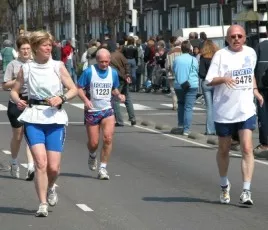
Here's how it works: if your knee hurts when you run but doesn't bother you on the elliptical, the stationary bike, or climbing stairs, that pattern points towards an overuse or loading issue — think pes anserine irritation or a mild tendinopathy — rather than a structural tear or ligament injury. Structural problems tend to hurt across more activities, not just the high-impact ones.
This is a self-check, not a diagnosis. It's a way to make sense of your symptoms before or alongside imaging — your scan and a clinician still make the final call.
What the Common Causes Actually Feel Like
Once you've done the self-check above, match your specific pain pattern against the table below. It won't replace a proper assessment, but it will help you make sense of what your body's telling you.| Condition | Typical pain location | What makes it worse | Typical course |
|---|---|---|---|
| Pes anserine bursitis/tendinopathy | About 5-7cm below the joint line, on the inside of your shin | Stairs and hills | Usually settles in two to six weeks with rest, ice, and load management |
| MCL strain/sprain | Right at the joint line | Valgus stress (your knee buckling inward) or pivoting | Mild strains often ease within two to four weeks; more significant sprains take longer |
| Mild medial meniscus irritation | Joint-line pain, sometimes with catching or locking | Twisting, squatting, or pivoting | More variable — can settle with rest, but sometimes needs a specialist's input |
One runner described their pain to me as wrapping around and sometimes down the back of the calf, with real tightness going into and out of a squat. That combination — squat-tightness plus a wraparound feel — fits pes anserine irritation or a mild MCL strain well, especially when walking itself stays pain-free.
When Imaging Comes Back Clean But the Pain Is Still Real
If that's where you find yourself, the treatment pathway a sports physician typically works through looks something like this: anti-inflammatories first, a cortisone injection as a mid-tier option if things aren't settling, and surgery only as an absolute last resort. That's the general shape of it — not a promised outcome for you specifically.
I've seen this exact scenario resolve well. One runner's medial ligament had been torn or stretched, then healed with some scar tissue left behind — nothing showed up clean on the imaging, but the pain was genuine. A cortisone shot settled it, and there was no relapse. A genuinely clean scan, followed up by a specialist, is a legitimate answer. It's not a dead end, even when it feels like one.
Strengthening and Load Management While You Sort Out the Cause
Focus on three areas: your quadriceps (squats to a comfortable depth, or straight-leg raises if squatting hurts), your hamstrings (bridges or slow, controlled deadlifts), and your calves (standing calf raises). Two to three sessions a week is plenty to start building the support your knee needs.
While you're symptomatic, lean on non-impact cross-training to keep your fitness ticking over — the elliptical, cycling, and pool running all work well here.
One thing to be strict about: don't push through joint-line pain, locking, or swelling. Dull, general soreness around the area is one thing. Sharp pain right at the joint line, or anything that locks or swells, is your cue to back off and get it checked.
Red Flags — When Medial Knee Pain Needs a Doctor, Not a Training Tweak
Every injury page on this site carries the same baseline promise: I'll tell you plainly when this is beyond a training fix. For medial knee pain, get it looked at by a doctor if you notice any of the following:- Your knee locking or catching
- A sense of your knee giving way
- Pain that wakes you up at night
- Visible swelling
- Being unable to fully straighten or bend your knee
- Any of the above in a minor or adolescent runner
Reader story: Sherri, Monticello, NY
Sherri, a runner from Monticello, NY, wrote to me with a case that shows exactly why these criteria matter. About a week after a June 10K, she started getting real pain in her knee — and for the next two months she couldn't run, and at times couldn't even walk. Two months on, she'd built back up to a slow two-mile jog on the treadmill, but the pain on her right side hadn't gone. She couldn't do a standing quad stretch — pulling her right foot towards her bottom while balanced on her left leg — without it hurting. Sitting too long left her knee feeling like it had frozen in a bent position, painful to straighten out afterwards. And the pain was worst of all lying in bed at night.Her freezing-after-sitting and worst-at-night pattern are exactly the two red flags named above — not abstract bullet points, but real symptoms that sent someone looking for answers. What I told her then still holds: our legs aren't always fully aligned — think of a train that's not quite running true on its tracks — and left unaddressed for long enough, that causes injuries. I recommended she work on strengthening her quadriceps, and I was clear that if the pain didn't ease up with rest and ice, it was time to get medical advice rather than keep managing it herself.
That's the line I'd draw for you too. Coaching judgement covers load management and your return-to-run pacing. Locking, instability, night pain, and anything in a young or adolescent runner hand off to a clinician — full stop. I'm a coach, not a doctor, and knowing where that line sits matters as much as anything else in this article.
Frequently Asked Questions
Is medial knee pain the same as runner's knee?
No. Runner's knee (patellofemoral pain) sits at the front of the knee, around the kneecap. Medial knee pain sits on the inside — different location, different causes.
Can I keep running with medial knee pain?
It depends on whether the pain shows up during low-impact activity too. Use the impact-vs-non-impact self-check above — if it's joint-line pain, locking, or getting worse, stop and get it assessed first.
Why does my MRI or X-ray look normal but my knee still hurts?
Early ligament strains and healing scar tissue often don't show up clearly on imaging. A clean scan with ongoing pain is common, and it still has a treatment pathway.
What does a sports physician typically try for medial knee pain?
Anti-inflammatories first, sometimes a cortisone injection, and surgery only as an absolute last resort.
Can squatting-related tightness on the inside of my knee be normal?
It can point to pes anserine or MCL irritation rather than something structural, especially if walking stays pain-free and running or squatting are what trigger it.
Medial knee pain catches plenty of runners off guard, mostly because it gets mistaken for something else. Work through the self-check, match your symptoms against the table above, and keep strengthening and cross-training while you sort out the cause. If your knee locks, gives way, wakes you at night, or swells, don't wait — go get it looked at.
For a bilateral case in a younger runner, a teenage runner's experience with bilateral medial knee pain is worth a read. And if footwear and hip mechanics turn out to be part of your picture, my page on quad and hip strengthening for knee support covers the supporting work in more depth.
More Pages on This Topic
Some Other Pages You May Like
About the author
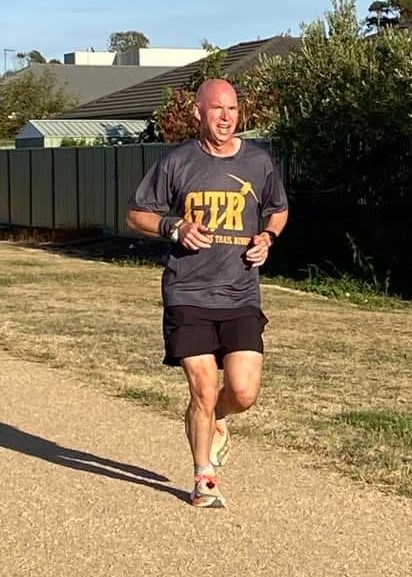
Dominique de Rooij (Dom)
Advanced Running Coach certified by Athletics Australia with 20 years of writing about running and over a decade coaching runners — from first-timers to marathoners. Dom's beginner programs have guided thousands of runners and been praised above plans from Jeff Galloway, Hal Higdon, and Runner's World. Now over 50, Dom still loves trail running, parkrun, and the coffee after.
Free weekly coaching • Join 3,500+ runners
Train Smarter, Not Just Harder
Get your free guide when you join the BRT Coaching Letter
No spam, ever. Unsubscribe in one click, any time.
What's New?
-
Cut 90 Seconds Off Your 1.5 Mile Run for the Army Test
Cutting 90 seconds off a 1.5 mile run in 3-4 weeks for the Army test: Dom breaks down realistic pacing to reduce 10:32 toward sub-9:00 for Paras selection. -
Training for a 1.5 Mile Run - How to Qualify For Your Test
Coach Dom's 3-step plan for 1.5 mile run training: build aerobic base, add strides, then tempo and pace work to hit your test time. -
Improve Your 1.5 Mile Running Time to 10:30: Shin Splints
From 12:59 to 10:30 for 1.5 miles: Coach Dom's shin-splint fix and training plan to improve your running time in 2-3 months.