Leg Cramps Spreading Over the Body
I am a 25 year old male. I ran sprints in high school track and for the last five years i have run longer distances; marathons and half marathons.
My major difficulty is cramping. it starts in my calfs, moves up to my thighs and will continue on up my body, even causing my tongue to cramp. I have tried drinking more water and sports drinks, eating bananas and taking "Hammer" supplement pills and gel to no avail.
I saw a sports doctor and he did blood tests but all my values are within the normal ranges but the cramping continues. He is at a loss as to what I can do to stop the cramping. I am wondering if you or one of your readers has any suggestions...
– Jeff, Poplar, WI
Answer by Dom: Hi Jeff, thanks for your question — and this one goes beyond standard cramp territory, so let me be straight with you. Cramping that climbs from your calves to your tongue isn't ordinary running cramp, and you've already covered the usual fixes. My advice is a proper medical follow-up, with a few practical things from me alongside it:
- Why a normal blood panel isn't the end of it
- What to ask your doctor for, and what to bring
- What to do the moment a cramp starts
- Check when your cramps hit: the training side
- Red flags: when to see a doctor straight away
Why a normal blood panel isn't the end of it
A standard blood panel is a limited tool. It typically checks sodium and potassium, sometimes calcium, and usually not magnesium — not the fuller picture. Normal results tell you the ones tested are fine on the day of the test. They don't rule out everything else.
You've also done the obvious things (more water, sports drinks, bananas, supplement pills and gels) and nothing has changed. That tells me more fluid and more salt probably aren't the answer for you. Stop adding and start investigating.
Cramping that spreads beyond the working muscles and reaches your tongue is the pattern I'd want a doctor to look at again, rather than waiting to see whether it settles. I'm a running coach, not a medical professional, so I won't guess at causes. What I can do is help you walk back into that appointment with the right questions.
What to ask your doctor for, and what to bring
Go back to your sports doctor and ask specifically for two things. First, a fuller electrolyte work-up (electrolytes are the minerals in your blood that help muscles and nerves work) covering magnesium and calcium as well as sodium and potassium. Second, a neurological assessment — a check of how your nerves and muscles are communicating. Normal basic bloodwork doesn't rule out either.
Then make the appointment easy for him. Bring:
A full list of everything you take. Include prescription medication, caffeine, energy drinks, pre-workout powders and any stimulants. Include the Hammer pills and gels too — what they contain, how many you take, and when. Your doctor should review those directly.
A symptom log. Note the date, how far into the run it started, your pace, the weather, what you'd eaten and drunk, and how long it lasted. Use this as a tool for that conversation, not your main course of action.
The timing pattern. Do cramps come only during races? Only after the first hour? Do they ever hit overnight or while you're sitting still? That last one matters a lot.
Also see my running and calf cramps page for the standard causes and fixes — hydration, sodium and potassium, overexertion. It seems like you've already taken care of the basics there.
A homeopath or alternative-medicine practitioner can still be worth a visit if you're into it. Some take a more holistic view. Just treat it as an optional extra, not a substitute for the medical re-evaluation above.
What to do the moment a cramp starts
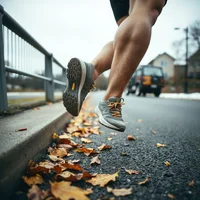
You've probably been pushing through or panicking. Try this instead. At the first twinge in your calf, slow to a walk — don't stop dead. Walk for a minute or two, breathe slowly, and gently stretch the cramping muscle. For a calf, that means straightening your knee and pulling your toes up towards your shin.
Stopping the first cramp early matters. In your case, the spreading from calf to thigh and beyond seems to build, so catching it at the start gives you the best chance.
If it keeps spreading, or reaches your tongue, trunk or hands, don't try to run it off. Stop, get somewhere safe, and sit down. If you're on a long run or in a race, tell someone and call it a day. A DNF (did not finish) is annoying. Whole-body cramping on a road, miles from home, is worse.
Run with your phone and let someone know your route until you have answers. That's sensible, not dramatic.
Check when your cramps hit (the training side

Current thinking links exercise cramps less to fluid loss than people assume, and more to muscle fatigue) particularly running faster or further than your muscles are used to. So look at your log for a pattern.
Do the cramps cluster late in hard efforts? Near the end of a half marathon or marathon at race pace? On days when you've pushed the mileage up quickly? If so, that's useful information for you and your doctor.
Until you have answers, I'd recommend taking the pressure off. Run your easy days truly easy — a pace where you can hold a conversation. Skip races and threshold effort (a hard but controlled pace you could hold for about an hour) for now. Build up mileage gradually, with a consolidation week every third or fourth week where you cut the distance back. You came from sprinting, so your calves and thighs may simply be less used to marathon load than you think — but that's something to test, not assume.
If cramping happens even on gentle runs, or at rest, that points away from training, and back to the doctor.
Red flags: when to see a doctor straight away
Whole-body cramping like yours comes with its own escalation criteria — worth naming clearly.
Cramping that spreads beyond the legs (into your trunk, hands or tongue) is itself the signal to act, however mild any single cramp feels.
A normal blood panel doesn't close the case. If whole-body cramping continues after normal results, the next step is a fuller electrolyte work-up (magnesium and calcium, not just sodium and potassium) plus a neurological assessment, not a wait-and-see period.
Weakness, twitching between cramps, numbness, or cramping at rest, not just during or after running, should prompt that same re-evaluation straight away.
Other than that, I would hope that somebody who reads this has got some advice as well! If you do find an answer, Jeff, I'd love to hear it.:)
Kind regards,
Dom
Some Other Pages You May Like
About the author

Dominique de Rooij (Dom)
Advanced Running Coach certified by Athletics Australia with 20 years of writing about running and over a decade coaching runners — from first-timers to marathoners. Dom's beginner programs have guided thousands of runners and been praised above plans from Jeff Galloway, Hal Higdon, and Runner's World. Now over 50, Dom still loves trail running, parkrun, and the coffee after.
Free weekly coaching • Join 3,500+ runners
Train Smarter, Not Just Harder
Get your free guide when you join the BRT Coaching Letter
No spam, ever. Unsubscribe in one click, any time.
What's New?
-
Cut 90 Seconds Off Your 1.5 Mile Run for the Army Test
Cutting 90 seconds off a 1.5 mile run in 3-4 weeks for the Army test: Dom breaks down realistic pacing to reduce 10:32 toward sub-9:00 for Paras selection. -
Improve Your 1.5 Mile Running Time to 10:30: Shin Splints
From 12:59 to 10:30 for 1.5 miles: Coach Dom's shin-splint fix and training plan to improve your running time in 2-3 months. -
Training for a 1.5 Mile Run - How to Qualify For Your Test
Coach Dom's 3-step plan for 1.5 mile run training: build aerobic base, add strides, then tempo and pace work to hit your test time.