Can I Run with a Torn ACL?

Is it ok to run with a torn anterior cruciate ligament (ACL)?
– Melissa, Arizona
Answer by Dominique: Hello Melissa — thanks for sending in your question.
I'll break my response down as follows:
1. What is an ACL?
2. What happens when the ACL is torn?
3. Recovery from and treatment of an ACL tear
What is an ACL?
The ACL — short for anterior cruciate ligament — is a key connector inside your knee. It links the large bone in your thigh (the femur) to the shin bone in your lower leg (the tibia). This ligament holds those bones together, keeping your knee stable and allowing it to bend and twist without problems.
What happens when the ACL is torn?
Inside your knee sit the menisci and a layer of cartilage — the joint's natural shock absorbers. When the ACL is torn, your knee can't function correctly, and the extra sliding and twisting between the bones puts those structures at risk. Many people with a chronically unstable knee end up with meniscus damage within a few years. The longer you keep running on it, the more likely further damage becomes.
Recovery from and treatment of an ACL tear
Recovery depends heavily on the severity of the tear. Partial tears can sometimes be managed with physical therapy and rehab alone, but a complete tear doesn't heal well by itself — the ligament has a poor blood supply. You may be asking yourself, "how long before I'm back to running then?" My honest answer: we're usually looking at months of healing and rehab. That's not what you want to hear — but it's the reality, and I'd rather tell you plainly now.

1. Rest and ice - Recovery starts with rest and ice to bring down swelling and pain.
2. Physical therapy - You'll work with a physio to rebuild strength in the muscles around the knee — restoring as much stability as possible.
3. Surgery - For a significant tear, surgery is often the right call. The recovery is long, but it gives your knee the best chance of regaining full stability — the torn ligament is usually replaced with a graft, a piece of tendon.
4. Post-surgery rehab - After surgery, a structured rehab programme focuses on getting your knee back to full function.
So — torn ACL and running? My advice is to stop running completely until you've seen a doctor. I'd recommend working with a medical professional to determine the best course of action for your specific tear. They'll give you a recovery roadmap built around your situation. Don't skip this step.
The trick with longer-lasting injuries like this is to accept and embrace the recovery process — and find out what other exercise you can do in the meantime. Ask your health professional about low-impact options that won't compromise your knee. Patience here isn't just sensible. It's essential.
Wishing you a speedy recovery.
Best of luck,
Dominique
Some Other Pages You May Like
About the author
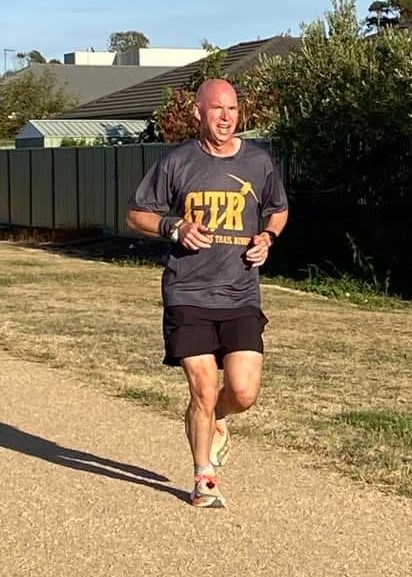
Dominique de Rooij (Dom)
Advanced Running Coach certified by Athletics Australia with 20 years of writing about running and over a decade coaching runners — from first-timers to marathoners. Dom's beginner programs have guided thousands of runners and been praised above plans from Jeff Galloway, Hal Higdon, and Runner's World. Now over 50, Dom still loves trail running, parkrun, and the coffee after.
Free weekly coaching • Join 3,500+ runners
Train Smarter, Not Just Harder
Get your free guide when you join the BRT Coaching Letter
No spam, ever. Unsubscribe in one click, any time.
What's New?
-
Cut 90 Seconds Off Your 1.5 Mile Run for the Army Test
Cutting 90 seconds off a 1.5 mile run in 3-4 weeks for the Army test: Dom breaks down realistic pacing to reduce 10:32 toward sub-9:00 for Paras selection. -
Improve Your 1.5 Mile Running Time to 10:30: Shin Splints
From 12:59 to 10:30 for 1.5 miles: Coach Dom's shin-splint fix and training plan to improve your running time in 2-3 months. -
Training for a 1.5 Mile Run - How to Qualify For Your Test
Coach Dom's 3-step plan for 1.5 mile run training: build aerobic base, add strides, then tempo and pace work to hit your test time.