Treadmill Running for Beginners: A Week-by-Week Plan
A treadmill is a genuinely good place to start running. Set the incline to 1% from your first session, start with a run/walk pattern between 3.5 and 5 mph depending on your fitness, then follow a proper week-by-week progression instead of guessing.That's what the rest of this page gives you — a real progression plan, not another treadmill-vs-outdoor comparison list.
I coach plenty of beginners who start here, whether by choice or because the weather outside isn't cooperating.
Treadmill vs. Outdoor Running: What Actually Changes for Beginners
A few things genuinely change the moment you step onto a belt instead of the pavement. The pace is fixed for you, which means you lose the skill of pacing by feel — you'll want to rebuild that once you head back outside. There's no wind resistance and no terrain variation unless you deliberately add incline yourself. And the surface is softer and more consistent, which cuts down some of the impact variability you'd get pounding the pavement outdoors.That's the short version. For the fuller comparison, see the full beginner framework on my beginner running guide — it covers outdoor-vs-treadmill progression in more depth than I will here.
Why You Should Set Your Treadmill to a 1% Incline From Day One
Here's something worth knowing: set your treadmill to a 1% incline before your very first session, not after you've built up some fitness. This isn't a progression step. It's a baseline correction.Outdoors, you're working against wind resistance and the ground isn't moving beneath you — on a treadmill, the belt does some of that work for you, which makes flat treadmill running feel easier than it should. A 1% incline roughly cancels that out, so the effort you feel on the treadmill actually matches what the same pace would feel like outside.
Set it and leave it there from day one — don't work your way up to 1%, that's the whole baseline, not a target. Higher inclines are a different tool entirely, used later for hill simulation once you're established, not part of this basic effort compensation.
This is something I actively teach every new athlete I coach on a treadmill. Easy to set. Easy to forget. Do it anyway.
Translating Treadmill Pace to Real-World Effort
A treadmill speed in mph doesn't map onto outdoor effort the way you'd expect — the same number on the display can feel completely different once you're outside dealing with wind, camber, and your own bodyweight moving you forward instead of a belt doing it for you.So don't chase a specific outdoor pace number on the treadmill. Judge your effort by the talk test instead. If you can speak in full sentences without gasping, you're at an easy effort, whatever the display says. That's the number that actually matters at this stage.
As a rough guide, a beginner who's comfortable at 5.0 mph with a 1% incline is running at roughly an easy outdoor effort — not necessarily an identical outdoor pace, but a similar level of exertion. For more on matching effort to pace as your fitness changes, see my pace benchmarks by fitness level.
A Beginner Treadmill Progression Plan (Week by Week)
This is the part that makes it practical — an actual week-by-week plan, not just "start slow and build up." Here's a real four-week starting point, all at a fixed 1% incline throughout.| Week | Speed Range | Incline | Interval Structure | Total Session Time |
|---|---|---|---|---|
| Week 1 | Walk 4.0-4.5 mph / Jog 5.0-5.5 mph | 1% | 30-60 sec jog : 2-3 min walk | ~20 minutes |
| Week 2 | Walk 4.0-4.5 mph / Jog 5.0-5.5 mph | 1% | 60-90 sec jog : 90 sec-2 min walk | ~22-25 minutes |
| Week 3 | Walk 4.0-4.5 mph / Jog 5.0-5.5 mph | 1% | 2-3 min jog : 60-90 sec walk | ~25-28 minutes |
| Week 4+ | Jog 5.0-5.5 mph (walk breaks as needed) | 1% | Continuous easy running, building toward the full session | ~25-30 minutes |
Treat the numbers above as illustrative starting points, not a rigid prescription. Adjust them to your own fitness using the talk test from the previous section — if a jog interval leaves you too breathless to speak, dial the speed back rather than pushing through it.
This progression is really just the site's structured run/walk program adapted to a treadmill and a fixed 1% incline — same interval logic, same gradual build-up, different surface.
Staying Motivated on the Treadmill
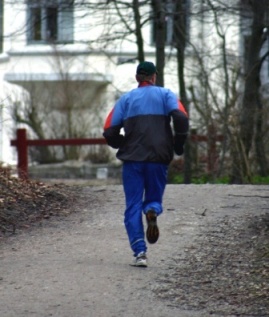
- Break sessions into intervals, not one long steady block. A session built from short jog/walk chunks passes faster than the same total time run non-stop.
- Reserve a show or podcast for treadmill sessions only. Making it the only time you get to watch or listen to something turns the session into something you look forward to, not just something you endure.
- Keep a simple session log. A quick note of speed, incline, and how it felt makes short-term progress visible — and visible progress is what keeps you coming back.
How to Transition to Outdoor Running Without It Feeling Harder
Beware: your first outdoor run is going to feel harder than the treadmill, even at an easier pace. That's not a sign you've lost fitness — it's wind, camber, and real terrain all showing up at once, none of which the treadmill ever asked of you.I see this exact pattern over and over coaching treadmill-trained beginners through their first outdoor sessions — the same readers who'd built a fantastic base indoors, convinced within a mile that something had gone wrong. Nothing had.
Make your first few outdoor runs shorter and slower than your treadmill equivalent — that's the sensible move, not a step backwards. Reassess after two or three sessions. Most beginners find the gap closes fast once their body adjusts to a moving surface again.
Mixing Treadmill and Outdoor Runs in the Same Week
If you've got access to both, here's the simple rule: either surface works fine for easy or base running. Treat the treadmill as a reliable backup for bad weather or a tight schedule, not a lesser version of the real thing.Switching surfaces mid-week doesn't mean rewriting your plan. Keep the same weekly structure and just adjust that day's pacing expectation using the talk test, whichever belt or pavement you're on.
Frequently Asked Questions
Should beginners start on a treadmill or run outside first?
Either is fine. A treadmill gives you more control — incline, weather, footing — while running outside builds pacing judgement sooner. Neither is the wrong starting surface.
Is treadmill running lower impact than outdoor running?
Generally, yes — the belt's slightly cushioned, consistent surface tends to reduce impact compared with pavement, though this varies by machine.
Does treadmill running build the same fitness as outdoor running?
Broadly, yes, for a beginner's aerobic base. But outdoor terrain and pacing judgement still need separate practice before you race on the road.
What treadmill is good for a beginner to buy?
Prioritise reliability and maintenance history over a long features list. A heart rate strap or handrail sensor is a nice-to-have, not a necessity, if you've already got your own heart rate monitor. Be cautious with second-hand units, since you never really know how hard they've been used.
I'm starting from a much higher body weight than before — should I walk or run first on the treadmill?
Start with walking only — about 20 minutes, three to four times a week — then gradually add short run intervals as your endurance builds. Always finish with a slow cool-down and some stretching, and check with your doctor first if any underlying medical condition is involved.
So: incline at 1%, judge effort by feel rather than by pace, and follow the progression instead of guessing. That's the whole plan.
Whether you're stuck indoors for a season or you just prefer starting there, the treadmill will get you fit enough to run wherever you want to next. :)
Some Other Pages You May Like
About the author
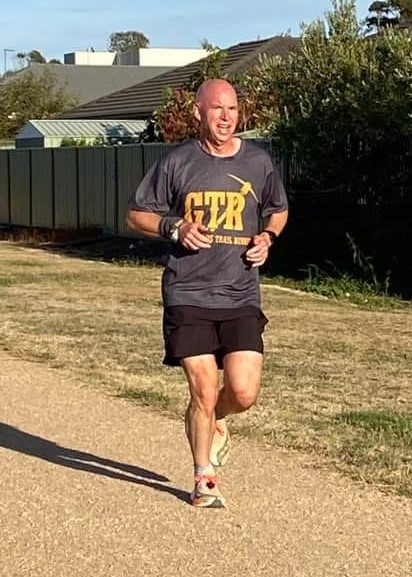
Dominique de Rooij (Dom)
Advanced Running Coach certified by Athletics Australia with 20 years of writing about running and over a decade coaching runners — from first-timers to marathoners. Dom's beginner programs have guided thousands of runners and been praised above plans from Jeff Galloway, Hal Higdon, and Runner's World. Now over 50, Dom still loves trail running, parkrun, and the coffee after.
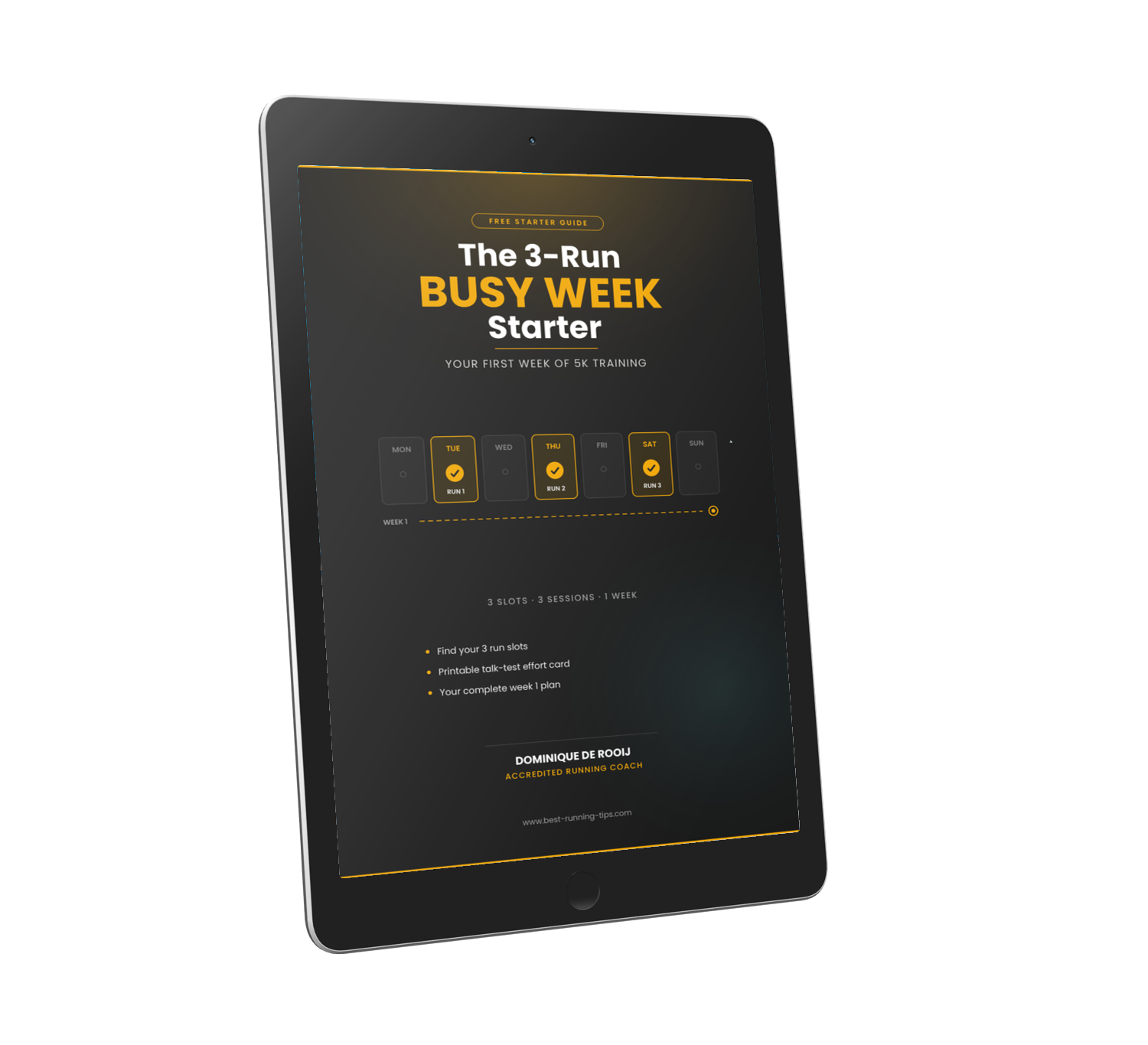
Free beginner guide • From Coach Dom
Start Running This Week, Even If Your Week Is Already Full
Most beginners don't quit for lack of motivation. They quit because their plan doesn't fit their life. The 3-Run Busy Week Starter plans your first week around the week you actually have.
- Find 3 run slots you can actually keep
- The talk test: the simple way to stop running too fast
- Your complete week 1 plan: 3 run/walk sessions, about 20 minutes each
You'll get the guide plus a short email every few days to help you through week 1. Unsubscribe any time. Privacy policy.
What's New?
-
Personalized Running Coaching - BRT | Run Smarter, Race Better
 Get a personalized running program built around your current fitness, goals, and schedule - not a generic app template. Choose from BRT Silver, Gold, or Platinum coaching with Dom, accredited running…
 -
Sample 4-Day Marathon Training Week: Base to Taper
A full 4-day-a-week marathon training schedule, phase by phase - base, build, peak, and taper - with named workouts and weekly mileage. -
Marathon Taper for a 10-12 Week Training Cycle
How to taper correctly on a compressed 10-12 week marathon plan - the right taper length, why standard advice doesn't fit, and the week-by-week structure.