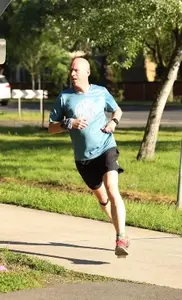
Can You Start Running at 55, Overweight and Smoking?
Yes — if you're in good health, there's no reason you can't start running at 55, carrying some extra weight, and smoking. Those three factors don't rule you out on their own. They do mean one thing first: get your doctor's sign-off, then start with a run/walk plan built for a true beginner.That's the honest answer I gave Jackie, a 55-year-old reader from Newark, Ohio, who wrote to me carrying some extra weight and smoking heavily, and who had never managed to run — not even around the track in high school. If that's close to your own starting point, keep reading. I'll cover the two gates you need to clear, why your legs will hurt at first, and the actual first step to take.
If carrying extra weight is your main sticking point, I've also written a full guide to starting running at a higher body weight — but for the age-plus-smoking combination specifically, keep reading here.
Why Your Legs Hurt the Last Time You Tried
Jackie described the front of her legs "killing her" for days after her past attempts — her shins, she guessed, and she guessed correctly. That's about as common a complaint as beginner running gets, and it's not a sign you're not cut out for this.Your shins take on a completely new kind of load the moment you start running. If you've been sedentary for years, those lower-leg muscles simply haven't been asked to work that way before. The discomfort is your body adapting — not damage.
Beware the difference, though, between this kind of expected soreness and a genuine injury. Ordinary new-runner soreness eases within a couple of days and gets better, run by run, as your legs adapt. Sharp, one-sided pain, swelling, or pain that keeps getting worse instead of better is different — that's worth checking properly rather than pushing through. See how to tell soreness from a real injury if you're ever unsure.
The Medical Check You Shouldn't Skip
I always advise beginning runners with any risk factors to see a doctor first, and at 55 with a smoking history, that applies to you. This isn't me being overly cautious — I don't know you, and I know nothing about your physical wellness beyond what you've told me, so I can't be the one to clear you.Before you go, be ready to tell your doctor how much you currently smoke, or used to, how active you've been over the past few years, and whether you've noticed any chest tightness, unusual breathlessness, or joint pain. Smoking affects your cardiovascular system specifically — the part of your body that has to adapt fastest once you start running — so it's worth a proper check before you push it.
Before I recommend a starting pace to any new runner, I ask about exactly these two things — smoking history and current activity level — because they change what a sensible first few weeks actually looks like. Think of this appointment as a starting gate, not a barrier. Most people walk out cleared to begin.
A Run/Walk Plan for a True Beginner
Once you're cleared, start with a run/walk program rather than trying to run non-stop. Run for a short interval, walk for longer to recover, and keep the running portion at an easy pace — the pace at which you could still hold a conversation.My own Beginner Running Program 3 takes you from nothing to 30 minutes of non-stop running over 12 weeks, and it's built for exactly this starting point. Here's what one reader told me after finishing it:
"I went from being able to not even run to my mailbox (2 blocks away) to running a 5k in just over 30 minutes... I am really excited to continue running." — Amy, WA, USA
That's the trick — you don't need to run far, or fast, or even non-stop, on day one. You need a structure that builds you up, week by week, until you can. For more of the basics, see my beginner running tips.
Getting Back Into Shape After Years of Being Sedentary




Why Older Legs Feel Stiffer — And What Actually Helps
It's common for stiffness to creep in the older you get, or the longer you've been away from running — tight calves, cranky knees, ankles that don't loosen up the way they used to.Your stretching routine is often the first thing worth looking at. I'd recommend working through my running stretches after every run, not just occasionally. Cross-training — yoga or pilates, for example — can also help keep your body flexible and supple between runs.
If stiffness persists, don't shy away from getting some professional help. An osteopath or massage therapist can do wonders, and can often spot what's actually causing it. Your running posture is a common hidden cause — worth having a professional eye on it if stretching and cross-training alone aren't shifting things.
Jackie — there's a runner in all of us, waiting to get out. I hope one of these gives you the push you need to start. All the best,
Dominique
Frequently Asked Questions
Do I need to see a doctor before I start running at 55?Yes, if you have any cardiovascular risk factors — including smoking — or joint issues. Screening isn't a barrier here. It's a starting gate.
Will smoking stop me from being able to run?
No, but it will make early effort feel harder on your heart and lungs. Start slower than you think you need to, and expect your breathlessness to improve as your fitness builds — whatever your quitting timeline looks like.
I used to run but now everything feels stiff and tight when I try again — why?
Most likely it's age- and inactivity-related loss of flexibility, not a sign you should stop. A proper stretching routine, some cross-training, and possibly a session with a bodywork professional usually sort it out.
I'm not very overweight but very out of shape — how long before I could handle a 10k?
With a structured 12-week beginner programme followed by a 12-week 10k programme, roughly six months is realistic for most sedentary starters.
What's a realistic first goal instead of jumping straight to a race?
Running continuously for 20 to 30 minutes, non-stop. Get there first, then start thinking about race distances.
Some Other Pages You May Like
About the author
Dominique de Rooij (Dom)
Advanced Running Coach certified by Athletics Australia with 20 years of writing about running and over a decade coaching runners — from first-timers to marathoners. Dom's beginner programs have guided thousands of runners and been praised above plans from Jeff Galloway, Hal Higdon, and Runner's World. Now over 50, Dom still loves trail running, parkrun, and the coffee after.
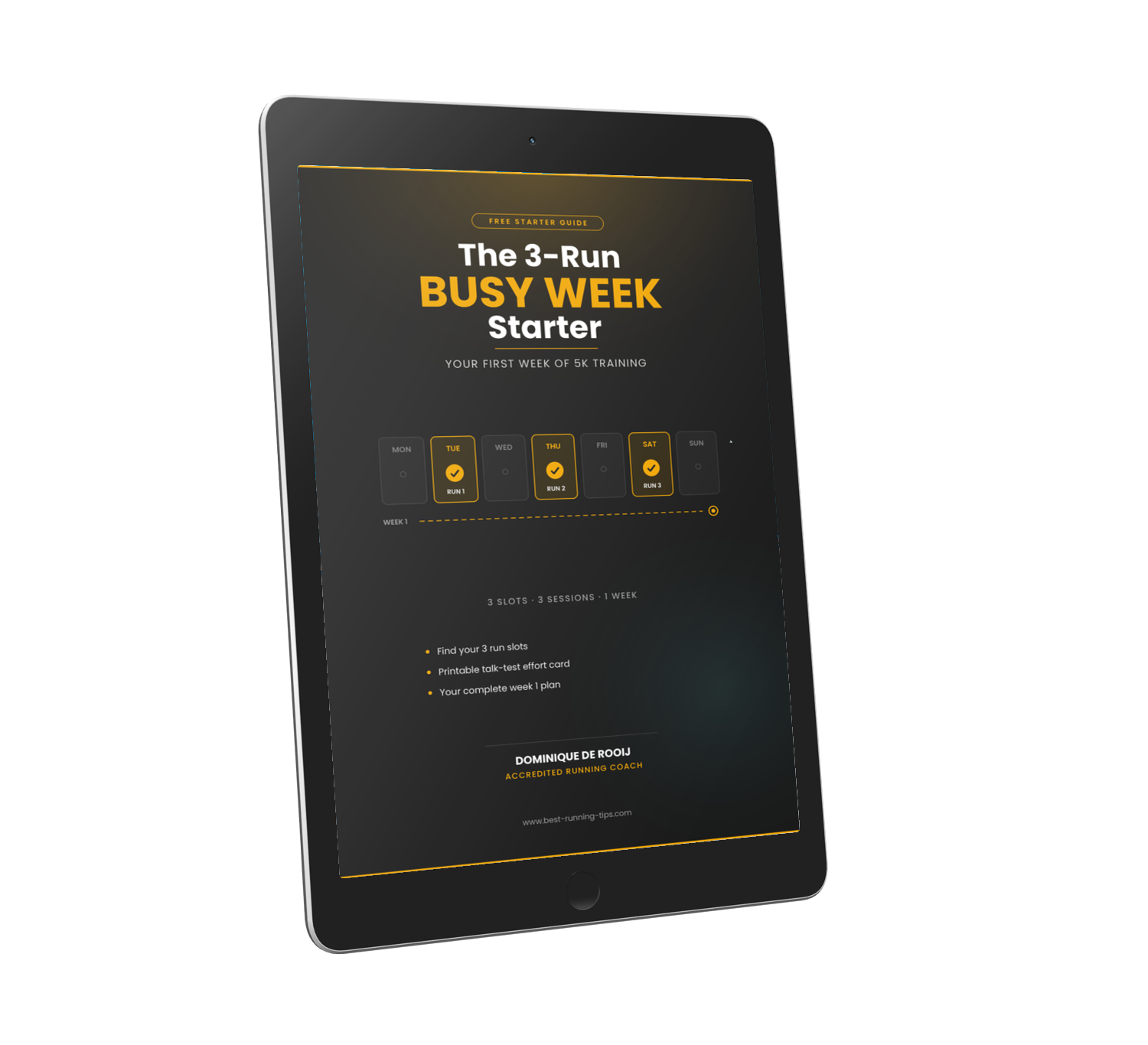
Free beginner guide • From Coach Dom
Start Running This Week, Even If Your Week Is Already Full
Most beginners don't quit for lack of motivation. They quit because their plan doesn't fit their life. The 3-Run Busy Week Starter plans your first week around the week you actually have.
- Find 3 run slots you can actually keep
- The talk test: the simple way to stop running too fast
- Your complete week 1 plan: 3 run/walk sessions, about 20 minutes each
You'll get the guide plus a short email every few days to help you through week 1. Unsubscribe any time. Privacy policy.
What's New?
-
Personalized Running Coaching - BRT | Run Smarter, Race Better
 Get a personalized running program built around your current fitness, goals, and schedule - not a generic app template. Choose from BRT Silver, Gold, or Platinum coaching with Dom, accredited running…
 -
Sample 4-Day Marathon Training Week: Base to Taper
A full 4-day-a-week marathon training schedule, phase by phase - base, build, peak, and taper - with named workouts and weekly mileage. -
Marathon Taper for a 10-12 Week Training Cycle
How to taper correctly on a compressed 10-12 week marathon plan - the right taper length, why standard advice doesn't fit, and the week-by-week structure.