Running Back Pain: Causes, Sciatica, and What Actually Helps
Most running back pain is thought to come from a handful of fixable mechanical causes, such as flat feet, poor posture and a weak core, but sometimes it is sciatica (pain from a pinched nerve that runs from your lower back down the leg), which needs a different response. Below: the causes, a self-check for sciatica, the core-strength link, whether to keep running, hill running, what relieves it, footwear and posture, and the red flags that mean you should see a doctor.Get it wrong and you can spend weeks stretching a back that needed a different fix, or push through pain that needed a doctor. I will help you work out which one you have before your next run.
What Causes Running Back Pain

If you have flat feet and your shoes aren't giving you enough support, the impact of your foot strike may not get absorbed as well as it should, and more of it can travel up through your legs into your lower back. The evidence linking foot type to back pain is mixed, but mile after mile that kind of load can build over time.
Posture matters just as much. Slouch or lean as you tire — and most runners do, without noticing — and you place sustained stress on your back for the length of your run. That stress adds up the same way, session after session.
A smaller number of cases trace back to structural factors that are harder to change — spinal curvature or degenerative discs among them. These are worth ruling out with a doctor if the mechanical fixes below don't help, but they account for a minority of running back pain.
Is It Sciatica? A Self-Check
Here's a distinction worth making: not all running back pain is mechanical. Some of it is sciatica — a pinched sciatic nerve, the longest nerve in your body, which starts in your lower back and runs through the buttock and down the back of the leg. Irritate it, and pain can travel along that path, not just sit in your lower back.The self-check is simple. Pain that stays localised across your lower back points to a mechanical cause. Pain that radiates — into your buttock, or further down your leg — points to sciatica instead. That difference matters, because the two need different management.
| Mechanical Back Pain | Sciatica | |
|---|---|---|
| Where you feel it | Localised across the lower back | Radiates from the lower back into the buttock, sometimes down the leg |
| Typical cause | Flat feet/shoes, posture, weak core | A pinched sciatic nerve |
| What helps | Core strengthening, footwear and posture fixes | Nerve-mobility exercises, gradual load management, physio if numbness, tingling or weakness appear |
Sciatica isn't the dead end older advice made it out to be. Rather than defaulting to bed rest or waiting it out, current guidance favours staying active: nerve-mobility exercises and a gradual, managed return to your normal training load — the same active approach as ordinary mechanical back pain, just applied more carefully. See a physio or your doctor if numbness, tingling, or leg weakness show up alongside the pain, or if it hasn't started easing after a couple of weeks of consistent self-management.
Weak Spots: The Core-Strength Connection
Three muscle groups show up again and again in runners with back pain: your abdominals, your back muscles, and your hamstrings. When any of these are weak, your back picks up the slack — and it shows.The fix is a proper core-strengthening program running alongside your training, not instead of it. Abs and back exercises, pilates, and some leg-strengthening work all count. This isn't just about your back, either — a stronger core holds up your running form for longer and helps prevent a whole range of other injuries too. For the broader picture, see core strengthening for injury prevention across running injuries generally.
Tight hamstrings deserve a special mention. They're often linked to back pain on their own, and to hamstring tightness and sciatica specifically — so loosening them off pays dividends beyond your hamstrings alone. It's also worth knowing that this same core and posture work helps manage sciatica symptoms, not only mechanical back pain — one more reason it belongs in your routine regardless of which type you're dealing with.
Should You Stop Running With Back Pain?

What matters more is the severity and the cause. If running is genuinely too painful, switch to cycling or swimming for a while instead — cross-training keeps you fit and keeps your motivation intact while your back settles. This is the call I make with runners constantly: stay active in some form, rather than stopping altogether, unless the pain itself tells you otherwise.
Hill Running and Back Pain
Hill running is a common trigger. Running uphill forces postural changes that place extra demand on your back muscles — and if you're already dealing with back pain, that extra demand shows up fast.For quick relief when the pain is intense, cut back on uphill running and trim your long-distance mileage first. Both are sensible first changes, because they reduce the load on your back.
Relief: What Actually Helps

If pain radiates into your buttock or leg, or isn't settling within a couple of weeks of consistent self-management, get a physical therapy referral rather than persisting alone.
Heat, contrast baths, and a visit to a chiropractor for spinal alignment can help alongside all of the above — but they're an adjunct, not a substitute for the strengthening work. The same goes for orthotic insoles: worth considering only when footwear is a genuine contributing factor, which I'll cover next.
Footwear and Posture
Don't guess at your footwear. Get a proper gait and foot-type assessment at a specialised running shoe store, rather than picking shoes off a shelf. Footwear is a genuine compounding factor alongside your posture — get both right, and you remove two of the biggest contributors to running back pain in one go.When to See a Doctor (Red Flags)
See a doctor if your pain is intense, prolonged, or simply isn't improving with the self-care measures above — it's worth ruling out disc deterioration or a condition that may need surgery. If your sciatica comes with numbness, tingling, or leg weakness rather than pain alone, that's a stronger signal to get checked, not a reason to wait longer.A small set of symptoms need same-day medical attention, not a routine appointment: new or worsening bowel or bladder problems, numbness in your inner thighs, groin, or genitals, or progressive weakness in both legs. These are signs of cauda equina syndrome — a genuine medical emergency — regardless of how manageable your back pain otherwise feels. Don't wait on these.
For the full rundown of red-flag symptoms across running injuries, it's worth knowing what applies beyond back pain too.
Frequently Asked Questions
Can hip or lower back pain actually be caused by running?
Yes — commonly from flat feet or inadequate shoes, posture breaking down over the course of a run, or weak core, hamstring, and back muscles. See the causes section above for the full picture.
Is my back pain sciatica?
If the pain radiates from your lower back into your buttock or down your leg, rather than staying localised, it may well be sciatica. Run through the self-check above to see which one fits.
Should I stop running with back pain?
Not automatically. Staying active generally does better for a sore back than complete rest, so scale back hill work and mileage first, cross-train if you need to, and see a doctor if the pain is intense or persistent.
What exercises help lower back pain from running?
A proper core-strengthening program — abs, back, pilates, and hamstring work — done alongside your running, not instead of addressing your footwear and posture.
Most running back pain responds well once you know whether you're dealing with a mechanical issue or sciatica — the self-check above is the place to start. Get your core strong, your footwear sorted, and your effort managed sensibly around it, and you'll be back to pain-free miles before long. :)
Some Other Pages You May Like
About the author
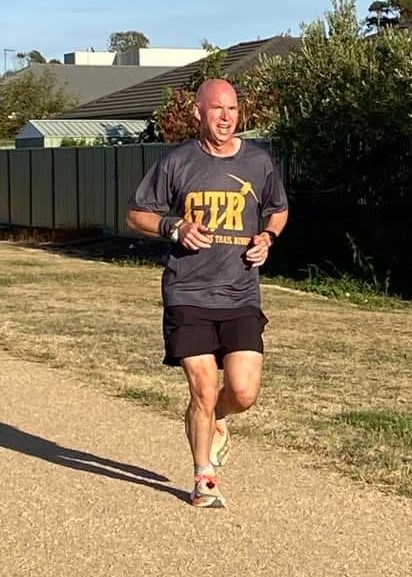
Dominique de Rooij (Dom)
Advanced Running Coach certified by Athletics Australia with 20 years of writing about running and over a decade coaching runners — from first-timers to marathoners. Dom's beginner programs have guided thousands of runners and been praised above plans from Jeff Galloway, Hal Higdon, and Runner's World. Now over 50, Dom still loves trail running, parkrun, and the coffee after.
Free weekly coaching • Join 3,500+ runners
Train Smarter, Not Just Harder
Get your free guide when you join the BRT Coaching Letter
No spam, ever. Unsubscribe in one click, any time.
What's New?
-
Cut 90 Seconds Off Your 1.5 Mile Run for the Army Test
Cutting 90 seconds off a 1.5 mile run in 3-4 weeks for the Army test: Dom breaks down realistic pacing to reduce 10:32 toward sub-9:00 for Paras selection. -
Improve Your 1.5 Mile Running Time to 10:30: Shin Splints
From 12:59 to 10:30 for 1.5 miles: Coach Dom's shin-splint fix and training plan to improve your running time in 2-3 months. -
Training for a 1.5 Mile Run - How to Qualify For Your Test
Coach Dom's 3-step plan for 1.5 mile run training: build aerobic base, add strides, then tempo and pace work to hit your test time.