Early Warning Signs of a Running Injury (and When to Pull Back)
Let's face it — a few weeks into a new running habit, almost everything aches a little. So when a new twinge shows up, the real question isn't whether it hurts. It's whether it's the ordinary kind of hurt, or the kind that turns into an injury if you keep running through it.Here's the one-line test. If it improves as you warm up and fades within a day, that's normal soreness — carry on. If it's sharp, sits in one specific spot, worsens as you run, or lingers past 48 hours, treat it as an early warning sign and read on.
This page is about that first decision, not what comes after it: normal or warning, monitor or pull back, run on or stop. For identifying and treating a specific injury once you know something's wrong, identifying and treating specific beginner injuries covers that ground in full.
Why Beginners Have a Harder Time Telling Soreness From Injury
New runners carry more soreness than experienced runners doing the same relative effort — and it's not in your head. Your muscles, tendons, and connective tissue are adapting to a type of loading they've never handled before, and that adaptation process produces real, generalised soreness of its own.I tell every new athlete I coach the same thing in their first few weeks: expect some soreness. It's part of the process, not a sign something's wrong. The problem is that most injury checklists don't make this distinction. They treat any ache as a red flag, which over-triggers badly for a beginner who's supposed to feel some soreness right now.
So recalibrate the question. Don't ask "does it hurt?" Ask "does it hurt in the specific way described below?" That's the distinction the rest of this page is built around.
The Core Test: Does the Pain Improve or Worsen During the Run?
A common rule of thumb is that pain that improves during a run is less concerning than pain that worsens. True, but it only helps if you can use it mid-run. Here's the protocol I give my own athletes.The moment you notice something, run this three-step check:
- Note it. Where exactly is it, and when did it start?
- Keep running. Continue at an easy effort for another three to five minutes.
- Reassess. If it fades or stays flat, finish the run as planned and monitor it afterwards. If it sharpens, changes your stride, or spreads, stop and walk home.
Reading Your Body's Early Signals: Aches, Stiffness, and Swelling
Once you've run the in-run test, use this table to calibrate what you're actually feeling against the beginner baseline from the section above. The same word — "ache" — can describe two completely different situations.| Symptom Type | Normal Beginner Soreness | Warning Sign |
|---|---|---|
| General muscle fatigue | Symmetrical, dull ache across both legs — fades within 24 to 48 hours | The same ache lingers past 48 hours or gets worse with each run |
| Localised ache or stiffness | Mild tightness that loosens off a few minutes into the run | One specific spot, one side only, present before you've even started moving |
| Swelling, sharp pain, or a stride change | No normal version — this category always deserves attention | Any swelling, a sharp or stabbing sensation, or a noticeable change in how you're running — stop today |
One-Time Niggle vs. Recurring Pattern: Why It Changes Your Response
A single ache means almost nothing on its own. The pattern it forms over your next few runs means quite a lot — and this is a coaching judgement call I use with my own athletes, not something I've pulled from a study.Here's how I apply it:
- First occurrence. Note it, run as planned, and watch for it next time out.
- Second occurrence, same spot, within three runs. Treat it as a pattern, not a coincidence — cut that run's intensity or distance and add an extra rest day before your next attempt.
- Third occurrence, same spot. Stop training through it. This is the point to actively pull back, and to consider a professional opinion if it hasn't resolved within a week of modified training.
Matching Your Symptom Location to What It's Likely Becoming
Where a niggle sits tells you a lot about what it's likely to become if you ignore it. In my own coaching, shin and outer-knee issues turn up disproportionately more in new runners than in experienced ones — their bodies simply haven't adapted to the loading yet.| Location | What It's Likely Becoming | Key Modification |
|---|---|---|
| Shin (front, lower leg) | Early shin splints | Cut back your mileage and avoid hard surfaces until it settles |
| Top or front of foot | Possible stress reaction — treat cautiously | Stop and get it checked before you run on it again |
| Outer knee | Iliotibial (IT) band irritation | Reduce downhill running and hold your mileage steady |
| Below the kneecap | Patellar tendon irritation — a "runner's knee" precursor | Cut back any incline or speed work for now |
| Achilles / back of heel | Early Achilles tendinopathy | Reduce hill work and other calf-loading efforts |
| Calf | Strain risk, especially after a pace increase | Return your pace to where it was before the increase |
What to Actually Do on a Pull-Back Day
"Just rest" is the usual advice, and it only helps if you can turn it into something usable. Here's your actual pull-back menu, beginner-friendly and equipment-free if you need it to be:- Walking. The direct substitute — it keeps the habit going without the impact.
- Easy stationary cycling or swimming. Fifteen to twenty minutes, at a genuinely easy effort, not a workout.
- Full rest. The right call if the signal was a sharp, stop-today one.
When It's Time to See a Professional
Most niggles resolve with the steps above. Some don't, and it helps to know the threshold in advance rather than guessing in the moment.See a doctor or physio the same day for sharp pain that changes your gait, any swelling, or pain that shows up with normal walking, not just running. Book an appointment within the week if a modified-training approach hasn't resolved a recurring niggle after one full week. Outside of those two situations, self-manage with the tools above — and if you want a full breakdown of when to see a doctor, that page goes further into the detail.
Frequently Asked Questions
How is beginner soreness different from an actual injury warning sign?Beginner soreness is symmetrical — both legs, roughly equally — dull, and fades within 24 to 48 hours. A warning sign shows up in one specific spot, is often present before you've even started moving, or changes the way you run.
What does it mean if pain gets better during a run but returns afterward?
It still counts as a signal. Track it against the recurring-pattern rule — a second occurrence in the same spot within three runs means modify your training, a third means pull back — rather than dismissing it just because the run itself felt fine.
How many times can a niggle recur before I need to change my training?
Twice in the same spot within three runs is the line — cut your intensity and add an extra rest day. A third recurrence means actively pulling back, not just monitoring.
What symptoms mean I should stop running immediately versus just modify the next session?
Sharp pain, swelling, or a change in your stride mean stop today. Dull, localised stiffness that hasn't recurred means modify your next session and keep watching it.
Is morning stiffness after a run something to worry about as a new runner?
Mild, brief stiffness that eases within the first few minutes of moving is common early on. Stiffness that's sharp, one-sided, or doesn't ease is worth tracking as a possible early signal.
Some Other Pages You May Like
About the author
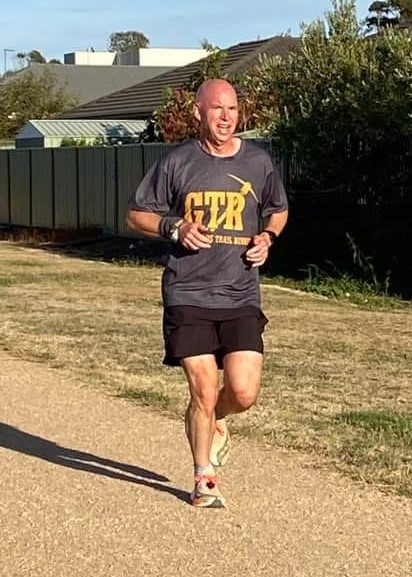
Dominique de Rooij (Dom)
Advanced Running Coach certified by Athletics Australia with 20 years of writing about running and over a decade coaching runners — from first-timers to marathoners. Dom's beginner programs have guided thousands of runners and been praised above plans from Jeff Galloway, Hal Higdon, and Runner's World. Now over 50, Dom still loves trail running, parkrun, and the coffee after.
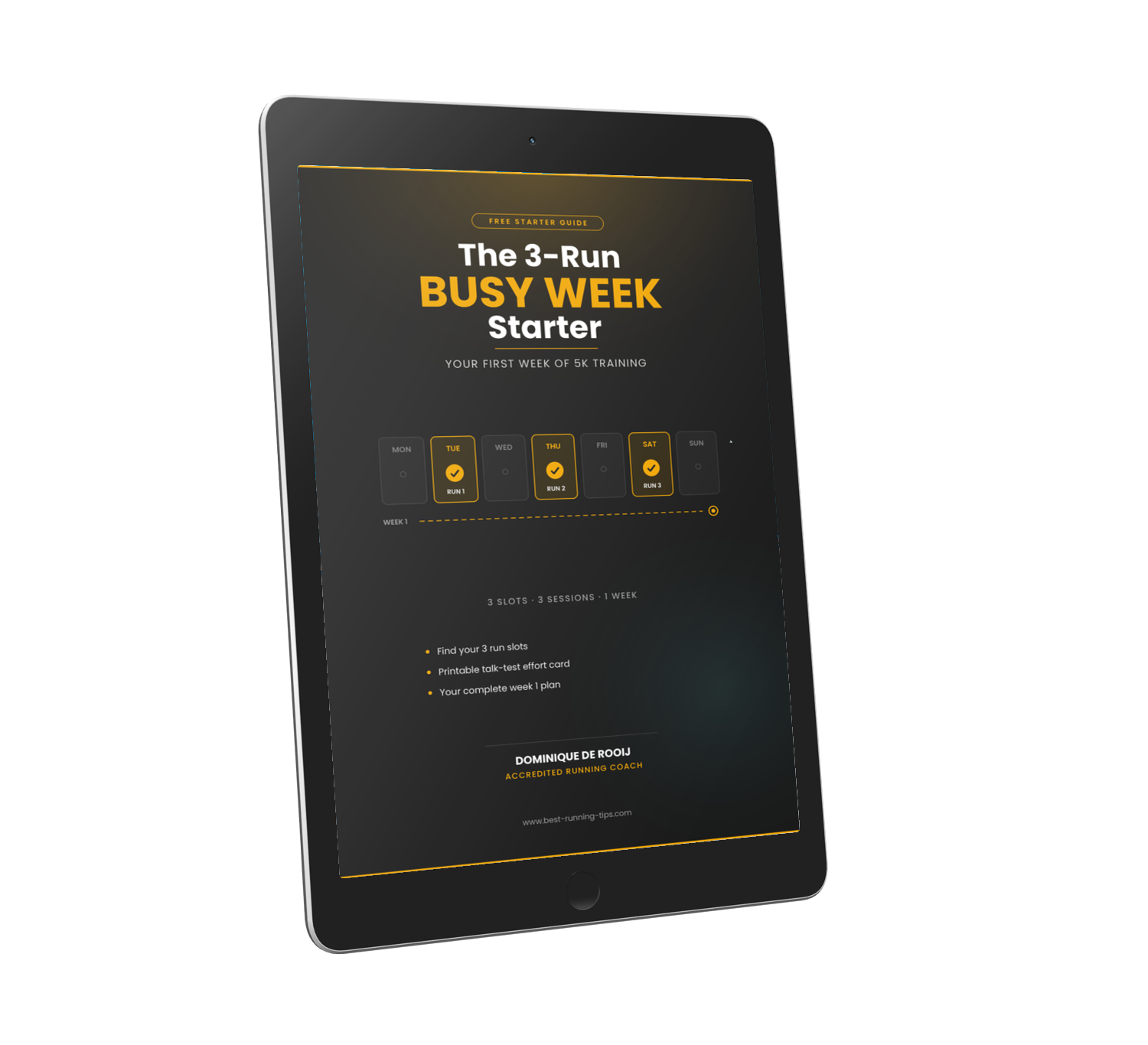
Free beginner guide • From Coach Dom
Start Running This Week, Even If Your Week Is Already Full
Most beginners don't quit for lack of motivation. They quit because their plan doesn't fit their life. The 3-Run Busy Week Starter plans your first week around the week you actually have.
- Find 3 run slots you can actually keep
- The talk test: the simple way to stop running too fast
- Your complete week 1 plan: 3 run/walk sessions, about 20 minutes each
You'll get the guide plus a short email every few days to help you through week 1. Unsubscribe any time. Privacy policy.
What's New?
-
Personalized Running Coaching - BRT | Run Smarter, Race Better
 Get a personalized running program built around your current fitness, goals, and schedule - not a generic app template. Choose from BRT Silver, Gold, or Platinum coaching with Dom, accredited running…
 -
Sample 4-Day Marathon Training Week: Base to Taper
A full 4-day-a-week marathon training schedule, phase by phase - base, build, peak, and taper - with named workouts and weekly mileage. -
Marathon Taper for a 10-12 Week Training Cycle
How to taper correctly on a compressed 10-12 week marathon plan - the right taper length, why standard advice doesn't fit, and the week-by-week structure.