Running With Asthma or Other Lung Conditions
Yes — running with asthma is generally safe, and for most runners it actually improves long-term asthma control by building cardiovascular fitness and airway tolerance. The exception is uncontrolled or unmedicated asthma, which needs your doctor's sign-off first. Get your medication timing right and adjust your warm-up and pacing, rather than just pushing through, and it works.I've coached plenty of runners managing asthma or another lung condition, and the ones who struggle aren't the ones with asthma — they're the ones treating it as a fitness problem instead of a medical one with its own plan. Below: how to tell asthma symptoms from ordinary beginner breathlessness, exact inhaler timing, training and race-day adjustments, and the red flags that mean stop. If you haven't got the basics of breathing technique for new runners down yet, that's worth sorting first — everything here builds on top of it.
Exercise-Induced Bronchoconstriction vs. Normal Beginner Breathlessness
Every new runner feels breathless. The trick is telling the difference between ordinary effort and an asthma symptom — and the timing gives it away every time.Normal breathlessness rises gradually as your effort increases, eases within a minute or two once you slow down, and doesn't come with wheezing, chest tightness, or a cough that lingers after you stop. Exercise-induced bronchoconstriction — EIB, the technical term for asthma symptoms triggered by exercise — behaves differently. It typically shows up five to fifteen minutes into a run, not immediately, and it often peaks a few minutes after you stop rather than easing straight away. The tell-tale signs are wheezing, a dry cough, or chest tightness, not just "feeling winded."
Here's the coaching line I give runners who ask me this: if slowing down doesn't resolve it within a minute or two, treat it as more than fitness. That's your signal to stop guessing and start treating it as a medical symptom, not a training one.
| Signal | Normal Beginner Breathlessness | EIB / Asthma Symptoms |
|---|---|---|
| Onset timing | Rises gradually with effort, from the start | Often appears 5–15 minutes into the run |
| After you stop | Eases within a minute or two | Can peak a few minutes after stopping |
| Symptom type | General breathlessness, no wheeze | Wheezing, dry cough, chest tightness |
Beyond Asthma: Other Lung Conditions That Get Mistaken for It
Asthma isn't the only explanation for breathing trouble on a run. If your inhaler isn't helping, one of these three might be why.COPD — chronic obstructive pulmonary disease — is more common in older or ex-smoking runners, and it causes persistent breathlessness rather than symptoms that only show up during exercise. Exercise-induced laryngeal obstruction, also called vocal cord dysfunction, feels like throat tightness with a noisy inhale rather than the classic wheeze on exhale — it's often misdiagnosed as "asthma that doesn't respond to inhalers," because it isn't asthma at all. Allergic rhinitis can compound the problem too: nasal congestion forces you into mouth breathing, which amplifies how breathless you feel even when your lungs themselves are fine.
None of this is a diagnostic tool — that's your doctor's job, covered below. It's a reason to ask the question if your current asthma treatment isn't working the way it should.
Medication Timing: Using Your Inhaler Before, During, and After Runs
The standard rescue inhaler — albuterol or salbutamol, most commonly — works best when you use it 15 to 20 minutes before you start running. Earlier and it's worn off before you need it. Later and it hasn't kicked in yet. That 15-to-20-minute window is the one number worth remembering from this whole page.If symptoms start mid-run despite pre-medicating, stop. Use your rescue inhaler, wait for symptoms to resolve, and then resume at an easier effort than you were running before — not back at the pace you stopped at.
Your controller or maintenance medication is a separate matter entirely. That's a daily prevention drug, not a pre-run dose, and it's not something to adjust yourself without talking to the doctor who prescribed it.
Warm-Up and Environmental Modifications That Actually Help
A longer, gradual warm-up — 10 to 15 minutes easy, building slowly rather than starting at pace — blunts the EIB response better than launching straight into your run. It's a sensible first move and it costs you nothing.Cold, dry air and high pollen or pollution days are the most common triggers you'll actually face. Cover your mouth in cold weather — see breathing in cold weather for the specifics — and check an air quality or pollen forecast before hard efforts on trigger-heavy days. Beware the days when both stack up at once: a cold, high-pollen morning is exactly when a shorter, easier session beats pushing through a planned hard one.
Adjusting Interval and Speed Workouts When You Have Asthma
Asthma changes how you build up to hard work, not whether you're allowed to do it.Build your interval volume more gradually than a non-asthmatic training plan would — start with shorter reps and longer recoveries, even at the same fitness level, and progress from there. Pre-medicate before interval or tempo sessions specifically, not just your easy runs, since higher ventilation rates during hard efforts are the main EIB trigger. On days when outdoor triggers are worst, a warm, humid environment — an indoor track or a treadmill — is a sensible substitute for your hardest sessions.
This is exactly how I build up interval work with athletes I coach who have a known asthma diagnosis: same progressive structure everyone else gets, just a slower ramp and medication timed around the session rather than the day. For the general breakdown of how your breathing should shift as effort rises, see how breathing changes by pace and effort.
Race-Day Strategy for Runners With Asthma
Race mornings are rushed, but the 15-to-20-minute pre-medication window doesn't move for that — build it into your morning routine the same way you would your pre-race breakfast.Cold race-morning starts and crowded corrals are both extra triggers, so give yourself a longer personal warm-up than usual before the gun — this is the specific instruction I give asthmatic athletes before a race. Carry your rescue inhaler during the race itself, not just beforehand. And start conservatively: adrenaline and a faster-than-planned opening pace are common asthma-symptom triggers on race day specifically, so hold back at the start more than feels necessary.
Red Flags: When to Stop and Seek Help
Stop the run immediately and use your rescue inhaler if any of the following happen:- Symptoms aren't improving within a few minutes of using your rescue inhaler.
- You need the rescue inhaler more than twice in one run.
- Your lips or fingertips take on a blue tinge.
- Chest tightness is severe enough that you can't speak in full sentences.
Any one of these means stop and seek medical attention — not push through, and not walk it off.
Working With Your Doctor to Build a Running-Specific Plan
Bring three things to that conversation: when your symptoms happen — the timing, the triggers, what resolves them — your current medication and a check of your inhaler technique, and your actual running goals, whether that's training for a 5K or general fitness. That last point matters more than it sounds. A running-specific plan looks different from a general activity plan, and your doctor can only build one if they know what you're training for.I ask every athlete with a lung condition to bring exactly that to their doctor before we build their training plan together — it's a coaching request, not a medical one. This page is general coaching information, not medical advice — talk to your doctor about your specific diagnosis and medication before starting or changing your training.
Frequently Asked Questions
Is it safe to run with asthma?
Yes, for most people with controlled asthma and the right medication timing. If your asthma isn't yet controlled, get your doctor's clearance first.
How long before a run should I use my inhaler?
Around 15 to 20 minutes before you start, for most rescue inhalers — full detail is in the medication timing section above.
What triggers make asthma symptoms worse for runners specifically?
Cold, dry air; high pollen counts; poor air quality or wildfire smoke; and starting a run too fast without a proper warm-up.
What symptoms during a run mean I should stop immediately?
Your rescue inhaler not helping within a few minutes, needing it more than twice in one run, blue-tinged lips or fingertips, or not being able to speak in full sentences.
Does air quality (pollution, wildfire smoke) affect asthmatic runners more than others?
Yes — asthmatic airways react more strongly to particulate matter and smoke. Check the air quality index before hard outdoor efforts on bad-air days.
So: get your medication timing right, adjust your warm-up and training build-up rather than pushing through, and know the red flags that mean stop.
Asthma changes your plan, not your ability to run.
Some Other Pages You May Like
About the author
Dominique de Rooij (Dom)
Advanced Running Coach certified by Athletics Australia with 20 years of writing about running and over a decade coaching runners — from first-timers to marathoners. Dom's beginner programs have guided thousands of runners and been praised above plans from Jeff Galloway, Hal Higdon, and Runner's World. Now over 50, Dom still loves trail running, parkrun, and the coffee after.
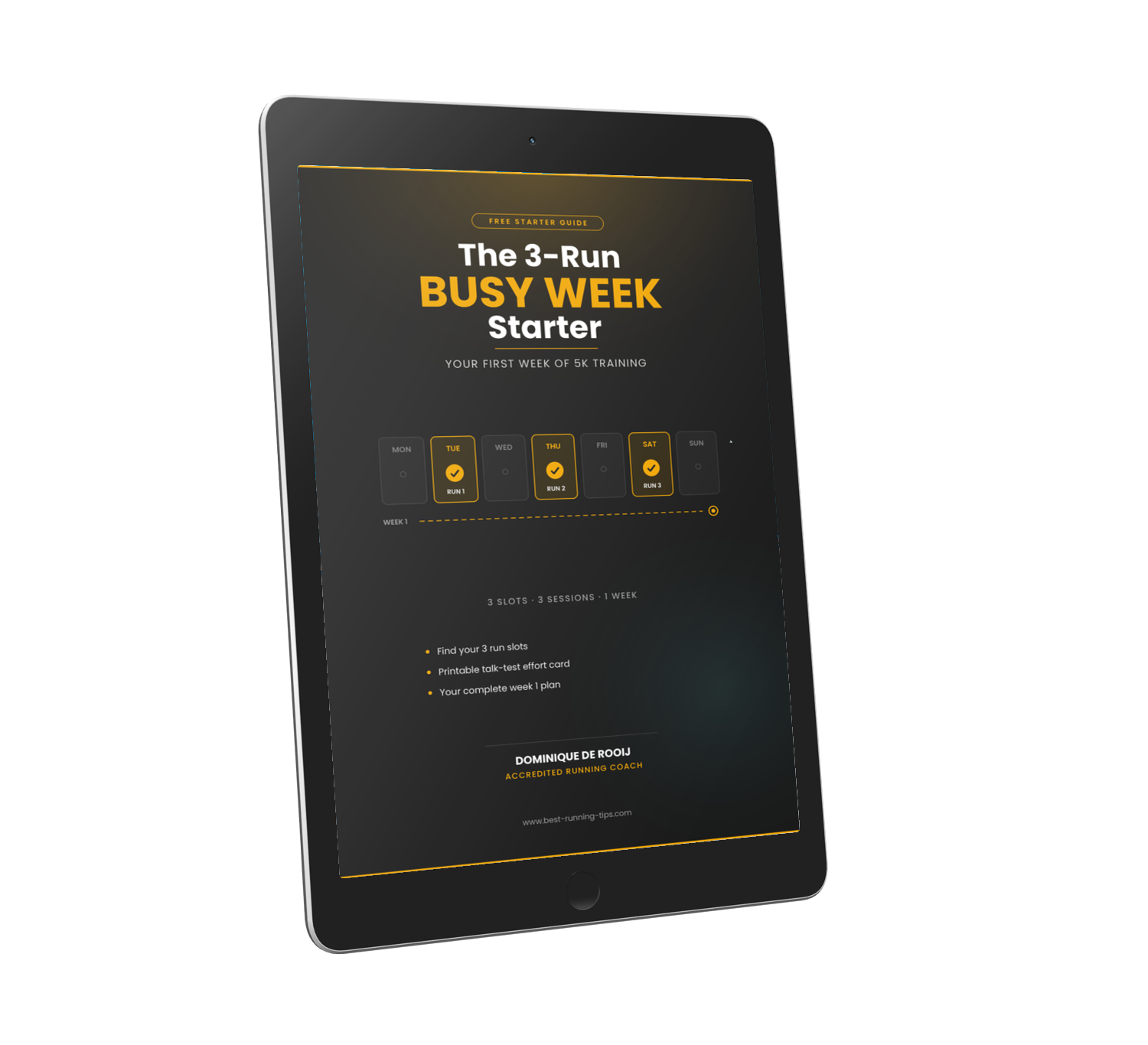
Free beginner guide • From Coach Dom
Start Running This Week, Even If Your Week Is Already Full
Most beginners don't quit for lack of motivation. They quit because their plan doesn't fit their life. The 3-Run Busy Week Starter plans your first week around the week you actually have.
- Find 3 run slots you can actually keep
- The talk test: the simple way to stop running too fast
- Your complete week 1 plan: 3 run/walk sessions, about 20 minutes each
You'll get the guide plus a short email every few days to help you through week 1. Unsubscribe any time. Privacy policy.
What's New?
-
Personalized Running Coaching - BRT | Run Smarter, Race Better
 Get a personalized running program built around your current fitness, goals, and schedule - not a generic app template. Choose from BRT Silver, Gold, or Platinum coaching with Dom, accredited running…
 -
Sample 4-Day Marathon Training Week: Base to Taper
A full 4-day-a-week marathon training schedule, phase by phase - base, build, peak, and taper - with named workouts and weekly mileage. -
Marathon Taper for a 10-12 Week Training Cycle
How to taper correctly on a compressed 10-12 week marathon plan - the right taper length, why standard advice doesn't fit, and the week-by-week structure.