High Heart Rate & Black Spots When Running: What It Means
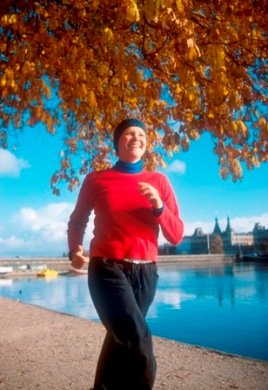
Nancy's Question, Philadelphia PA
Nancy is 52 — 53 in two months — 5'11", and 140lbs, writing in from Philadelphia, PA. Before running, she cycled 20 to 30 miles on Mondays, Wednesdays and Fridays, and weight-lifted on Tuesdays and Thursdays. She's genuinely fit. Running is just new to her.It took her until 51 to run a mile without stopping, at around an 11.5 minute-mile pace. Eighteen months in, she'd built up to 5-mile runs at 11 minutes a mile. Then, a month before writing in, that progress reversed — she started struggling to get past 4 miles, often walking after 2.5 to 3 miles.
Throughout, her treadmill heart rate monitor reads consistently in the 190s for close to an hour of running. She sees black spots. She loses coordination. She feels like she can't get enough air.
She's already seen doctors about it and been told, "that's great you're running, most people can't even run a mile." She has good medical coverage. What she doesn't have is a straight answer on what type of doctor to see, or what tests to ask for. That's what this page is for.
Is Your Heart Rate Reading Actually Right?
Before anything else, it's worth checking the number itself. The standard estimate for maximum heart rate is 220 minus your age — a rough guide, not gospel, so get a more accurate max heart rate estimate if you want a sharper number. For a 52-year-old, that rough estimate lands around 168 beats per minute (bpm).Nancy's reading of 190 sits around 22 beats above that. That gap cuts two ways, and both are worth taking seriously.
One possibility: the reading itself is inflated. Treadmill grip sensors are notoriously less reliable than a chest strap — they pick up grip pressure and motion as much as your actual pulse. The other possibility: the number is real, and a heart rate that far above your estimated max is worth a doctor's attention in its own right.
Here's the sensible first step, before drawing conclusions either way: repeat a run wearing a chest-strap monitor instead of relying on the treadmill's built-in sensor. It costs you nothing, and it rules out the simplest explanation first.
Black Spots and Losing Coordination: When This Is a Red Flag
Let's be direct about this one. Graying or spotted vision, dizziness, and losing your coordination or balance during exercise are not routine fatigue — they're near-fainting symptoms, and they're treated as a genuine warning sign. That's especially true when they're paired with a heart rate that's unusually high for the effort, exactly as Nancy describes.This isn't an emergency-room-tonight situation. But it is a see-someone-soon, not see-someone-someday situation.
One thing matters more than almost anything else here: how you describe it. Tell your doctor specifically that this happens during exercise — graying vision, losing coordination, mid-run — rather than describing it generally as "stamina problems." That detail is what changes whether a doctor takes it seriously, or shrugs it off the way Nancy's did.
I'm not a doctor, and none of this is a diagnosis — it's triage guidance, based on what these symptoms usually mean, not a read on what's actually going on in your body specifically.
Worth Checking Promptly vs. Not an Emergency
| Worth Checking Promptly | Not an Emergency |
|---|---|
| Black spots, dizziness, or loss of coordination during exercise | Gradual fatigue that improves with rest |
| Heart rate far above your age-predicted max | Heart rate that settles quickly once you stop |
| A sudden, unexplained drop in performance | No visual or balance symptoms at all |
Why Might Your Stamina Have Suddenly Dropped?
Set the scary symptoms aside for a moment, because there's a second question buried in Nancy's letter that's easy to miss: a genuine regression, not a plateau. Two months ago, 5 miles at 11 minutes a mile. Now, struggling past 4. That's not slow progress — that's going backwards, after 18 months of steady gains.A sudden drop like that, after a long stretch of consistent progress, usually points to something specific rather than an ordinary plateau. Two of the more common, easily checked causes are iron-deficiency anaemia and an underactive thyroid — both worth raising with a doctor directly.
There are other everyday culprits worth ruling out too: dehydration or heat load, if this coincides with warmer conditions; poor sleep; a recent illness or infection your body's still recovering from. And given Nancy is running Monday, Wednesday, Friday and lifting Tuesday, Thursday with no rest day built in, simple overtraining and under-recovery deserves a look as well — wondering if this is overtraining instead? covers that angle in more depth.
None of this is a self-diagnosis list. It's a starting point for the conversation with your doctor, not a substitute for having it.
What to Actually Ask Your Doctor For
This is the part the old answer to this question never actually gave: a concrete starting point. Here's what I'd raise with a general practitioner (GP, or family doctor) in Nancy's position.A full blood count with iron studies checks for anaemia. A thyroid panel — specifically thyroid-stimulating hormone (TSH) — checks thyroid function. And given the exertional black spots and loss of coordination specifically, it's worth asking whether a referral for a cardiac work-up makes sense: an exercise stress test or an ambulatory electrocardiogram (ECG), sometimes called a Holter monitor, are the standard ways to see what your heart is actually doing during a run, rather than guessing from a treadmill's number.
Here's the detail that makes the difference: naming the exertional symptoms clearly — black spots, loss of coordination, specifically during exercise — is what gets a doctor to consider that cardiac work-up, rather than filing it under general stamina complaints the way Nancy's earlier visits did.
In the Meantime: Training Adjustments
While the medical side gets sorted, there's still a sensible way to train. None of this replaces the doctor's visit above — think of it as running comfortably in the meantime, not around the problem.A run/walk approach is the place to start. Run at a pace where you can still hold a conversation — even if that means a gentle shuffle — and walk when you need to, rather than pushing through.
Where you can, run outdoors instead of on the treadmill. Outside, your pace adjusts naturally to how your body feels in the moment. A treadmill's belt doesn't care how you're feeling — it just keeps moving.
Taking up running at 50 and building to 5 miles is genuinely impressive — don't let a rough few weeks erase that. Get the reading checked, get the doctor's appointment booked with the right words attached to it, and keep your training gentle until you've got answers. For more on getting the most out of a heart rate monitor, see the full guide to heart rate training.
All the best,
Dominique
Frequently Asked Questions
Is it normal to see black spots or feel dizzy when running?
Not something to write off as normal fatigue, especially paired with a heart rate that's unusually high for the effort — it's worth a prompt doctor's visit, and worth describing specifically as happening during exercise.
What heart rate is too high for my age when running?
The rough estimate is 220 minus your age; a number that sits well above that estimate for sustained periods is worth checking with a chest-strap monitor first, then raising with a doctor if it holds up.
Why has my running suddenly gotten harder after months of steady progress?
A genuine regression, not a normal plateau, usually has a specific cause — anaemia, thyroid function, poor recovery, or illness are the common, checkable ones a doctor would look at first.
What tests should I ask my doctor for if my heart rate seems too high when exercising?
A full blood count with iron studies, a thyroid panel, and — if you're getting exertional symptoms like dizziness or black spots — ask about a referral for an exercise stress test or a Holter monitor.
Some Other Pages You May Like
About the author

Dominique de Rooij (Dom)
Advanced Running Coach certified by Athletics Australia with 20 years of writing about running and over a decade coaching runners — from first-timers to marathoners. Dom's beginner programs have guided thousands of runners and been praised above plans from Jeff Galloway, Hal Higdon, and Runner's World. Now over 50, Dom still loves trail running, parkrun, and the coffee after.
Free weekly coaching • Join 3,500+ runners
Train Smarter, Not Just Harder
Get your free guide when you join the BRT Coaching Letter
No spam, ever. Unsubscribe in one click, any time.
What's New?
-
Personalized Running Coaching - BRT | Run Smarter, Race Better
 Get a personalized running program built around your current fitness, goals, and schedule - not a generic app template. Choose from BRT Silver, Gold, or Platinum coaching with Dom, accredited running…
 -
Sample 4-Day Marathon Training Week: Base to Taper
A full 4-day-a-week marathon training schedule, phase by phase - base, build, peak, and taper - with named workouts and weekly mileage. -
Marathon Taper for a 10-12 Week Training Cycle
How to taper correctly on a compressed 10-12 week marathon plan - the right taper length, why standard advice doesn't fit, and the week-by-week structure.
