Treadmill Running: Incline, Pace and Training Guide
Treadmill running is a legitimate substitute for outdoor training, not a lesser one, provided you set it up right: use a minimum 1% incline to match outdoor effort, and apply the same training-plan logic you would outside, with easy days easy and hard days hard. Below: why runners use a treadmill, the 1% incline rule, fitting sessions into a real training plan, form and safety on the belt, whether it's easier on your body, how to choose a treadmill, and how to get from treadmill training to race day.Plenty of runners treat the treadmill as a last resort, and quietly lose weeks of training every time the weather turns. I use mine regularly, and I coach plenty of runners who do the same with good results, so let's get the setup right and make those sessions count.
Why Runners Use a Treadmill
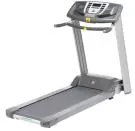
- Weather extremes — too hot, too cold, too windy or pouring with rain, the treadmill keeps your training schedule intact when going outside would be miserable or unsafe.
- Hills on demand — if you live somewhere flat, the incline button gives you climbing you simply can't find outdoors.
- Safety — running indoors after dark removes a real risk, particularly if you'd otherwise be training alone.
- Controlled test conditions — a treadmill holds pace and incline steady, so you can repeat a fitness test without wind, terrain or weather skewing the result.
- Convenience — awkward work hours, young kids at home, a show you don't want to miss — the treadmill fits around your life.

The 1% Incline Rule: Matching Treadmill Effort to Outdoor Effort
Here's the thing about treadmill running: the same displayed pace feels easier than it does outside. There's no air resistance to push through, and that missing air resistance is the main reason you're doing less work than the number on the display suggests.Do you need to set an incline when running on a treadmill? Yes. Set a minimum 1% incline to bring your effort back in line with outdoor running at the same pace. For very fast interval efforts (mile pace or quicker) you can nudge it up towards 1.5–2%, because the missing air resistance matters more the faster you go.
Use the table below to convert your outdoor pace to an equivalent treadmill speed at 1% incline.
| Effort | Outdoor Pace (per mile) | Outdoor Pace (per km) | Treadmill Speed @ 1% Incline |
|---|---|---|---|
| Easy | 10:00 /mile | 6:13 /km | 6.0 mph (9.7 km/h) |
| Threshold / Tempo | 8:00 /mile | 4:58 /km | 7.5 mph (12.1 km/h) |
| Interval (5K effort) | 6:30 /mile | 4:02 /km | 9.2 mph (14.8 km/h) |
| Interval (mile effort) | 5:30 /mile | 3:25 /km | 10.9 mph (17.6 km/h) |
Beware: this is an effort-matching heuristic, not a lab-exact conversion. Treat it as your starting point, then fine-tune by feel over your first few sessions — your perceived effort and breathing will tell you more than the display ever will.
I've spent over 20 years at Best Running Tips, and this pace table is built from that coaching experience — not a generic converter widget.
If you're chasing exact hill-simulation numbers for a specific gradient rather than general effort-matching, see my treadmill grade-to-hill conversions instead — that page covers grade-specific numbers this one doesn't. And if you want to convert your full range of training paces rather than just the four bands above, my treadmill speed and distance guide goes further.
Fitting Treadmill Sessions Into a Real Training Plan
Here's a mistake I see often: runners treat the treadmill as a separate training phase, with its own rules. It isn't. The treadmill is an environment substitution — nothing more. An easy run on the treadmill is still an easy run. A treadmill interval session still follows the same structure as the interval session you'd run outside.Most session types translate indoors cleanly. Easy runs, tempo efforts and most interval work all hold up well on the belt — see my treadmill interval sessions guidance for how to structure them. A few lose real value indoors: long hill repeats with genuine descents, and race-simulation long runs, where terrain and pacing feel matter as much as fitness. For dedicated hill work, take the session outside where you can — my hill running workouts page covers which sessions I'd move outdoors first.
The rule of thumb: if a session's value comes from fitness and structure, the treadmill handles it fine. If its value comes from terrain, descent or race-specific feel, it belongs outside.
Form, Cadence, and Safety on the Belt

- Cadence often increases slightly — studies find runners take slightly more steps per minute on a treadmill than overground, so don't be surprised if your steps per minute creep up compared with outside.
- Clip the safety key on — every time, no exceptions. It's a one-second habit that stops a genuinely nasty fall.
- Keep your hands off the rails — holding on distorts your posture and lets you cheat the effort. If you need the rail to stay upright, you're running too fast for where you're at.
Is Treadmill Running Actually Easier on Your Body?
Apologies if this comes as a surprise: "easier on the legs" isn't the full story. The belt may reduce some impact loading compared with concrete or tarmac, although research finds only small and mixed differences, and it varies by machine. And even reduced impact isn't the same as reduced load, full stop.The fixed belt speed and reduced push-off variability change how the load lands on your body, rather than simply lowering it. I've coached runners who picked up new complaints — hip flexor tightness, in particular — only after shifting to heavy treadmill mileage, from the shorter, more repetitive stride pattern the belt encourages. It wasn't an injury they'd had outdoors; it showed up because of the treadmill, not despite it.
My honest take: treat "easier on your joints" as partially true, not as a blanket claim. Listen to your body on the treadmill just as carefully as you would outside — a new niggle after an indoor run is still a niggle worth paying attention to.
Choosing a Treadmill (Briefly)
If you're shopping for one, three things matter more than the rest: belt size (long and wide enough that you're not clipping the edges at speed), incline range (at least a few percent, given the 1% rule above), and motor durability (built for genuine running mileage, not occasional walking).That's the short version. For the full breakdown of what to look for and what to skip, see my treadmill features to look for guide.
Treadmill vs. Outdoor Running: What Actually Changes

None of that makes one better than the other — they're different tools for different days. For the full comparison, see treadmill vs. outdoor running.
From Treadmill Training to Race Day
If most of your mileage has been indoors, don't take your treadmill fitness straight to the start line untested. Deliberately reintroduce outdoor long runs before race day — you need to rebuild your feel for real pacing, camber, and whatever weather turns up on the day. Fitness built on the belt is real fitness, but it doesn't automatically transfer to road conditions you haven't practised in.See my transitioning from treadmill to road racing guide for how to plan that changeover.
Set your incline, keep your easy days easy and your hard days hard, and the treadmill will do exactly what you need it to — build and maintain fantastic progress, whatever's happening outside your window.
For help choosing the right paces for treadmill workouts, I recommend Daniels Running Formula by coach Jack Daniels.
Frequently Asked Questions
Is treadmill running as good as running outside?
Yes, for fitness and structured-session training. No, for race-specific pacing feel, terrain adaptation and mental toughness — you need both in a full plan.
Do I need to run at an incline on the treadmill?
Yes — a minimum 1% grade to offset the lack of air resistance. See the incline-rule section above for the full pace table.
Is treadmill running easier on your joints than road running?
Partially. You may get a little less impact loading, but the mechanical stress is different, not zero — it's not a blanket "easier."
How do I convert my outdoor pace to a treadmill speed?
Use the 1% incline-adjusted pace table above as a starting point, then fine-tune by perceived effort over a few sessions.
How many days a week can I run on a treadmill?
The same volume and hard/easy principles from outdoor training apply. The treadmill doesn't change your weekly training-load limits.
More Pages on This Topic
Some Other Pages You May Like
About the author

Dominique de Rooij (Dom)
Advanced Running Coach certified by Athletics Australia with 20 years of writing about running and over a decade coaching runners, from first races to marathons. Dom created PlanMyRace, a training plan generator for any race from 1500m to the marathon. Now over 50, Dom still loves trail running, parkrun, and the coffee after.
Stop Guessing.
Train for Your Best Race.
PlanMyRace builds a personalised, week-by-week training plan for any race from 1500m to the marathon, around your race date, your current fitness and the week you actually have.
Get My Free Plan →No credit card needed. Your full first week is free.
What's New?
-
Cut 90 Seconds Off Your 1.5 Mile Run for the Army Test
Cutting 90 seconds off a 1.5 mile run in 3-4 weeks for the Army test: Dom breaks down realistic pacing to reduce 10:32 toward sub-9:00 for Paras selection. -
Improve Your 1.5 Mile Running Time to 10:30: Shin Splints
From 12:59 to 10:30 for 1.5 miles: Coach Dom's shin-splint fix and training plan to improve your running time in 2-3 months. -
Training for a 1.5 Mile Run - How to Qualify For Your Test
Coach Dom's 3-step plan for 1.5 mile run training: build aerobic base, add strides, then tempo and pace work to hit your test time.