Pacing By Effort and Heart Rate When GPS Can't Be Trusted
Pace by effort and heart rate, in that order, when GPS goes unreliable. Trust perceived effort first — it responds instantly and needs no device. Use heart rate as your secondary cross-check, but only from your own trained goal-pace HR band, not a generic max-HR formula. Treat GPS pace as tertiary, and even then, average it over the last 0.5-1 mile rather than trusting the instant reading — instant GPS pace is the least reliable number on your watch in poor-signal conditions, not the most.
You've raced a tunnel, a downtown canyon of skyscrapers, or a switchback-heavy course before and watched your GPS pace swing wildly for no reason your legs could feel. The watch is wrong far more often than your legs are — the skill is trusting the right signal in the moment instead of chasing a number that's already lying to you.
Building Your Effort-to-HR-to-Pace Table Before Race Day

You can't pace by effort and HR on race day if you haven't calibrated it in training first. Here's the three-run protocol I use. On a flat, GPS-reliable long run or tempo effort, run 15-20 minutes at goal marathon pace and record your average heart rate — this becomes your goal-pace HR band, give or take 3-5bpm. Repeat at goal-pace effort, not pace, on a second run to confirm the HR band holds independent of the day's exact pace. Then name the effort level in plain language tied to the talk test — "can speak in broken sentences, not full ones" — so it's usable without a watch at all.
| Effort descriptor | Talk-test | HR band | Expected pace range |
|---|---|---|---|
| Goal marathon effort | Broken sentences, not full ones | Your trained band ±3-5bpm | Your calculated goal pace ±5-10 sec/mile |
| Slightly hard | Short phrases only | +5-10bpm above band | 10-20 sec/mile faster than goal |
| Comfortably steady | Full sentences | -5-10bpm below band | 15-25 sec/mile slower than goal |
Most self-coached runners over-trust instantaneous GPS pace and under-trust their own breathing — the fix is deliberately practising effort-based pacing on at least two training runs before race day, not just reading about it.
Why GPS Goes Unreliable on Marathon Courses
Knowing the cause helps you trust the backup instead of blaming your watch. Urban canyon signal bounce off tall buildings can read 10-20 seconds/mile off. Tunnels and underpasses cause total signal loss, and your watch estimates pace by accelerometer until it reacquires. Heavy tree cover on trail-adjacent sections does something similar. And switchback or tight-turn courses cause GPS to "cut corners," under-reading distance and making your pace look faster than your actual effort.
Resolving Conflicting Signals Mid-Race

If GPS says slow but your effort and breathing feel on-target, trust effort and hold form — don't surge to "fix" a GPS number that's likely wrong. If HR is spiking well above your goal-pace band while effort still feels moderate, treat HR as the early-warning signal — possible heat, dehydration, or adrenaline-driven overpacing at the start — and ease off before effort itself confirms it.
I coached a runner racing a tunnel-heavy urban marathon whose GPS pace read 25 seconds/mile fast through a tunnel section. He panicked, slowed to match the wrong number, and lost real time versus simply holding effort through the dead zone. If your numbers still don't add up mid-race beyond a GPS glitch, see the fuller recalibration framework for what to do next.
Your training paces are the starting point for building this effort/HR table — translate them into your race-day backup before you need it, not while you're standing in a corral wondering if your watch is lying to you.
Back to the full marathon pacing strategy hub.
Some Other Pages You May Like
About the author
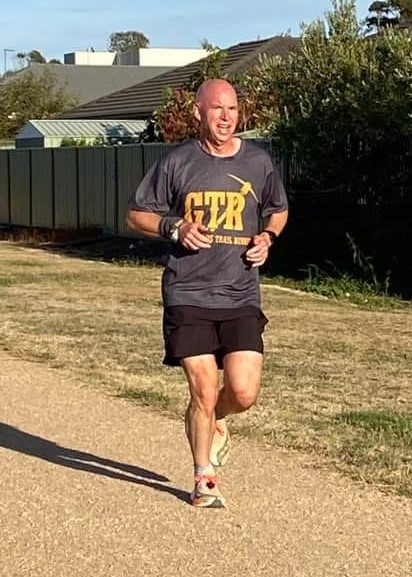
Dominique de Rooij (Dom)
Advanced Running Coach certified by Athletics Australia with 20 years of writing about running and over a decade coaching runners — from first-timers to marathoners. Dom's beginner programs have guided thousands of runners and been praised above plans from Jeff Galloway, Hal Higdon, and Runner's World. Now over 50, Dom still loves trail running, parkrun, and the coffee after.
Free weekly coaching • Join 3,500+ runners
Train Smarter, Not Just Harder
Get your free guide when you join the BRT Coaching Letter
No spam, ever. Unsubscribe in one click, any time.
What's New?
-
Personalized Running Coaching - BRT | Run Smarter, Race Better
 Get a personalized running program built around your current fitness, goals, and schedule - not a generic app template. Choose from BRT Silver, Gold, or Platinum coaching with Dom, accredited running…
 -
Sample 4-Day Marathon Training Week: Base to Taper
A full 4-day-a-week marathon training schedule, phase by phase - base, build, peak, and taper - with named workouts and weekly mileage. -
Marathon Taper for a 10-12 Week Training Cycle
How to taper correctly on a compressed 10-12 week marathon plan - the right taper length, why standard advice doesn't fit, and the week-by-week structure.