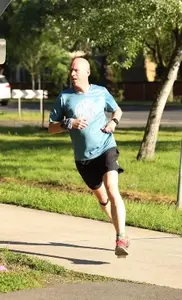
Pacing Big vs. Small Half Marathons What Changes

In a large, congested race, expect to run 0.1-0.3 miles further than the certified 13.1 due to weaving around slower runners — at goal pace, that's 1-3 extra minutes you didn't budget for, and choosing your starting position well is the single biggest lever for minimising it. A small race flips the problem entirely: no congestion, but no pace group or crowd energy to lean on either. This page covers corral positioning, running tangents properly, quantifying the congestion cost, pacing alone in a small field, using pacers by race size, and adjusting your goal time realistically.
Get either end wrong and the damage shows up in the same place — a pace chart that looked fine on paper falls apart in the opening miles, for opposite reasons depending on the field size you signed up for.
Choosing Your Start Corral Position Relative to Your Goal Pace
Line up at or just ahead of the pace group or corral matching your actual goal pace — never a corral for a faster time to try to get out ahead of the crowd. I tell athletes to line up with their actual pace group, not a faster one — starting in the wrong corral to "beat the crowd" is one of the most common self-inflicted congestion problems I see.
Starting in a faster corral than your pace guarantees weaving around people for the entire first mile, in the wrong direction — you'll spend that mile passing runners you have no business being ahead of. If corral assignment is self-seeded, arrive early enough to stand within the first third of your correct pace band.
How to Actually Run Tangents in a Crowded Field
"Run the tangents" gets repeated constantly without anyone explaining how. Here's the method: look 50-100m ahead to the next visible turn before you reach it, and start angling toward the inside of that turn 3-5 strides early.
Don't just follow the runner directly in front of you. Watching athletes on race footage, I see them consistently follow the runner ahead rather than the road's actual line, adding avoidable distance turn after turn — because the runner they're following almost certainly isn't running the tangent either.
Quantifying the Extra Distance and Time Cost of a Congested Start

Most of the extra distance in a congested race gets added in the first 1-2 miles, before the field spreads out. Budget the first 800m to a mile as weaving territory, where hitting exact goal pace simply isn't realistic.
Judge yourself on effort rather than the watch until the field thins out naturally. Fighting your GPS pace number during this stretch wastes energy on a number that doesn't reflect what's actually happening around you.
The Small-Race Problem: Pacing Alone Without Crowd Energy
Small races bring a different set of problems that most advice ignores entirely. Aid stations tend to be thinner — confirm spacing in advance and consider self-carrying more fluid or fuel than you would in a major race.
There's no natural pace group to latch onto, so identify 1-2 similarly-paced runners in the first mile and agree, even wordlessly, to work together. There's also less crowd energy for the mental lift you'd get in the back half of a big race — pre-plan specific mental cues rather than relying on atmosphere that simply won't be there.
One runner I coached pre-arranged a loose pacing partnership with a similarly-timed stranger in the first mile of a small local race with no pace groups. Both finished within 30 seconds of their goal, purely because they'd solved the "pacing alone" problem before it became one.
Using or Replacing Pacers and Pace Groups by Race Size
In large races, confirm a pace group matching your goal exists before race day, and start with them rather than alone. In small races, where no pace group exists, use your own splits as the pacer and check them every mile rather than relying on a group you won't have.
Adjusting Your Goal Time Realistically Based on Field Size and Course Design

In a genuinely congested major-city start, build in a 1-2 minute buffer to your goal time to account for unavoidable early weaving. This isn't lowering your ambition — it's accounting for a real, quantifiable cost that exists regardless of how well you run the rest of the race.
Frequently Asked Questions
How much extra distance should I expect to run in a congested race?
0.1-0.3 miles further than the certified 13.1, due to weaving around slower runners. At goal pace, that's 1-3 extra minutes you didn't budget for, and choosing your starting position well is the single biggest lever for minimising it.
Where should I line up at the start?
At or just ahead of the pace group or corral matching your actual goal pace — never a faster corral to try to get out ahead of the crowd. Starting in a faster corral than your pace guarantees weaving around people for the entire first mile, in the wrong direction.
How do I run tangents without losing time in a crowded field?

Look 50-100m ahead to the next visible turn before you reach it, and start angling toward the inside of that turn 3-5 strides early. Don't just follow the runner directly in front of you — they're very likely not running the tangent themselves.
Should I draft off other runners or find my own space?
Find your own space for pacing accuracy, but draft opportunistically in wind or when it costs you nothing tactically. Constantly weaving to draft in a congested field usually adds more distance than the energy it saves.
What's different about pacing a small race with no crowd energy?
Three things change: aid stations are thinner, so confirm spacing in advance and consider self-carrying more fluid or fuel; there's no natural pace group, so identify 1-2 similarly-paced runners in the first mile to work with; and there's less crowd energy for a mental lift in the back half, so pre-plan specific mental cues rather than relying on atmosphere that won't be there.
How should I adjust my goal time for a congested start?

In a genuinely congested major-city start, build in a 1-2 minute buffer to your goal time to account for unavoidable early weaving. This isn't lowering your ambition — it's accounting for a real, quantifiable cost.
How do I stay aid-station efficient in a large, crowded race?
Pick a lane on one side of the table early and commit to it rather than cutting across other runners at the last second. Reaching for a cup at the far end of a crowded table costs more time and disruption than grabbing the nearest one and adjusting your line after.
Are pacers and pace groups worth using, and does it depend on race size?
Yes, and it depends heavily on size. In large races, confirm a pace group matching your goal exists before race day and start with them rather than alone. In small races, if no pace group exists, use your own splits as the pacer and check them every mile rather than relying on a group you won't have.
How do I stay mentally engaged in a small, quiet race?
Pre-plan specific mental cues and mile-by-mile focus points before race day, rather than counting on crowd noise or a big field to carry you through the harder miles. A small race rewards runners who've done this mental preparation in advance.
Some Other Pages You May Like
About the author
Dominique de Rooij (Dom)
Advanced Running Coach certified by Athletics Australia with 20 years of writing about running and over a decade coaching runners — from first-timers to marathoners. Dom's beginner programs have guided thousands of runners and been praised above plans from Jeff Galloway, Hal Higdon, and Runner's World. Now over 50, Dom still loves trail running, parkrun, and the coffee after.
Free weekly coaching • Join 3,500+ runners
Train Smarter, Not Just Harder
Get your free guide when you join the BRT Coaching Letter
No spam, ever. Unsubscribe in one click, any time.
What's New?
-
Personalized Running Coaching - BRT | Run Smarter, Race Better
 Get a personalized running program built around your current fitness, goals, and schedule - not a generic app template. Choose from BRT Silver, Gold, or Platinum coaching with Dom, accredited running…
 -
Sample 4-Day Marathon Training Week: Base to Taper
A full 4-day-a-week marathon training schedule, phase by phase - base, build, peak, and taper - with named workouts and weekly mileage. -
Marathon Taper for a 10-12 Week Training Cycle
How to taper correctly on a compressed 10-12 week marathon plan - the right taper length, why standard advice doesn't fit, and the week-by-week structure.