5K Race Warm-Up Protocol: What to Do in the 25 Minutes Before the Gun
A 15–20 minute warm-up is the evidence-grounded standard for a 5K: 10–12 minutes easy jog, 3 minutes dynamic movement, 4 × 80–100m strides at race pace, then settle to the start line. Faster runners (sub-20) benefit from 20–25 minutes. Below: the full step-by-step protocol, how it scales by finish time, whether to stretch, and the 5-minute start line window.
Skip the warm-up, or cut it down to a token jog, and km 1 of your race becomes the warm-up instead — which means you're racing your first kilometre underprepared while everyone who warmed up properly is already at full capacity.
Why the 5K Warm-Up Is Different From Any Other Distance

A 5K runs at roughly 85–100% VO₂max at a strong, competitive effort — higher relative intensity than any other common road race distance at that effort level (this fraction drops for slower finish times — see the scaling breakdown below). A 10K runs at roughly 80–90% VO₂max; a marathon runs at roughly 75–85%. The 5K has the highest intensity demand at the gun and the least room for the cardiovascular system to "catch up" during the race.
The oxygen kinetics problem: at race start, there is a measurable lag — 60–90 seconds — between the cardiovascular demand of race pace and the delivery of oxygen to working muscles. This is the "oxygen kinetics deficit." During this lag, the muscles run partly on glycolysis (anaerobic), accumulating lactate that compounds through km 3–4.
A warm-up meaningfully shortens this lag by pre-activating the cardiovascular system and speeding oxygen-uptake kinetics before the race starts — "priming" exercise research consistently shows faster oxygen uptake at the start of hard efforts following a warm-up, though the exact reduction in lag time varies with fitness and warm-up protocol. For a 25:00 5K runner, the difference between arriving warmed up and cold at the start line translates to approximately 30–60 seconds of race time — because the energy cost of the cold start is paid across the entire race, not just in km 1.
The contrast with the marathon: a marathon runner starts at roughly 75–85% VO₂max and can achieve a natural warm-up across the first 3–4km without meaningful time penalty. A 5K runner at 95% VO₂max doesn't have this luxury. The cardiovascular system must be prepared before the gun fires.
The oxygen kinetics argument is the one I use with athletes who push back on the warm-up. "Won't I tire myself out?" The answer: a 15-minute easy jog and 4 strides is a trivial physiological load relative to the race. What it does is shift the cardiovascular starting point from cold to prepared. That's 30–60 seconds of free performance gain.
The Full 5K Warm-Up Protocol — Step by Step
| Phase | Duration | Content | Purpose |
|---|---|---|---|
| Phase 1 — Easy jog | 10–12 min (T−25 to T−13) | 1.5–2km at very easy conversational pace — 60–90 sec/km slower than 5K goal pace | Elevate core temperature; increase muscle blood flow; begin cardiovascular activation |
| Phase 2 — Dynamic movement | 3 min (T−13 to T−10) | Leg swings forward-back and lateral (10 reps/leg); high knees (30m); butt kicks (30m); hip circles (10 each direction) | Joint mobility; neuromuscular activation through race-specific movement range |
| Phase 3 — Strides | 4–6 min (T−10 to T−4) | 4× 80–100m at 5K race effort (not sprint — at race pace). Walk back recovery (30–45 sec) between each | Prime neuromuscular firing pattern at race pace before km 1 |
| Phase 4 — Settle to start | 2–3 min (T−4 to T−0) | Easy walk or very light jog to start area; keep moving | Maintain temperature; prevent cardiovascular cool-down; mental preparation window |
Minimum viable protocol (time-pressed): 8 min easy jog + 2 strides + start. Better than nothing; worse than the full protocol by approximately 15–20 seconds. If you have 10 minutes: use all of it for the jog, skip dynamic work, do 2 strides.
The stride question: "Won't strides tire me out?" No — 4 × 80m at race pace with full walk recovery is a trivial cardiovascular load. What they do is teach your neuromuscular system what race pace feels like before the gun goes off. Km 1 without strides feels unfamiliar and often provokes conservative pacing. Km 1 after strides feels exactly like the strides did, just sustained. It's a decision about how your first 400m feels.
What to avoid: static stretching in this window (see below). A pre-race coffee if untested in training — gastrointestinal effects vary widely. A tempo effort as part of the warm-up unless this is established practice for you — it adds cardiovascular load and is not needed for recreational runners.
Protocol Scaling by Finish Time

Faster runners need longer warm-ups because they race closer to VO₂max ceiling — where oxygen kinetics lag is most costly. Slower runners operate at lower VO₂max fractions and have more time for natural warm-up within race km 1.
| Target finish time | Warm-up duration | Protocol variation |
|---|---|---|
| Sub-20:00 | 20–25 minutes | Full 4-phase protocol. Some competitive runners add a 3–4 min tempo effort at threshold pace after strides — only if this is established practice. |
| 20:00–24:59 | 20 minutes | Standard full protocol. No additions needed. |
| 25:00–29:59 | 15–20 minutes | Full protocol; 10-min jog, dynamic, 3 strides minimum. |
| 30:00–34:59 | 12–15 minutes | 10-min easy jog + 2–3 strides. Dynamic movement included if time allows. |
| 35:00+ | 10–12 minutes | Easy jog + 2 strides. At this effort, km 1 provides adequate additional warm-up without significant time penalty. |
The scaling principle: the more time you spend at race pace with relatively low VO₂max reserve, the less physiologically critical a full warm-up is. A 38:00 5K runner is operating at 75–80% VO₂max — there is enough cardiovascular headroom that the first km of the race serves as a warm-up without excessive lactate accumulation. A 17:00 5K runner is at 98% VO₂max — there is no headroom, and a cold start costs disproportionately.
Should You Stretch Before a 5K?
Static stretching before a 5K: no. This isn't a matter of convention — the evidence is consistent: static stretching (holding for 30+ seconds) reduces muscle force production for 30–60 minutes post-stretch. Before a race that requires maximum force output in every stride, this is counterproductive. The loosening sensation from a static stretch does not translate to performance. I had a runner who insisted on a 10-minute static stretch routine before every race. When we compared her parkrun results with and without the static stretching phase, the non-stretching runs were consistently 20–30 seconds faster at the same perceived effort.
Dynamic movement: yes — after the warm-up jog. Leg swings, hip circles, high knees, and butt kicks maintain or improve range of motion without the force production penalty. These movements are the correct pre-race flexibility work for a 5K.
For chronic tightness patterns: if you have a specific area (tight hip flexors, calf tightness) that benefits from mobilisation, a brief gentle movement (10 seconds, not a held stretch) during the dynamic phase is acceptable. This is different from a full static stretching protocol.
Post-race is the right time for static stretching. Muscles are warm, range of motion is at maximum, and there is no performance cost. If you want to stretch, save it for after the finish line.
The 5-Minute Start Line Window
The gap between completing your warm-up and the gun going off is an overlooked detail. The temperature and cardiovascular activation built during the warm-up dissipates quickly when you stand still — especially in cool or cold weather. Standing in the start area for 10 minutes after a warm-up negates approximately half the warm-up benefit.
If the warm-up finishes 5–8 minutes before gun: keep moving. Slow walking or light jogging in the start area maintains temperature. This is what you'll see competitive runners doing in the start pen — not because they're nervous, but because they're maintaining the warm-up state.
If the start is delayed: continue light movement throughout the delay. If the delay is 15+ minutes, restart the warm-up sequence: 2 strides minimum to re-prime the neuromuscular system before the gun.
Mental routine in the final 2–3 minutes: visualise km 1 execution — your start position, the first 400m pace, where you'll settle after the opening surge. Confirm the goal time. Take 3 controlled breaths to manage pre-race HR elevation. This is not ritual — it's the psychological equivalent of the physiological warm-up. Your brain needs to know what you're about to do as much as your legs do.
FAQ — 5K Warm-Up
How long should I warm up before a 5K?

15–20 minutes for most runners (25–35 min finish time). 20–25 minutes for sub-20. Minimum 10–12 minutes if pressed for time.
What should I do to warm up?
Phase 1: easy jog 10–12 min. Phase 2: dynamic movement (leg swings, high knees, 3 min). Phase 3: 4 strides at race pace (4–6 min). Phase 4: easy movement to the start.
Should I stretch before a 5K?
Dynamic movement (leg swings, hip circles) after the jog: yes. Static stretching (held for 30+ seconds): no — reduces force production for up to 60 min.
What are strides and why do them?

80–100m accelerations at race pace effort, full recovery between. They prime the neuromuscular system to fire at race pace before km 1. Without them, km 1 often feels foreign.
What if I can't warm up?
Run km 1 at 10 sec/km slower than goal pace. Time cost vs. a proper warm-up: approximately 30–45 seconds.
Same warm-up for parkrun and road race?
Yes, if both are race-effort. The protocol scales by finish time, not by race context.
See also: 5K race strategy hub · building the warm-up into your race morning schedule · how the warm-up helps manage pre-race anxiety
Some Other Pages You May Like
About the author
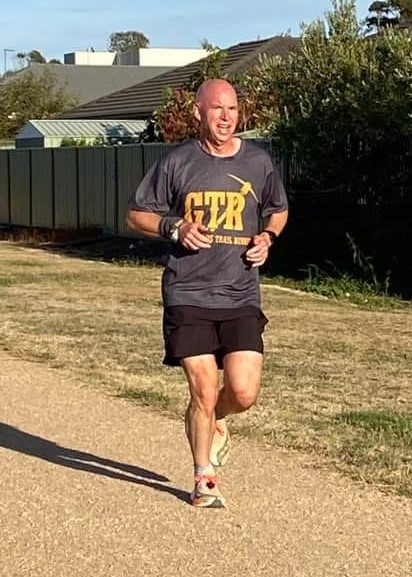
Dominique de Rooij (Dom)
Advanced Running Coach certified by Athletics Australia with 20 years of writing about running and over a decade coaching runners — from first-timers to marathoners. Dom's beginner programs have guided thousands of runners and been praised above plans from Jeff Galloway, Hal Higdon, and Runner's World. Now over 50, Dom still loves trail running, parkrun, and the coffee after.
Free weekly coaching • Join 3,500+ runners
Train Smarter, Not Just Harder
Get your free guide when you join the BRT Coaching Letter
No spam, ever. Unsubscribe in one click, any time.
What's New?
-
Personalized Running Coaching - BRT | Run Smarter, Race Better
 Get a personalized running program built around your current fitness, goals, and schedule - not a generic app template. Choose from BRT Silver, Gold, or Platinum coaching with Dom, accredited running…
 -
Sample 4-Day Marathon Training Week: Base to Taper
A full 4-day-a-week marathon training schedule, phase by phase - base, build, peak, and taper - with named workouts and weekly mileage. -
Marathon Taper for a 10-12 Week Training Cycle
How to taper correctly on a compressed 10-12 week marathon plan - the right taper length, why standard advice doesn't fit, and the week-by-week structure.
