Hip Weakness, Pronation, or Tibial Torsion? Possible Contributors to IT Band Pain, and What to Try First
To explore what may be contributing to your iliotibial band pain (the iliotibial band is the thick strip of connective tissue running from your hip to just below your knee), start with two quick self-checks: a single-leg squat where your hip drops or your knee caves inward may hint at hip weakness, a wet-foot print with almost no arch may hint at pronation (your foot rolling inward as it lands), and if neither fits, tibial torsion (a rotational twist in the shin bone) is another possibility. Research has not settled which of these actually drive iliotibial band syndrome, so treat them as hypotheses to explore, not diagnoses. Below: why there is more than one possible contributor, a self-check for each and what a positive result might mean, how to choose where to start, footwear and orthotic thoughts for each, what to do if more than one seems to apply, and when to see a doctor.
I don't know you or your gait, so treat these checks as ideas to try, not a diagnosis. The evidence on what causes iliotibial band syndrome is mixed, and a systematic review of the risk factors found no consensus. What I can offer is a sensible way to decide where to start, and to change course if it isn't working. This page assumes you already know you're dealing with iliotibial band syndrome; if you're not sure yet, confirm it first with the Ober test (a side-lying check for tightness in the band) before working through these causes.
Why IT Band Syndrome Has More Than One Possible Contributor

Same tensioner, several possible ways to overload it. That's why "strengthen your hips and foam roll" — the default advice almost everywhere — may only suit one of the three. If you want to know more about rolling, here's what foam rolling can and can't do for IT band pain — it isn't a substitute for working out what is loading your knee.
Possible Contributor 1: Hip Abductor Weakness — and a Self-Check for It
Weak glute medius and hip abductors are the most talked-about iliotibial band (ITB) suspect online. The research is less clear-cut than the internet suggests, so here's a way to check for it rather than assume it.Stand on the leg that hurts and lower into a single-leg squat, or do a single-leg bridge if squatting itself is painful. Watch — in a mirror, or better, on a slow-motion phone video — for three signs: your hip dropping on the non-standing side, your knee caving inward past your toes, or your pelvis visibly tilting. Any one of those is a sign worth noting.
A word of honesty here: a home check gives you a rough signal, not a diagnosis. As a coach, I read this test differently in person than I ever can from a video — I can nudge you mid-rep and watch how you correct, which a phone recording simply can't show me. Your home check is good enough to suggest where to start; a physio's hands-on assessment gives you a more precise read, particularly if your result looks borderline rather than clearly positive.
Mechanically, here's the link: when your hip drops or your knee caves, your femur rotates inward relative to your knee — and that may increase the angle, and the tension, the ITB has to manage with every stride. That is the proposed link, and it is a theory rather than something settled. Working on the drop is a reasonable thing to try.
Possible Contributor 2: Excessive Pronation — and Self-Checks for It
Pronation gets blamed constantly and tested rarely. Two simple checks give you a rough idea, though neither is conclusive.Wet your foot and step onto a piece of paper or a dark tile. A normal arch leaves a curved gap along the inside edge. Almost no gap — the print looks like a full, flat foot outline — may suggest a flatter foot. Be aware that a static foot print doesn't reliably predict how your foot moves while you run. Then check your current running shoes: heavy wear concentrated on the inner heel and inner forefoot, more than the outer edge, is a further hint.
The proposed mechanical link is timing, not just shape. As your foot pronates during the stance phase — the moment it's flat on the ground and taking your weight — your shin rotates inward with it. The idea is that too much of that rotation, for too long a portion of your stride, makes the ITB above your knee resist a shin that's twisting more than it should. Evidence for this link is thin, so hold it loosely.
Possible Contributor 3: Tibial Torsion — and Its Practical Limits
This is the cause that deserves a proper explanation. I won't avoid it.Tibial torsion is a rotational alignment of your shin bone — the degree your shin is twisted between your knee and your ankle. You were built this way, gradually, as you grew. It isn't an injury, and it isn't something that happened to you last month.
Here's the uncomfortable part: you can't strengthen your way out of it. A weak hip responds to training. A twisted bone doesn't — no amount of glute work or foam rolling changes the alignment of your tibia. What rehab can do is manage the symptoms it causes and help your other muscles compensate around it. That's a real, worthwhile outcome — it's just a different outcome from "fixing" the cause.
You can't reliably self-test for this one at home. If your single-leg squat looks clean and your wet-foot print looks normal, and the pain persists anyway, that's a reason to ask whether tibial torsion is worth ruling in or out — with a professional gait or biomechanical assessment, not another round of home testing.
Choosing Where to Start
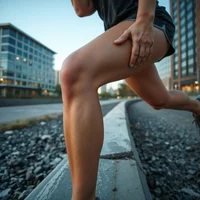
| Possible contributor | Self-Check Result | Sensible First Step | What to Hold Back On |
|---|---|---|---|
| Hip weakness | Hip drop, knee cave, or pelvis tilt on the single-leg squat test | Glute medius and hip abductor strength work — first, and consistently | Orthotics — no evidence they help in this case |
| Pronation | Little or no arch on the wet-foot print, inner-edge shoe wear | A gait analysis, a footwear check and a cadence and form check | Months of isolated hip strength work as your main fix |
| Tibial torsion | Both home checks clean, pain persists; a professional assessment is needed to say more | Load management and compensatory strength work | Expecting any exercise, shoe, or orthotic to change the alignment itself |
Footwear and Orthotic Choices by Cause
Whether new shoes or orthotics help you is uncertain, and I don't know of good evidence that they resolve iliotibial band syndrome.If pronation seems to be a contributor, footwear is something you can experiment with. Some runners try a stability shoe with medial support — support built into the inner edge of the midsole to resist the inward roll — or an orthotic. Results vary, and static foot tests are poor predictors of how your foot moves when running. A gait analysis at a specialty running store is a sensible, low-cost step before you spend on custom orthotics.
If hip weakness seems to be a contributor, new shoes won't strengthen your glutes. Spend your budget on the strength work instead.
If tibial torsion is a possibility, orthotics may help with comfort and loading — they cushion and redistribute pressure — but they won't correct the underlying twist in the bone. Go in expecting comfort at most, not correction.
If More Than One Contributor Seems to Apply
Most runners aren't a clean textbook case — and if your self-checks flagged more than one thing, that's normal, not a sign you tested wrong.The trick is sequencing, not tackling everything simultaneously. Start with the factor that looks most obvious — usually whichever check gave you the clearest result — then layer in the second idea once that's underway. A runner with a strongly positive single-leg squat check and only mild pronation, for example, might sensibly start with a few focused weeks of hip strength work rather than splitting effort between hip exercises and a new pair of shoes from day one.
When to See a Doctor or Get a Professional Gait Analysis

See a professional if a genuine attempt at self-checking leaves you unsure what applies, or if you've tried the sensible first step for a fair period without your pain responding — for what a fair trial looks like, the full IT band syndrome recovery plan covers healing-timeline expectations. See a doctor specifically, not a coach or a self-test, for numbness, swelling, night pain, or any mechanical locking of the knee. Those aren't cause-matching questions. They're red flags.
Stop treating "hip weakness, pronation, or tibial torsion" as a list to read and start treating it as a set of ideas to try. Pick the one your checks support, give it a fair run, and change course if it doesn't help — that will get you further than months of guesswork.
Once things start to improve, here's your return-to-running progression to follow as symptoms improve.
Some Other Pages You May Like
Does Foam Rolling Help IT Band Syndrome?
Flexible Return to Running After IT Band Syndrome
Normal Soreness vs. a Setback
Self-Screening for IT Band Syndrome
Running Hip Pain
Medial Knee Pain
Exercise Program
Marathon Training Tips
Home > Running Injuries > IT Band Syndrome > IT Band Syndrome Causes

About the author
Dominique de Rooij (Dom)
Advanced Running Coach certified by Athletics Australia with 20 years of writing about running and over a decade coaching runners — from first-timers to marathoners. Dom's beginner programs have guided thousands of runners and been praised above plans from Jeff Galloway, Hal Higdon, and Runner's World. Now over 50, Dom still loves trail running, parkrun, and the coffee after.
Free weekly coaching • Join 3,500+ runners
Train Smarter, Not Just Harder
Get your free guide when you join the BRT Coaching Letter
No spam, ever. Unsubscribe in one click, any time.
What's New?
-
Cut 90 Seconds Off Your 1.5 Mile Run for the Army Test
Cutting 90 seconds off a 1.5 mile run in 3-4 weeks for the Army test: Dom breaks down realistic pacing to reduce 10:32 toward sub-9:00 for Paras selection. -
Training for a 1.5 Mile Run - How to Qualify For Your Test
Coach Dom's 3-step plan for 1.5 mile run training: build aerobic base, add strides, then tempo and pace work to hit your test time. -
Improve Your 1.5 Mile Running Time to 10:30: Shin Splints
From 12:59 to 10:30 for 1.5 miles: Coach Dom's shin-splint fix and training plan to improve your running time in 2-3 months.